Details
- Language
- English
- Country
- GB
- Studio
- Crackit Productions
- Seasons
- 1 · 4 eps
Popularity · Search interest now
Low
0.7
Based on TMDb activity
Starring

Where to watch
Not currently available for streaming or purchase.
Links may earn Incoming a commission at no extra cost to you.
Incoming Editorial TeamVerified
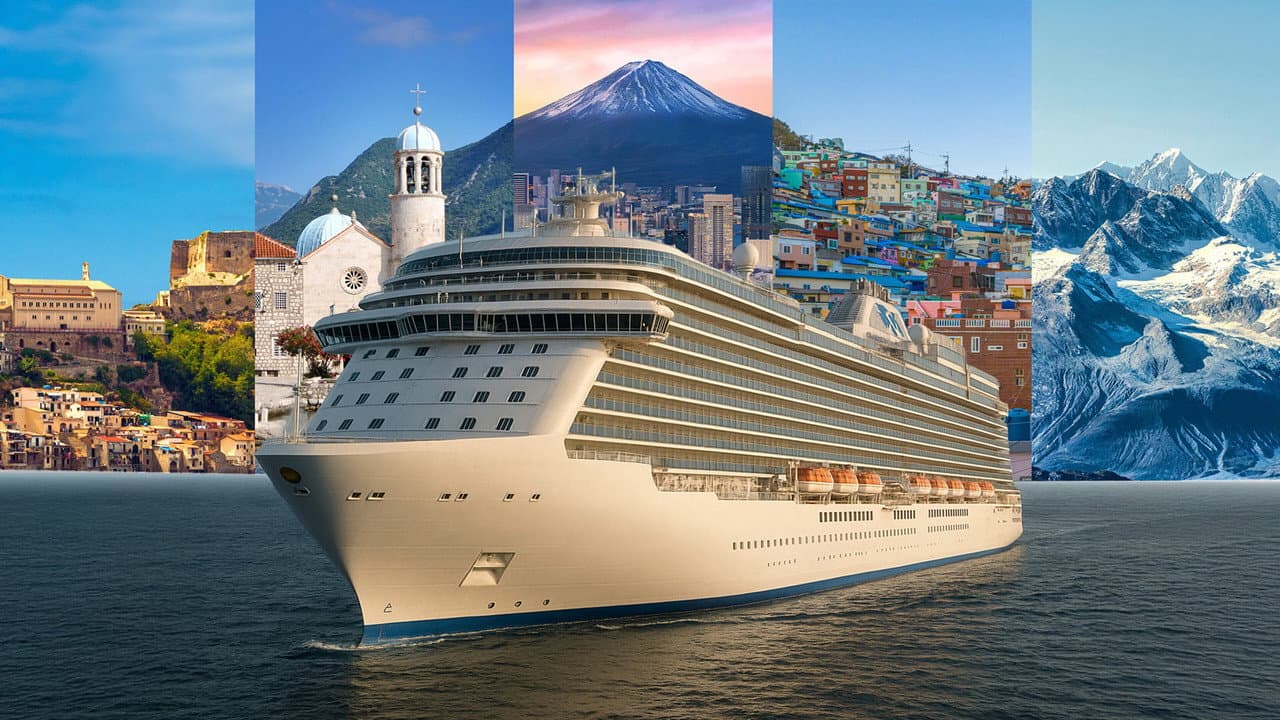
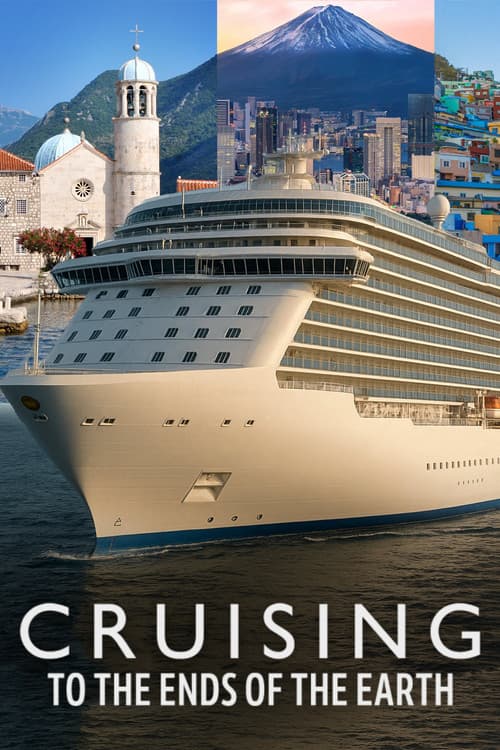
Cruising to the Ends of the Earth is an upcoming television series filmed aboard Princess Cruises ships, premiering on April 26, 2026. The series follows three voyages spanning Alaska, South Korea, Japan, and the Mediterranean.
Gallery (4)
Key features
- ·Documentary travel television series
- ·Three featured voyage routes
- ·Filmed aboard Princess Cruises ships
- ·Destinations include Alaska, Japan, South Korea, Mediterranean
- ·English language
- ·Premieres April 26, 2026
FAQ
When does Cruising to the Ends of the Earth release?
Cruising to the Ends of the Earth is scheduled to premiere on April 26, 2026.
What is Cruising to the Ends of the Earth about?
The series follows three separate cruise voyages, visiting Alaska, South Korea, Japan, and the Mediterranean, documenting the landscapes and coastlines encountered along each route.
Which cruise line is featured in Cruising to the Ends of the Earth?
The series is filmed on board Princess Cruises ships.
Where can I watch Cruising to the Ends of the Earth?
A broadcaster or streaming platform for the series has not been confirmed in the available information.
About this release
A four-part documentary series titled Cruising to the Ends of the Earth is set to premiere on April 26, 2026, produced by the British production company Crackit Productions. The series takes its cameras aboard Princess Cruises ships across three distinct voyage routes, using the infrastructure of commercial ocean travel as a lens through which to examine some of the more geographically and historically varied corners of the planet.
The premise organizes itself around contrast. Three routes anchor the series: Alaska's glacial interior and coastal wilderness, the coastlines of South Korea and Japan, and the Mediterranean, framed here through the weight of its ancient history rather than its more familiar role as a summer holiday backdrop. That the same mode of transport — a large cruise ship — serves as the connective thread across environments as different as a frozen Alaskan fjord and a sun-bleached Aegean port is itself a quietly interesting structural choice. The ship becomes not just a vehicle but a recurring character, a floating constant moving through radically dissimilar worlds.
Crackit Productions is a UK-based outfit, which places Cruising to the Ends of the Earth firmly in the tradition of British factual television — a genre with a long and confident history of using travel and natural landscape as documentary subject matter. British broadcasters and production companies have sustained audience appetite for this kind of series for decades, and the format here — multiple episodes, multiple destinations, a unifying thread of a single brand of transport — follows a recognizable pattern. What distinguishes this series, at least in its stated ambition, is the breadth of the geographic spread. Alaska, East Asia, and the Mediterranean are not obvious companions on a single itinerary, and the editorial decision to hold them together under one title suggests the series is interested in the variety itself as a subject, not merely the scenery of any one location.
The involvement of Princess Cruises as the platform for filming raises some questions worth sitting with. The series is shot on board the company's vessels, which means access to those ships, their passengers, and their routes was granted — or arranged — in a specific context. Documentary series filmed in partnership with commercial entities have become a recognizable format in British factual television, and they can produce genuinely engaging work. What remains to be seen is how Cruising to the Ends of the Earth handles the relationship between the cruise line's natural interest in favorable presentation and a documentary's obligation to observe honestly. The series description emphasizes landscape — "breathtaking," "frozen peaks," "dazzling coastlines" — rather than the social world of cruise travel itself, which suggests the focus may be primarily outward-facing, trained on what the ships pass through rather than what happens on board.
The four-episode structure is relatively compact for a documentary series spanning three major geographic regions. That compression raises a practical question about depth: four episodes to cover Alaska, the South Korea and Japan coastline, and the full sweep of Mediterranean history is an ambitious scope, and the series will have to make decisions about what to include and what to leave at the dock. Whether each episode is devoted to a single destination or whether the series cuts across routes within episodes is not yet clear from what has been released. The distinction matters — a single-destination-per-episode approach allows for a degree of immersion, while a more interwoven structure might emphasize comparison and contrast at the expense of sustained attention to any one place.
Alaska, as a documentary subject, carries a well-established visual vocabulary: ice fields, wildlife, the particular quality of northern light. The challenge for any series working in that territory is finding something to show or say that the accumulated body of nature documentary hasn't already rendered familiar. Japan and South Korea, as cruise destinations, appear less frequently in British factual television than, say, the Norwegian fjords or the Caribbean, which may give that section of the series more room to work with. The Mediterranean episode — or episodes — faces perhaps the steepest competition, given the sheer volume of historical documentary content already available on ancient Greece, Rome, Egypt, and the various other civilizations that ring that sea.
The series is a first season, with no predecessor to measure it against, which means audiences and the production alike are starting without a baseline. That lack of established expectation can be an advantage — there is no template to live up to or depart from, at least not a series-specific one.
Viewers most likely to seek out Cruising to the Ends of the Earth will include audiences with an existing interest in travel documentary, particularly those who engage with the genre on British television, as well as anyone with a personal or prospective interest in cruise travel as a form. The Princess Cruises connection will draw some viewers from that community specifically. Whether the series finds a wider audience will depend on how substantively it engages with the landscapes it visits — and whether four episodes is enough space to do three very different parts of the world any real justice.
Comments
Sign in to join the conversation.
Loading…