
Details
- Language
- Japanese
- Country
- JP
- Studio
- Bibury Animation Studios
- Seasons
- 1 · 12 eps
- Theme
- redemption
- For
- adult
Popularity · Search interest now
Rising
24.3
Based on TMDb activity
Starring


Incoming Editorial TeamVerified
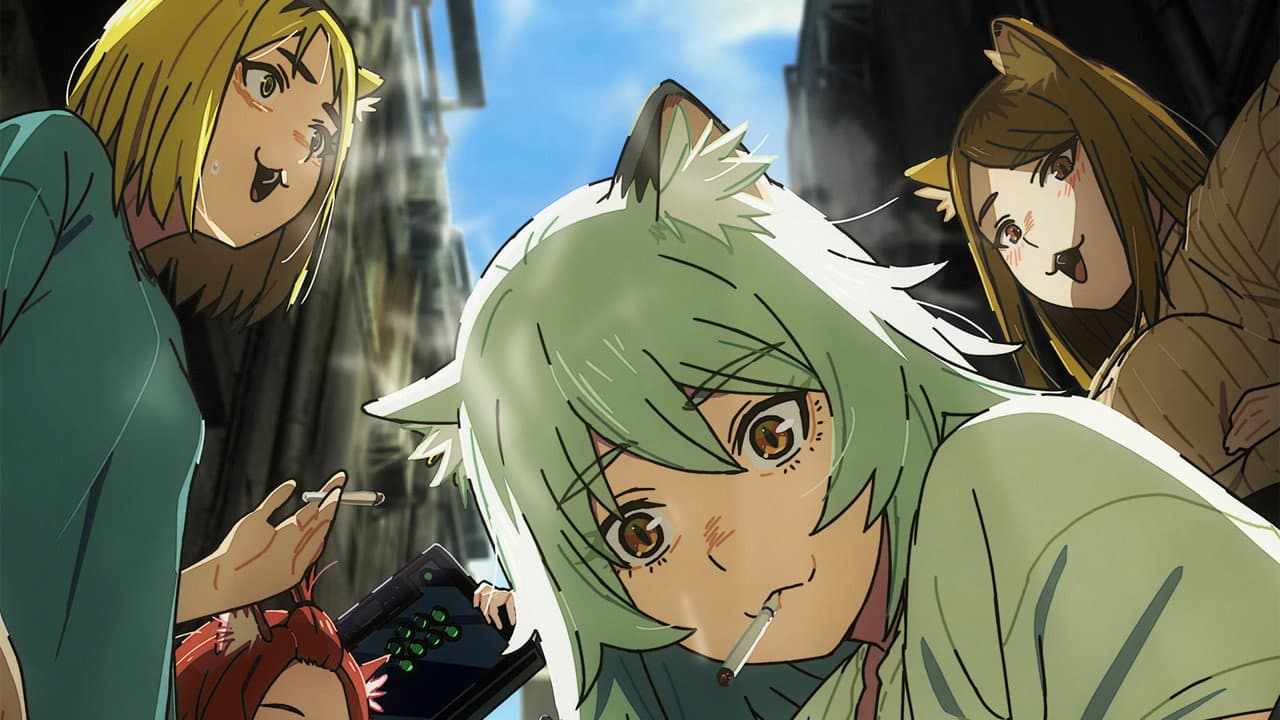
Chainsmoker Cat (ヤニねこ) is a Japanese-language television series following a catgirl named Yani as she navigates financial instability and unemployment while managing a smoking habit. The series is scheduled to premiere on July 3, 2026.
Trailer
Episodes
✓ Previously aired
Key features
- ·Japanese-language television series
- ·Premieres July 3, 2026
- ·Slice-of-life premise
- ·Catgirl protagonist
FAQ
When does Chainsmoker Cat premiere?
Chainsmoker Cat is scheduled to premiere on July 3, 2026.
What is Chainsmoker Cat about?
The series follows Yani, a catgirl who struggles to pay rent and keep a job while maintaining a smoking habit, as concern from those around her prompts her to reconsider her future.
What is the Japanese title of Chainsmoker Cat?
The Japanese title is ヤニねこ.
About this release
On July 3, 2026, Bibury Animation Studios releases Chainsmoker Cat (Japanese title: ヤニねこ), a twelve-episode animated comedy-fantasy series from Japan. The show centers on Yani, a catgirl who is simultaneously contending with precarious employment, an overdue rent, and an entrenched smoking habit — circumstances that begin to strain her relationships as the people around her push back on the direction her life is taking.
Bibury Animation Studios, the Japanese production house behind the series, has built a catalog working primarily in the animation space, and Chainsmoker Cat represents the kind of character-driven, slice-of-life-adjacent material that has found a consistent audience in Japanese animation over the past decade. The premise itself sits at a particular intersection: the catgirl, a figure deeply embedded in anime iconography, placed not in the usual genre contexts of fantasy adventure or romantic comedy but in something considerably more mundane and a little bleak — a young woman who cannot hold a job, cannot make rent, and cannot quit smoking. The genre tags attached to the series (animation, comedy, sci-fi-fantasy) suggest the show is not aiming for stark social realism; the sci-fi-fantasy classification indicates the world accommodates catgirls as a matter of course, which means the premise treats Yani's species as incidental rather than as the central source of dramatic tension. Her problems are recognizably human ones, simply worn on a character with ears and a tail.
That framing matters, because it positions Chainsmoker Cat in a lineage of Japanese comedies that use genre costuming to approach everyday anxieties — economic instability, addiction, the social friction that comes from being a certain kind of person that your loved ones worry about. The smoking habit is specific enough to function as more than a quirk; it is the axis around which her other difficulties rotate, and the series premise makes clear that the people in her life do not simply find it charming. Their concern, as the description puts it, "grows," which implies a show structured around escalating stakes rather than a static portrait of someone comfortably failing to launch.
Twelve episodes is a standard single-cour run for a Japanese animated series — enough room to develop a modest ensemble and put Yani through multiple cycles of consequence without the kind of sprawl that a two-cour season would allow. Whether the show resolves its central tension or leaves Yani in productive irresolution is not yet known, though the description's phrasing — that she "must rethink her future" — leans toward some form of reckoning without specifying where that reckoning lands.
What the available information does not answer is perhaps what will most determine the show's reception: the precise register of its comedy. The premise could sustain a broad, gag-driven approach in which Yani's disasters are played for slapstick, or it could aim for something drier and more uncomfortable, finding the humor in the specific social texture of being someone whose choices are a source of ambient disappointment to others. Those are genuinely different shows, and the distance between them is not visible from the outside. Similarly, the sci-fi-fantasy classification raises a question about world-building that the premise leaves unanswered — how much of the series' energy is invested in the mechanics of whatever world Yani inhabits, and how much of that world is simply backdrop for the character study? A catgirl navigating a recognizable urban Japan is a different proposition than one navigating a more elaborately constructed alternate setting.
The smoking itself is worth noting as a subject choice. Tobacco use in animated series aimed at younger audiences has long been handled carefully, often elided or framed as an obvious villain trait. A series that places active, habitual smoking at the center of its protagonist's identity — treating it as something she enjoys, something she cannot stop, and something that costs her — is making a tonal commitment of some kind. Whether that commitment lands as wry social observation or as something more sympathetic or more judgmental is another open question.
Bibury Animation Studios' involvement provides some indication of production values and sensibility, though without a richer data profile it is difficult to draw firm comparisons to their prior output. The studio's name is in the metadata without additional context about their track record on projects of this type, so the animation's visual ambition and stylistic approach remain to be seen.
The audience most likely to seek out Chainsmoker Cat when it becomes available in July 2026 will probably skew toward viewers already comfortable with Japanese animation's more low-key, character-focused registers — people who have made their way through slice-of-life comedies with unconventional premises and appreciate the genre's willingness to let protagonists be comprehensively imperfect. The smoking-as-central-flaw angle may also draw in viewers who find the typical catgirl framing exhausting and are curious whether this series does something more textured with the archetype. That curiosity, at least, the premise earns on its own terms.
Comments
Sign in to join the conversation.
Loading…