Details
- Language
- English
- Country
- US
- Studio
- Eat the Cat
- Seasons
- 1 · 10 eps
- TMDb Rating
- 10.0 (1 votes)
Rating · Quality score from voters
IMDb
6.7/10
Popularity · Search interest now
Rising
11.3
Based on TMDb activity
Starring








Incoming Editorial TeamVerified
A storm is coming for happily married attorneys Anna and Tom Bowden when Max Cady, the notorious killer they are responsible for putting behind bars, is let out of prison and wants revenge.
Trailer
Gallery (5)
Episodes
✓ Previously aired
About this release
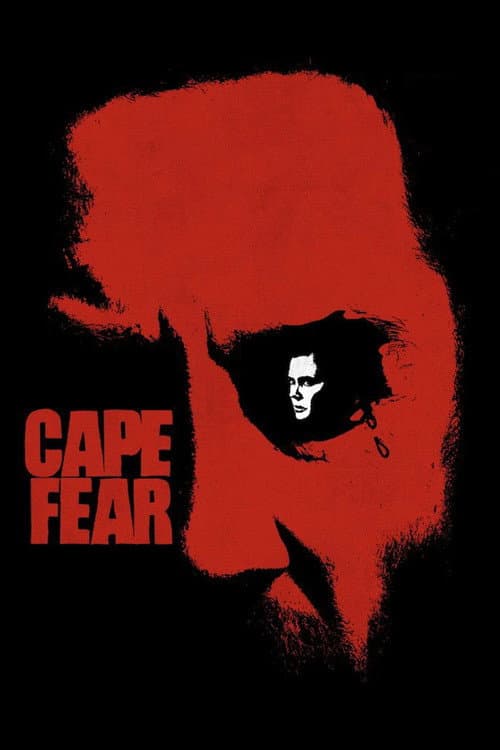
The name Cape Fear carries considerable weight before any new version of it arrives. The latest iteration comes as a television limited series, scheduled for release on June 4, 2026, produced by Eat the Cat, Amblin Television, and UCP. It runs ten episodes across a single season, and its premise returns to the architecture that has made this particular story durable across decades: a married couple, both attorneys, find their settled life disturbed when the man they helped put in prison — a killer named Max Cady — is released and turns his attention toward them.
The source material has a long history in American popular culture, which makes any new adaptation immediately conversational. The story originated in John D. MacDonald's 1957 novel "The Executioners," which was first adapted for the screen in 1962, directed by J. Lee Thompson and starring Gregory Peck and Robert Mitchum. That film gave Max Cady one of the more quietly menacing screen presences of its era. Martin Scorsese's 1991 remake, which starred Nick Nolte and Robert De Niro, pushed the material toward something more operatic and stylized, and it remains the version most contemporary audiences know by instinct if not by detail. Both films share the same basic geometry: the Bowden family, the released convict, and the slow collapse of the boundary between a professional past and a domestic present.
What the television format offers that neither film could is time. Ten episodes is a meaningful commitment, and the structural difference between a two-hour film and a ten-episode series is not merely one of length but of rhythm and depth. A series can follow multiple characters across parallel tracks, build a community around the Bowdens rather than isolating them, and let Max Cady's presence accumulate before it erupts. Whether this adaptation uses that space to develop its two attorneys — here named Anna and Tom, rather than Sam as in prior versions — as figures with equal interiority is one of the more interesting open questions. Prior versions have centered the husband with the wife and daughter existing largely as objects under threat. The decision to establish both Anna and Tom as attorneys responsible for Cady's imprisonment rather than just one of them suggests, at least structurally, a different distribution of agency.
The production credentials are worth noting. Amblin Television, the television arm of Steven Spielberg's Amblin Entertainment, has been involved in a range of prestige and genre television over the years. UCP, which stands under the NBCUniversal umbrella, has produced series with a similarly broad range. Eat the Cat is the third production company attached, though the specific creative personnel — writers, directors, showrunner, cast — are not part of the available record at this point. That absence is not unusual for a project still more than a year from release, but it leaves the most consequential questions unanswered. Who is playing Max Cady? The role has attracted actors known for a very particular quality of controlled volatility — Robert Mitchum's flat calm, Robert De Niro's theatrical menace. Whoever steps into it will face immediate comparison.
The genre classification, crime and drama, is accurate but tells only part of the story. Cape Fear in all its prior forms has functioned as something closer to a psychological thriller, and its central tension has always been less about crime in a procedural sense and more about the permeability of respectability — the idea that a comfortable, professionally established life is not as sealed off from its own past as its inhabitants would prefer to believe. The attorney angle is particularly pointed: the Bowdens are people whose livelihoods depend on the legal system, and it is that same system that releases Cady. Whatever moral complexity the writers choose to invest in that irony will largely determine whether this version has something to say beyond its plot mechanics.
It is also worth observing that the television landscape in 2026 will have no shortage of limited series built around menace and domestic disruption. The format has become a reliable container for this kind of material since at least the mid-2010s, and audiences have developed considerable fluency with its conventions: the slow escalation, the institutional failure, the protagonist who knows something is wrong before anyone around them believes it. Cape Fear predates all of that as a cultural artifact, which means this series arrives with the unusual position of being both familiar and potentially fresher than much of what surrounds it, simply because its source has genuine age on it. Whether the ten-episode structure risks making that escalation feel drawn out rather than sustained is a practical concern the finished episodes will have to answer.
The audience most likely to seek this out in June 2026 will include viewers who know the Scorsese film and are curious what the expanded format does with the same template, as well as those who follow prestige crime drama without any particular investment in the prior adaptations. For both groups, the central question is the same: what does Max Cady become when a production has ten hours rather than two to make him felt.
Comments
Sign in to join the conversation.
Loading…