
Details
- Language
- Chinese
- Country
- CN
- Studio
- iQIYI
- Seasons
- 1 · 24 eps
- TMDb Rating
- 8.0 (8 votes)
- Theme
- true crimeunderdog
Rating · Quality score from voters
IMDb
7.2/10
Popularity · Search interest now
Rising
49.4
Based on TMDb activity
Hype score
leaderboard →83
/ 100↑ +2.3 in 24h
#40 globally#9 in tv
30-day trendWP 75 · YT 94
Born with Luck maintains steady television research activity.
Starring








Where to watch
Not currently available for streaming or purchase.
Links may earn Incoming a commission at no extra cost to you.
Incoming Editorial TeamVerified
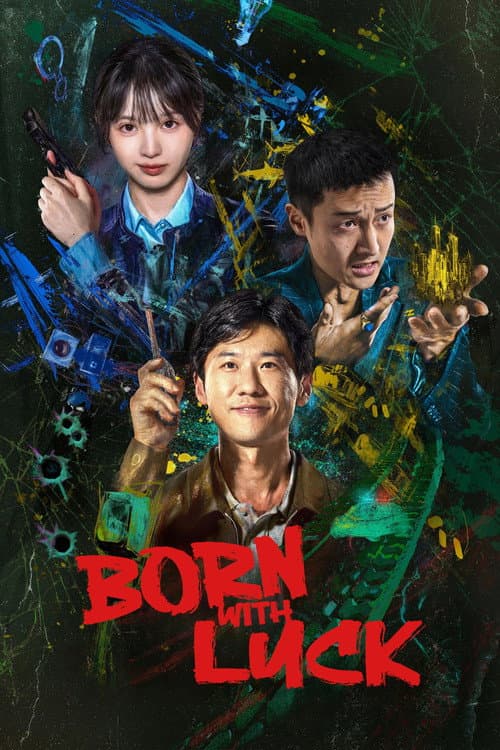
Born with Luck (擒贼记) is a Chinese-language television series following a veteran detective entangled in crime and corruption. It is scheduled to release on April 28, 2026.
Trailer
Gallery (1)
Episodes
✓ Previously aired
Key features
- ·Chinese-language crime drama series
- ·Set in Sanjiangkou
- ·Follows a detective and criminal investigation
- ·Features ensemble of thief characters
- ·Premieres April 28, 2026
FAQ
When does Born with Luck release?
Born with Luck is scheduled to release on April 28, 2026.
What is Born with Luck about?
The series follows Zhang Yi'ang, a veteran detective sent to Sanjiangkou to investigate a case, who becomes entangled in a criminal network and a murder investigation with unlikely help from a group of bungling thieves.
What is the original title of Born with Luck?
The original Chinese title is 擒贼记.
What language is Born with Luck in?
The series is in Chinese (Mandarin).
About this release
A Chinese crime drama with an unusual tonal premise arrives on May 4, 2026, when Born with Luck — carrying the Chinese subtitle 低智商犯罪, which translates roughly as "low-intelligence crime" — begins its run as a 24-episode series produced by iQIYI and TOMORROW FILM. The show centers on Zhang Yi'ang, a veteran detective dispatched to a place called Sanjiangkou to look into a case, only to find that the investigation pulls him into a broader tangle of criminal networks and institutional corruption. What distinguishes the setup from a standard procedural is the presence of a group of inept thieves who, through their own blundering, end up assisting Zhang in piecing together the truth behind a murder.
That subtitle — 低智商犯罪 — is doing a fair amount of work before a single frame airs. In Chinese popular culture, the phrase has a slightly sardonic ring, often applied to crimes that are self-defeating in their stupidity, or to criminals who manage to fail despite every advantage. Attaching it to a series that also involves a seasoned detective and a powerful criminal network suggests the show is deliberately positioning itself somewhere between straight-faced thriller and dark comedy of errors. Whether those registers are balanced carefully or allowed to work against each other is, for now, an open question.
The setting of Sanjiangkou — a name that literally means "confluence of three rivers" — points toward a provincial Chinese backdrop rather than a metropolitan one. Much of the most interesting Chinese crime drama of recent years has migrated away from big-city settings, finding in smaller cities and rural areas a kind of moral geography where formal institutions are weaker, local power structures are more entrenched, and outsiders like Zhang are both necessary and unwelcome. If the series follows that tradition, the location itself may function less as backdrop than as an active element of the narrative, shaping what Zhang can know, who he can trust, and how far the corruption he is investigating actually reaches.
The production partnership between iQIYI — one of China's dominant streaming platforms — and TOMORROW FILM suggests a project with reasonably substantial resources behind it. iQIYI has, over the past several years, become one of the more ambitious commissioners of serialized drama in China, and its crime output in particular has attracted considerable attention both domestically and among overseas audiences who follow Chinese streaming content. TOMORROW FILM's involvement as a co-producer indicates a collaborative structure typical of larger-scale Chinese drama productions, though the specific creative responsibilities each company holds in this instance are not publicly detailed.
Twenty-four episodes is a significant commitment by the standards of any television market, and it raises immediate questions about pacing and structure. A 24-episode crime series built around a single murder investigation has to make a series of choices: Does it resolve the central case early and open outward into the larger corruption story? Does it sustain the mystery across all 24 hours? Does it use the incompetent thieves as recurring comic counterweight or phase them out as the stakes rise? None of these questions have been answered in the available material, and they matter because they will determine whether the show feels expansive or merely extended.
The relationship between Zhang and the bungling thieves is the most narratively distinctive element described, and it carries the most uncertainty. Mismatched-ally structures are well-established across crime drama globally — the reluctant partnership between a serious investigator and comic or unlikely supporting characters runs from classic noir through contemporary procedurals — but the specific texture of that dynamic varies enormously depending on how the writing handles it. If the thieves exist primarily as comic relief in service of a grimmer central plot, the show operates in one mode; if their particular brand of low-competence criminality is used to illuminate something about the nature of crime or institutional failure in the setting, it operates in another. The subtitle suggests the latter possibility is at least on the table.
There is also the question of Zhang Yi'ang himself. The description identifies him as a veteran — implying experience, possibly cynicism, and almost certainly some form of personal cost that experience brings — but nothing in the available information addresses what kind of detective he is, what brought him specifically to Sanjiangkou rather than a colleague, or what relationship, if any, he has to the corruption he uncovers. These are the character questions that tend to determine whether a crime series feels inhabited or merely plotted.
The audience most likely to seek Born with Luck out will be viewers already oriented toward Chinese streaming drama who have followed iQIYI's crime output with interest, as well as those drawn to crime series that use humor as a structural element rather than a garnish. The 24-episode length will be standard for its primary audience and may serve as a mild barrier for viewers less familiar with the pacing conventions of Chinese serialized television, who may find the commitment significant before knowing how the show handles it. For those who have found that longer-form Chinese crime dramas reward patience — and many have — the premise here offers enough friction between its serious and absurdist elements to make May 4 worth marking.
Comments
Sign in to join the conversation.
Loading…