
Details
- Language
- Chinese
- Country
- CN
- Studio
- MangoTV
- Seasons
- 1 · 1 eps
Popularity · Search interest now
Low
0.4
Based on TMDb activity
Starring






Where to watch
Not currently available for streaming or purchase.
Links may earn Incoming a commission at no extra cost to you.
Incoming Editorial TeamVerified
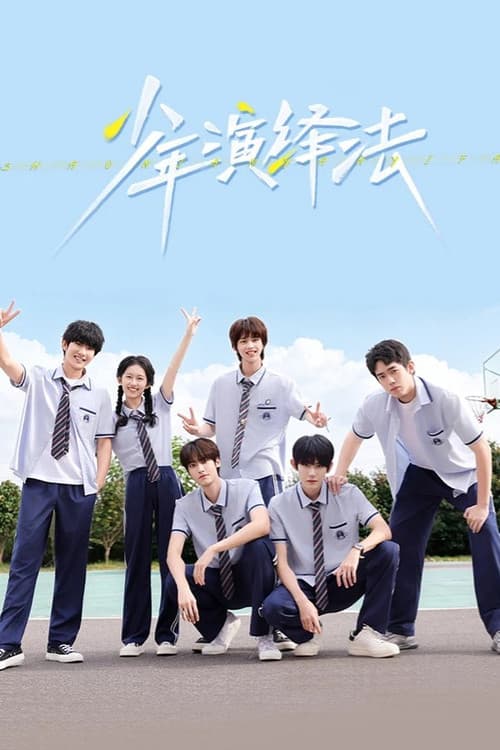
少年演绎法 is an upcoming Chinese-language television series scheduled to release on April 29, 2026. The show follows a group of young boys pursuing revenge and truth, with hidden identities and unexpected twists shaping their journey.
Gallery (1)
Key features
- ·Chinese-language television series
- ·Premieres April 29, 2026
- ·Themes of revenge, identity, and redemption
- ·Ensemble cast of young male leads
- ·Coming-of-age narrative
FAQ
When does 少年演绎法 release?
少年演绎法 is scheduled to release on April 29, 2026.
What is 少年演绎法 about?
The series follows a group of young boys who set out to seek revenge and uncover the truth, but hidden identities and unexpected twists transform their mission into a story of growth, friendship, and redemption.
What language is 少年演绎法 in?
少年演绎法 is a Chinese-language series.
About this release
少年演绎法, a Chinese-language drama-mystery series produced by MangoTV, is scheduled to release on April 29, 2026. The show arrives on one of mainland China's most prominent streaming and broadcast platforms, which has built a recognizable catalog of youth-oriented dramas and variety productions over the past several years.
The premise centers on a group of young men who set out seeking revenge and the exposure of a concealed truth. What begins as a mission driven by grievance becomes complicated, the synopsis suggests, by unexpected reversals and hidden identities — a structural DNA that places the show squarely within a well-worn but persistently popular tradition of Chinese youth drama. That tradition tends to braid together personal loyalty, moral reckoning, and the specific texture of adolescent or young-adult relationships under pressure. The mystery genre designation layered on top of the drama classification signals that the show intends its plot machinery — secrets, disguises, revelations — to carry as much weight as its character work.
The Wikipedia reference attached to this production points to Hou Minghao, a Chinese actor who has built a following through a combination of idol-group origins and subsequent television and film work. His association with the project, as suggested by that metadata, is likely a significant factor in the show's anticipated audience profile. MangoTV has a track record of pairing recognizable young talent with genre-inflected dramas targeted at viewers in their teens and twenties, and 少年演绎法 appears to fit that programming logic. Whether Hou Minghao leads the ensemble or occupies a prominent supporting role is not confirmed by the available data, but his name's attachment to any MangoTV production of this type is rarely incidental.
What the available information does not settle is the scope of the production. The metadata lists the series as having one season and one episode, which is an unusual configuration for a drama of this described complexity — a revenge narrative with ensemble characters, evolving identities, and a thematic arc spanning growth and redemption is not typically told in a single episode. It is possible the episode count reflects incomplete data at the time of cataloging, or that the release structure involves a format unconventional by standard serialized television norms. Chinese streaming platforms have at various points experimented with long-form single-episode presentations and staggered release models, so the listed figure may simply be a placeholder rather than a literal description of the show's final shape.
The thematic territory the synopsis stakes out — revenge that transforms into something more reflective, friendship formed under duress, redemption arrived at through hardship — is familiar enough in Chinese youth drama that its interest will depend heavily on execution: the specificity of the writing, the chemistry of the cast, and whether the mystery architecture actually generates surprise or functions mainly as decorative scaffolding. Revenge narratives set among young men have a particular gravitational pull in the genre because they allow for extended examination of loyalty's limits, of what obligations young people owe one another versus what they owe themselves, and of how moral clarity tends to erode once the full picture of any injustice comes into focus. Hidden identities, a staple the synopsis explicitly flags, function in this context not merely as plot devices but as a way of asking which version of a person is real — a question that maps naturally onto the experience of adolescence and early adulthood.
MangoTV's production infrastructure gives the show a reasonably well-resourced platform from which to launch. The broadcaster has distributed content internationally through its Mango TV app and has, in recent years, seen some of its drama output circulate among Chinese-language diaspora audiences and subtitled-content communities more broadly. Whether 少年演绎法 is positioned for that kind of cross-border reach or is primarily designed for the domestic market is not specified in the available data, but the genre combination of drama and mystery, along with the implied youth-ensemble format, suggests content that tends to travel moderately well through fan-subtitling networks even when formal international distribution is limited.
The title itself, rendered roughly as something like "The Deductive Method of Youth" or "Youth Deduction Method" in English, carries a suggestion of rationalism and procedure — deduction, inference, the working-out of a problem — set against the emotionally turbulent backdrop the synopsis describes. That tension between analytical process and the messiness of grief, friendship, and moral injury is potentially the show's most interesting formal proposition, depending on how literally it pursues the implication.
Viewers likely to seek this out on or after April 29, 2026, will be primarily those already invested in MangoTV's drama output, followers of Hou Minghao's career looking to track his next project, and audiences drawn to Chinese youth dramas with mystery and ensemble dynamics at their center.
Comments
Sign in to join the conversation.
Loading…