Details
- Language
- English
- Studio
- Malaika Pictures
- Directed by
- Richard Ladkani
- Written by
- Richard Ladkani
- For
- adult
Popularity · Search interest now
Low
0.7
Based on TMDb activity
Starring

Incoming Editorial TeamVerified
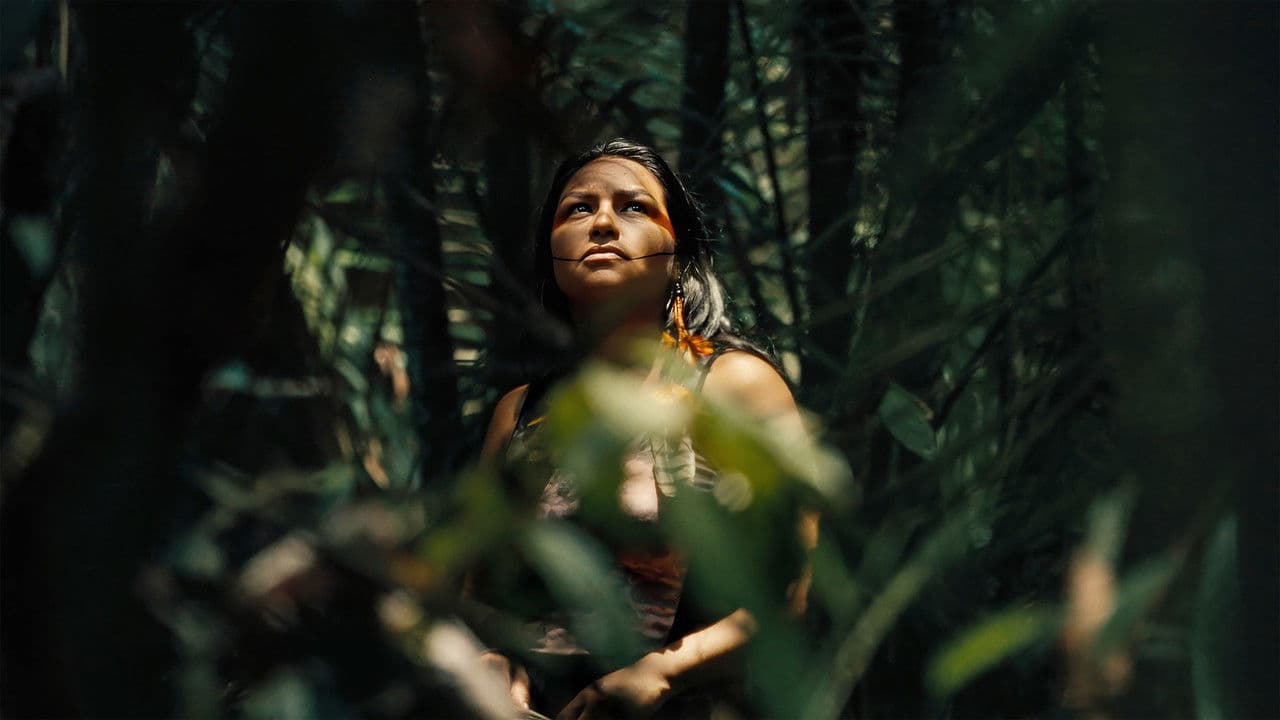
Indigenous chief Juma Xipaia fights to protect tribal lands despite assassination attempts. Her struggle intensifies after learning she's pregnant, while her husband, Special Forces ranger Hugo Loss, stands by her side.
Gallery (3)
About this release
Yanuni, a drama-documentary produced by Malaika Pictures, Appian Way, and Nia Tero, is scheduled for release on April 24, 2026. The film centers on Juma Xipaia, an indigenous chief working to defend her tribe's ancestral lands in the face of assassination attempts against her. Her situation grows more complicated when she learns she is pregnant, a development that deepens both the personal and political stakes of her position. Her husband, Hugo Loss, a Special Forces ranger, remains at her side throughout the conflict.
The three production companies behind the film represent a notable convergence of institutional interests. Appian Way, the production banner with a track record in prestige dramatic features, joins Nia Tero, an organization specifically dedicated to supporting indigenous storytelling and land stewardship narratives, and Malaika Pictures in bringing this story to screen. The involvement of Nia Tero in particular signals a commitment to centering the film within the broader conversation about indigenous sovereignty and land rights — a subject that has drawn sustained documentary and dramatic attention over the past decade, particularly as displacement and environmental destruction have continued to accelerate pressure on tribal communities across South America and beyond.
The film's genre classification as both drama and documentary is one of its more immediately interesting formal qualities. That dual designation could mean several different things in practice: a hybrid narrative that blends nonfiction footage with dramatized sequences, a docudrama that reconstructs events from a real person's life with actors, or a more loosely applied label that signals the film's grounding in documented real-world circumstances rather than wholly invented ones. The source material — a named chief, Juma Xipaia, confronting named adversaries and navigating a very specific political situation — suggests that the events depicted are drawn from or inspired by actual circumstances, though the precise relationship between the film and its factual basis remains to be clarified. Whether Juma Xipaia is portrayed by an actress or appears as herself, whether Hugo Loss is a fictionalized composite or a named individual drawn from life, and whether the assassination attempts depicted have a specific documented history are all questions the available information does not resolve.
What the description does establish is a structure that places a woman in a position of communal authority at the center of the story, with a pregnancy subplot layered onto an already high-pressure political and physical threat. The juxtaposition is not subtle — an indigenous leader trying to protect collective land while simultaneously anticipating the birth of a child creates an obvious but resonant thematic parallel between the protection of future generations and the defense of the territory they would inherit. Whether the film treats this parallelism with restraint or leans into it as overt symbolism will likely determine much about the tone the finished work strikes.
The husband's role, as described, is one of support rather than dominance. Hugo Loss's identity as a Special Forces ranger introduces a secondary tension worth noting: the presence of a figure trained in state-sanctioned military violence standing alongside an indigenous leader whose conflict is, in many documented real-world cases, partly a conflict with state interests or state-adjacent actors. That dynamic — the ranger as protector of a chief whose fight may intersect awkwardly with institutional power structures — is either a genuine complication the film intends to examine or simply a detail of the biographical record that the production has chosen to preserve. Again, the available information does not specify.
The film's original language is listed as English, which is a detail worth pausing on given the subject matter. Stories of indigenous land defense in South America are typically told in Portuguese, Spanish, or the indigenous languages of the communities involved. An English-language production — or at minimum a production whose primary language is English — raises practical questions about access and framing: for whom is this story being told, and how is the gap between the language of production and the language of the world depicted being navigated? These are not accusations so much as observations that curious viewers will likely carry into the theater.
The film arrives at a moment when indigenous land rights have been the subject of sustained international attention, from legal battles over ancestral territory in Brazil's Amazon basin to organized resistance movements in North America and beyond. Documentary filmmaking has engaged with these subjects consistently over the past several years, and the narrative drama form has increasingly been used to bring individual figures from those struggles to broader audiences. Yanuni appears to be working within that tendency while potentially blending formal registers in ways that remain to be seen.
Those most likely to seek out the film in its opening weeks will probably include audiences already engaged with indigenous rights issues, viewers drawn by the Appian Way or Nia Tero associations, and documentary enthusiasts whose appetite for politically grounded narratives about land, sovereignty, and survival has been shaped by earlier work in the genre. The pregnancy element and the romantic partnership at the story's core may broaden that appeal toward viewers more accustomed to narrative drama than to nonfiction filmmaking — which may well be part of the calculation behind the hybrid classification.
Comments
Sign in to join the conversation.
Loading…