
🔥 Hot
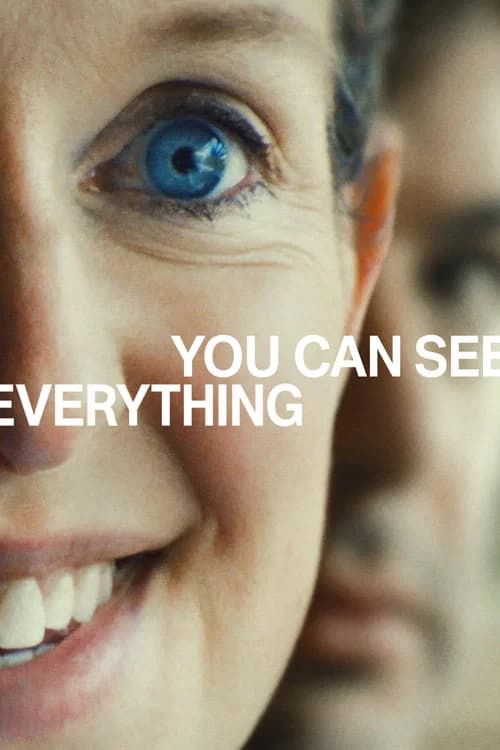
You Can See Everything
DocumentaryOct 16, 2026
You Can See EverythingReleased
Details
Popularity · Search interest now
Based on TMDb activity
Hype score
leaderboard →Wahlkampf's Wikipedia momentum is accelerating in the film category.
Not currently available for streaming or purchase.
Links may earn Incoming a commission at no extra cost to you.
Incoming Editorial TeamVerified
How do you gain the most votes or lose the fewest? How do you cast your lead candidate in the best possible light? In his long-term observation Wahlkampf, Harald Friedl accompanies a young, ambitious campaign team on their way through the “super election year” of 2024.
A documentary called Wahlkampf — the German word for election campaign — is scheduled for release on April 24, 2026. Directed by Harald Friedl, the film follows a young campaign team through what its framing describes as the "super election year" of 2024, a period in which an unusually dense cluster of consequential votes took place across Germany and, more broadly, across Europe and the world. The film's central preoccupation, as described by its own premise, is strategic and almost clinical: how does a campaign team maximize votes, or at minimum, minimize losses? How is a lead candidate shaped and presented for public consumption?
The documentary genre has a long tradition of embedding itself inside political operations, from the observational films that followed American presidential campaigns in the 1970s onward. What distinguishes the better examples of the form is not partisan sympathy but proximity — the willingness of a campaign to allow a camera into the room where decisions are made, where talking points are workshopped, where the gap between a candidate's authentic self and their projected image is negotiated in real time. Friedl's approach, described as a "long-term observation," places Wahlkampf in that vein. The implication is sustained access over months rather than a series of set-piece interviews, which tends to produce footage that press releases and official communications cannot manufacture.
The film is in German, situating it firmly within a German-language documentary tradition that has produced rigorous, formally sober work on political subjects. Whether it will receive theatrical distribution or festival placement outside German-speaking markets before or after its April 2026 date is not yet established from available information. What is known is that the subject matter — the mechanics of electioneering during a year that saw an extraordinary number of votes across multiple countries — carries obvious international relevance even if the specific campaign being documented is rooted in a particular national context.
The metadata associated with the film links, notably, to Alice Weidel, the co-leader of the Alternative für Deutschland party, which placed strongly in the German federal election held in February 2025. That connection is worth noting without overreading it. It is not confirmed from available information whether Weidel or the AfD is the specific subject of Friedl's camera — the source description mentions only "a young, ambitious campaign team" accompanying "their lead candidate" — but the association is present in how the film has been indexed and categorized. The AfD's 2024 and 2025 electoral performance made it one of the most discussed political organizations in Europe during the period the film covers, and any documentary produced in proximity to that campaign would carry significant weight for audiences trying to understand how a party that was once treated as a fringe phenomenon consolidated mainstream electoral support. If the film does focus on the AfD's operations, it would represent an unusual degree of insider access to an organization that has often been adversarial toward mainstream German media. If it does not, the indexed connection remains unexplained by currently available information, and the film may simply document a different campaign that was active during the same crowded electoral window.
That ambiguity is, at this stage, the most significant open question around Wahlkampf. Political documentaries draw their authority from who, precisely, is being observed — and the difference between following a local or regional campaign team and embedding with a nationally consequential party is enormous in terms of what the film can illuminate. The phrase "super election year" in the film's own framing gestures at the broader European and global context of 2024, a year in which major votes took place not only in Germany but across dozens of countries simultaneously, producing a kind of compressed democratic moment that political scientists and journalists spent considerable energy analyzing. Whether Friedl uses the campaign he is observing as a window onto that wider phenomenon, or keeps his focus tight on the granular decisions of a single team, is not yet clear.
Also unresolved from available information is the question of editorial access and control — a perennial tension in political documentary filmmaking. Campaigns that allow cameras in do so with varying degrees of influence over the final product, and the degree to which a film can be genuinely observational versus inadvertently serving as a form of extended campaign communication depends almost entirely on the terms of access that were negotiated. Friedl's background and previous work are not detailed in the available material, so there is no filmography to consult for evidence of how he has historically navigated that tension.
The release date of April 2026 places Wahlkampf roughly fourteen months after the German federal election of February 2025, which means audiences who see it will already know how the political story it documents ended — at least in electoral terms. That foreknowledge can work in a documentary's favor, transforming campaign footage into something closer to dramatic irony, where small decisions captured on camera acquire retrospective weight because the viewer knows what followed. It can also make a film feel like a postmortem rather than a living document. Which of those experiences Wahlkampf delivers will depend on how Friedl has structured and edited his long-term observation.
Audiences most likely to seek the film out are those with an active interest in German politics, European electoral dynamics, or the craft of political campaigning itself — including journalists, political scientists, and observers who spent 2024 and 2025 tracking the realignment of German party politics. Given the film's language and subject matter, it will probably travel through documentary festival circuits and specialist theatrical runs before reaching broader audiences, if it reaches them at all.
You Can See Everything
DocumentaryOct 16, 2026
You Can See EverythingReleased ⭐ Popular
The Odyssey
AdventureJul 15, 2026
The Odyssey ⭐ Popular
Digger
ComedySep 28, 2026
Digger ⭐ Popular
Moana
FamilyJul 8, 2026
Moana ⭐ Popular
The Awakening
HorrorOct 29, 2026
The AwakeningReleased ⭐ Popular
Buddy
HorrorAug 27, 2026
BuddySign in to join the conversation.