 🔥 Hot
You Can See Everything
DocumentaryOct 16, 2026
You Can See EverythingReleased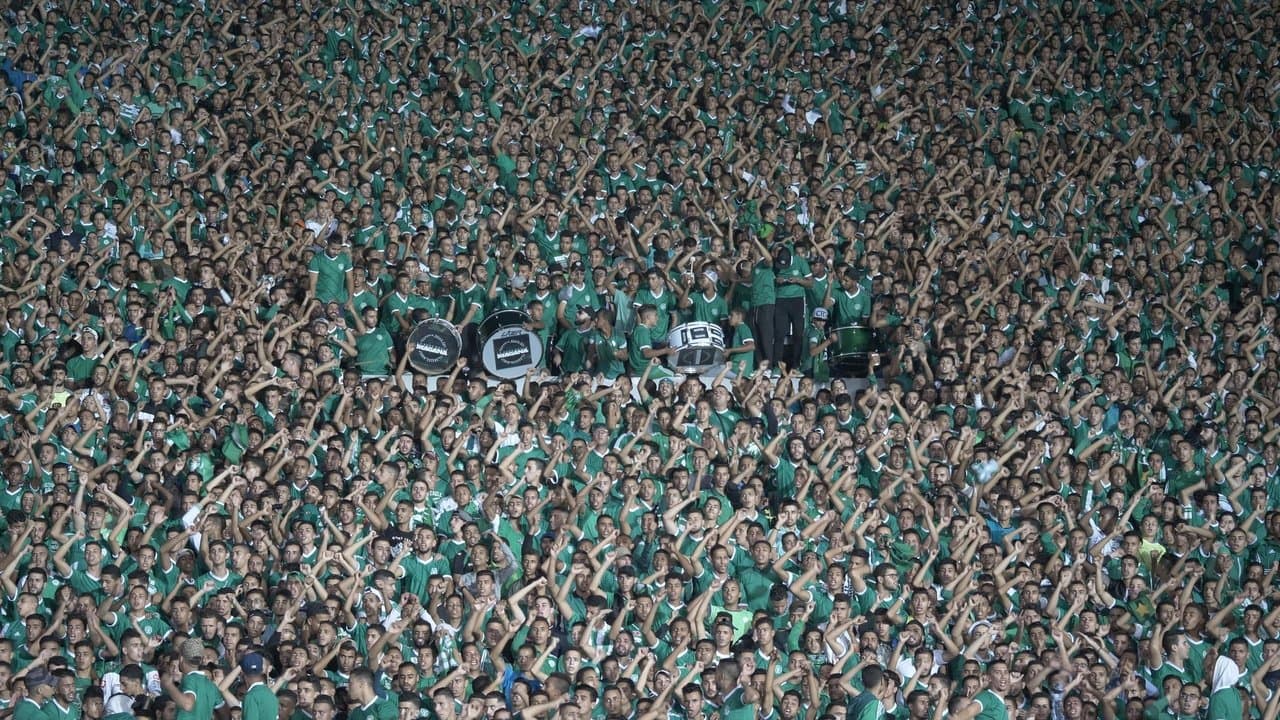
Details
Popularity · Search interest now
Based on TMDb activity
Not currently available for streaming or purchase.
Links may earn Incoming a commission at no extra cost to you.
Incoming Editorial TeamVerified
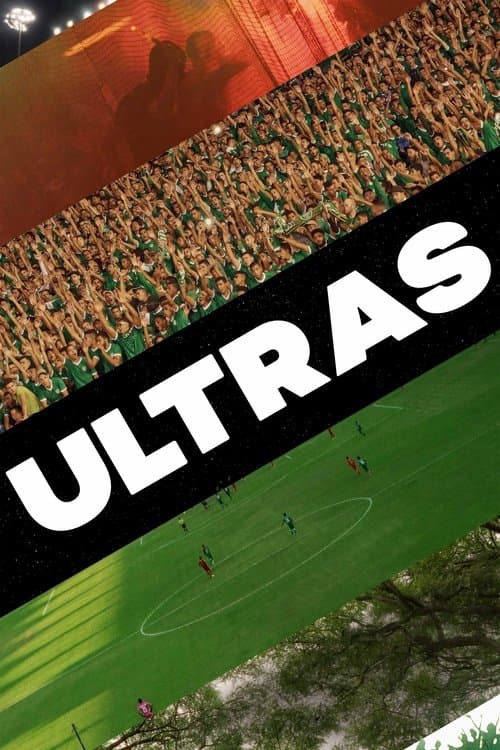
Ultras – the heart and soul of football stadiums around the globe. The supporters that will do anything for the team and yields that extra power into the game to help their team win. ULTRAS is not your regular sports film. Through epic images and a cinematic mosaic of football supporters and their societal contexts around the world, we portray a subculture that is widely known but yet mysterious and inaccessible for most of us.
A documentary titled Ultras is scheduled for release on Friday, April 24, 2026. The film arrives in its original Swedish language and approaches its subject — the global phenomenon of football ultra culture — through what its makers describe as a cinematic mosaic of supporter groups and their wider societal contexts.
The ultras as a subject have long existed in a peculiar cultural limbo. Anyone who has watched European or South American football with any seriousness has encountered them, at least visually: the coordinated tifo displays unfurling across entire stadium ends, the smoke flares, the synchronized chanting that transforms a concrete bowl into something closer to a collective organism. Yet for all their visual spectacle, ultra groups remain genuinely opaque to outsiders. They operate according to internal codes, hierarchies, and histories that rarely translate into mainstream sports coverage, which tends to treat them either as background atmosphere or, when things go wrong, as a public order problem to be managed.
Documentary filmmaking has occasionally circled this territory. Films about specific clubs, specific tournaments, or specific moments of supporter unrest have appeared over the decades, but sustained, cross-cultural examinations of the ultra phenomenon as a distinct subculture — with its own aesthetics, politics, and social functions — have been comparatively rare. Ultras presents itself as precisely that kind of project, operating at the level of the subculture rather than the individual match or club. The description of "epic images" and a "cinematic mosaic" drawn from supporter groups around the world suggests a film more interested in the texture and meaning of ultra life than in narrative reconstruction of any particular incident or rivalry.
The Swedish-language origin is worth noting. Scandinavia has its own tradition of organized supporter culture, though it occupies a different register than the Italian clubs where the ultra identity is historically rooted, or the Balkan and Eastern European scenes that have attracted substantial journalistic attention in recent years. Whether the film's perspective is specifically shaped by a Swedish or Nordic vantage point — or whether the Swedish-language designation reflects simply the nationality of the production company — is not entirely clear from what has been made public. What the source material does assert is an ambition to move beyond any single national context, portraying groups across multiple countries and placing them within their respective societal frameworks.
That framing — "societal contexts" — is one of the more interesting threads left unresolved by the available information. Ultra culture is not politically uniform. Across different countries and different clubs, organized supporter groups have aligned themselves with radically different ideological positions, from far-right nationalist movements to explicitly left-wing antifascist organizations. Some groups have become entangled in organized crime; others have served as genuine community institutions in working-class neighborhoods. Whether Ultras engages directly with these political dimensions or maintains a more observational distance is unknown at this stage. A film that presents the movement primarily through its visual grandeur without interrogating its contradictions would be a different kind of document than one that treats supporter culture as a lens onto broader social fractures.
The claim that the film is "not your regular sports film" is the kind of assertion that tends to appear in documentary promotion and is best evaluated against what the finished work actually delivers. What it does signal is an awareness that the subject risks being packaged as pure spectacle — the choreography, the noise, the passion — without the friction that makes documentary filmmaking genuinely worthwhile. The tension between the aesthetic appeal of ultra culture and the more complicated realities beneath it seems likely to be at the center of whatever argument the film is making, though the precise contours of that argument remain to be seen.
There is also the question of access. Ultra groups are, by their own design, resistant to outside scrutiny. Their rituals, their internal disputes, and their organizational structures are generally not offered up willingly to cameras. How the filmmakers navigated that resistance — whether through long-term relationships with specific groups, through participant observation, or through some other approach — would tell the audience a great deal about the depth of what they are watching. The description of the culture as "widely known but yet mysterious and inaccessible for most of us" acknowledges this barrier directly, but the mechanics of how that inaccessibility was overcome are part of the story the film itself will need to tell.
The April 2026 release places the film in the run-up to and overlap with the tail end of European domestic football seasons, a timing that may be incidental but which puts it in front of audiences whose engagement with the sport is seasonally heightened.
The likely audience is a compound one: football supporters with an intellectual curiosity about the culture surrounding the game, documentary viewers drawn to subculture portraiture as a genre, and anyone with an interest in the sociology of collective identity and urban working-class life. These are not entirely overlapping categories, and whether Ultras can address all of them simultaneously — satisfying the football faithful while remaining coherent to viewers with no particular investment in the sport — may be the central challenge the film sets for itself.
🔥 HotYou Can See Everything
DocumentaryOct 16, 2026
You Can See EverythingReleased ⭐ Popular
The Odyssey
AdventureJul 15, 2026
The Odyssey ⭐ Popular
Digger
ComedySep 28, 2026
Digger ⭐ Popular
Moana
FamilyJul 8, 2026
Moana ⭐ Popular
The Awakening
HorrorOct 29, 2026
The AwakeningReleased ⭐ Popular
Runner
ActionSep 7, 2026
RunnerSign in to join the conversation.