Details
- Language
- Chinese
- Mood
- melancholy
- Theme
- coming of age
Popularity · Search interest now
Low
0.5
Based on TMDb activity
Hype score
leaderboard →73
/ 100↓ -2.9 in 24h
#84 globally#52 in movie
30-day trendWP 80 · YT 68
Tied Together reaches top 9% movie traffic with accelerating interest.
Incoming Editorial TeamVerified
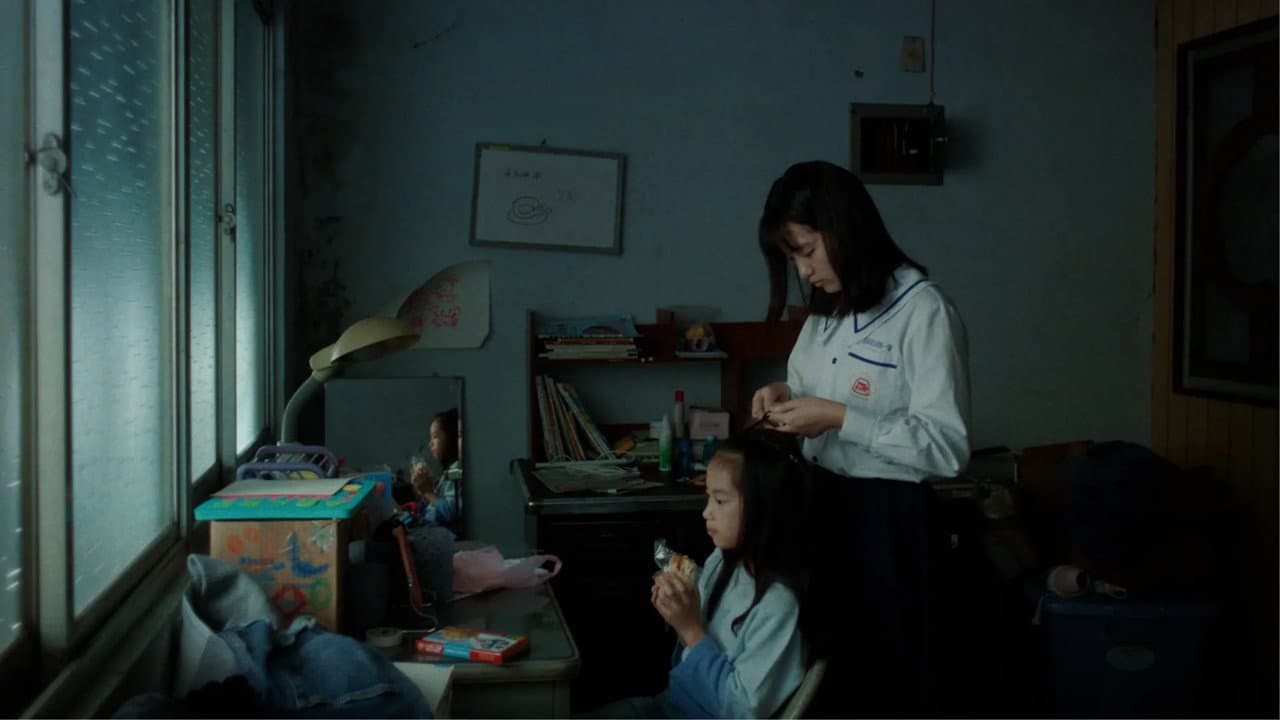
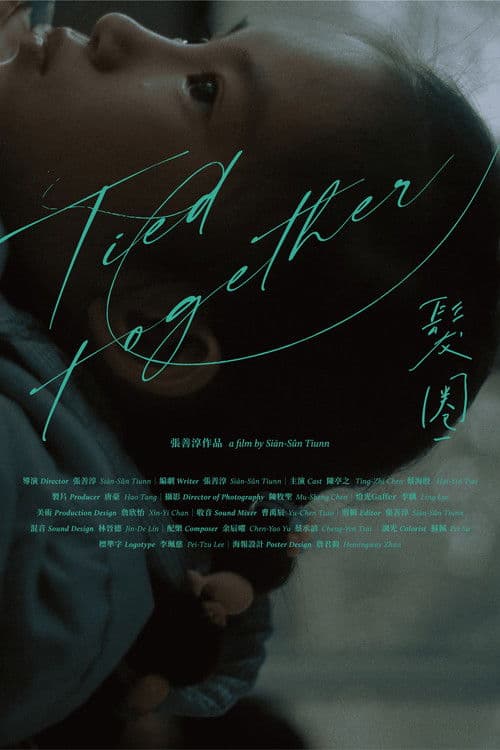
Tied Together (original title: 髮圈) is a Chinese-language film following two half-sisters navigating life without their parents. It is scheduled for release on April 26, 2026.
Key features
- ·Chinese-language drama film
- ·Releases April 26, 2026
- ·Focuses on two half-sisters
- ·Story centers on family and childhood
FAQ
When does Tied Together release?
Tied Together is scheduled for release on April 26, 2026.
What is the original title of Tied Together?
The original Chinese title is 髮圈.
What is Tied Together about?
The film follows nine-year-old Yu and fifteen-year-old Guei, half-sisters living without their parents, whose close but complicated bond leads to an incident rooted in Yu's feelings about her biological mother.
What language is Tied Together in?
The film is in Chinese.
About this release
Tied Together (Chinese title: 髮圈) is scheduled for release on April 26, 2026. The film is a Chinese-language production, and based on the metadata linking it to a Wikipedia entry titled Together (2025 film), it appears to have originated — or been completed — prior to its 2026 release date, suggesting a gap between production and wider availability that is not uncommon for smaller foreign-language films navigating festival circuits or international distribution windows.
The story centers on two half-sisters: Yu, who is nine years old, and Guei, who is fifteen. They are living together without their parents present. Guei has assumed a caretaking role that far exceeds what might normally be expected of a teenager — she functions, in practice, as a mother figure to her younger sister. That dynamic, a child raising a child in the absence of adults, carries a particular weight in the tradition of Asian family dramas, where the pressures of filial responsibility and improvised domesticity have long served as rich dramatic terrain. Films in this vein often use the confined world of siblings to examine how love, when it must do the work of parenting, can distort as much as it protects.
The central tension described in the film's synopsis arrives through the social world outside the household. Yu's classmates tease her — presumably about the unusual domestic arrangement, about being cared for by an older sister rather than a parent. Children are perceptive about difference and often cruel about it, and that cruelty becomes a kind of mirror in which Yu is forced to see her own situation in a new, less comfortable light. The title Tied Together and its Chinese counterpart 髮圈 — which translates to "hair tie" or "hair band" — suggest an intimacy that is also a constraint: something that holds things in place, that binds, that can pull.
The emotional pivot the synopsis describes is precise and psychologically interesting. Yu, in an effort to protect the image of her real mother — to preserve whatever idealized or necessary fiction she holds about where her mother stands in her life — accidentally hurts Guei. The exact nature of that hurt is not specified, which leaves the film's specific mechanics open. But the structure of the moment is clear: the younger sister, attempting to defend something internal and perhaps fragile, causes harm to the person who has given her the most. That the harm is accidental rather than willful is significant. It places the story in the territory of inadvertent consequence rather than deliberate betrayal, which tends to produce a more morally ambiguous and emotionally resonant kind of drama.
What the available information does not reveal is who directed the film or who wrote it, which makes it difficult to situate Tied Together within any particular filmmaker's body of work or thematic preoccupations. The absence of credited creators in the provided data is notable, particularly for a film with this level of narrative specificity in its premise. It is also unclear how the film was produced — whether it emerged from a major studio context, an independent production, or a television film framework, though the genre metadata does classify it under "tv-movie." That classification may explain some of the limited pre-release visibility, since television films, even those with theatrical ambitions or festival profiles, often receive less advance critical attention than their theatrically distributed counterparts.
The Chinese-language designation places the film within a broad linguistic category that encompasses productions from mainland China, Taiwan, Hong Kong, and diaspora contexts. The original story — two half-sisters, no parents, a blurred line between sisterhood and motherhood — does not obviously anchor itself to a specific regional identity based on the synopsis alone. The class dynamics involved, the social pressures of a school environment, and the emotional mechanics of a child protecting a parent's memory are concerns that travel across those regional distinctions, even as the cultural texture of each would shape the film quite differently.
What remains open is perhaps the more interesting set of questions. How does the film treat Guei's perspective? The synopsis is framed almost entirely around Yu's experience — her teasing, her emotional defense, her accidental act of harm — but Guei, the fifteen-year-old who has subordinated her own adolescence to raise her sister, is a figure with a potentially richer and more occluded interior life. A teenager who mothers a child is not simply performing generosity; she is also living without the ordinary freedoms and uncertainties of her own developmental stage. Whether Tied Together gives that experience its due weight, or whether it remains predominantly a story about the younger child's awakening to the complexity of her own situation, is a question the available material does not answer.
The film's title metaphor is also worth sitting with. A hair tie is a small, everyday object — functional, domestic, the kind of thing that passes between sisters without ceremony. It holds things together but can be stretched, tangled, or snapped. Whether the film uses that image with restraint or elaborates it into something more schematic will likely determine how the emotional logic of the story lands.
Audiences likely to seek out Tied Together are those drawn to intimate, small-scale family dramas in the tradition of Chinese-language cinema that explores childhood, parental absence, and the emotional labor shouldered by children who must become adults before their time. The film's modest pre-release profile and its television-film classification suggest it will find its audience gradually rather than through any concentrated theatrical moment — likely through streaming platforms or festival programming where patient, dialogue-driven dramas about family bonds tend to find the viewers most suited to them.
Comments
Sign in to join the conversation.
Loading…