Details
- Language
- English
- Studio
- Buhler Productions
Popularity · Search interest now
Low
0.0
Based on TMDb activity
Incoming Editorial TeamVerified
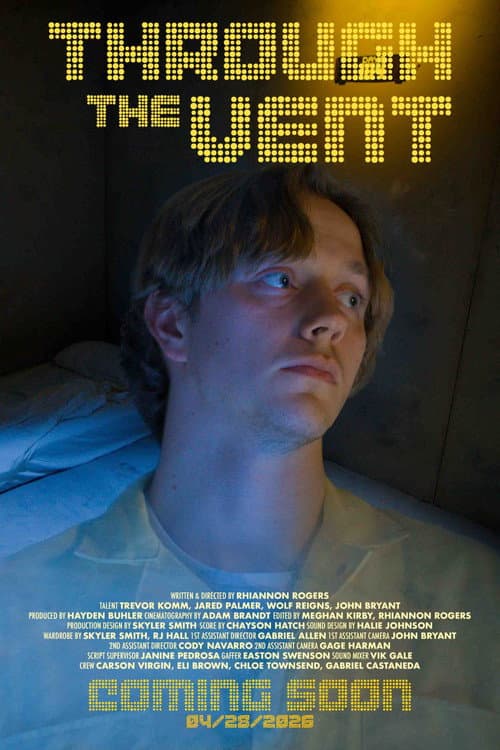
Through the Vent is an upcoming film set in a corporate prison where indebted workers perform forced labor. It releases on April 28, 2026.
Key features
- ·Dystopian corporate prison setting
- ·Forced-labor debt repayment premise
- ·English-language film
- ·Theatrical release April 28, 2026
FAQ
When does Through the Vent release?
Through the Vent is scheduled to release on April 28, 2026.
What is Through the Vent about?
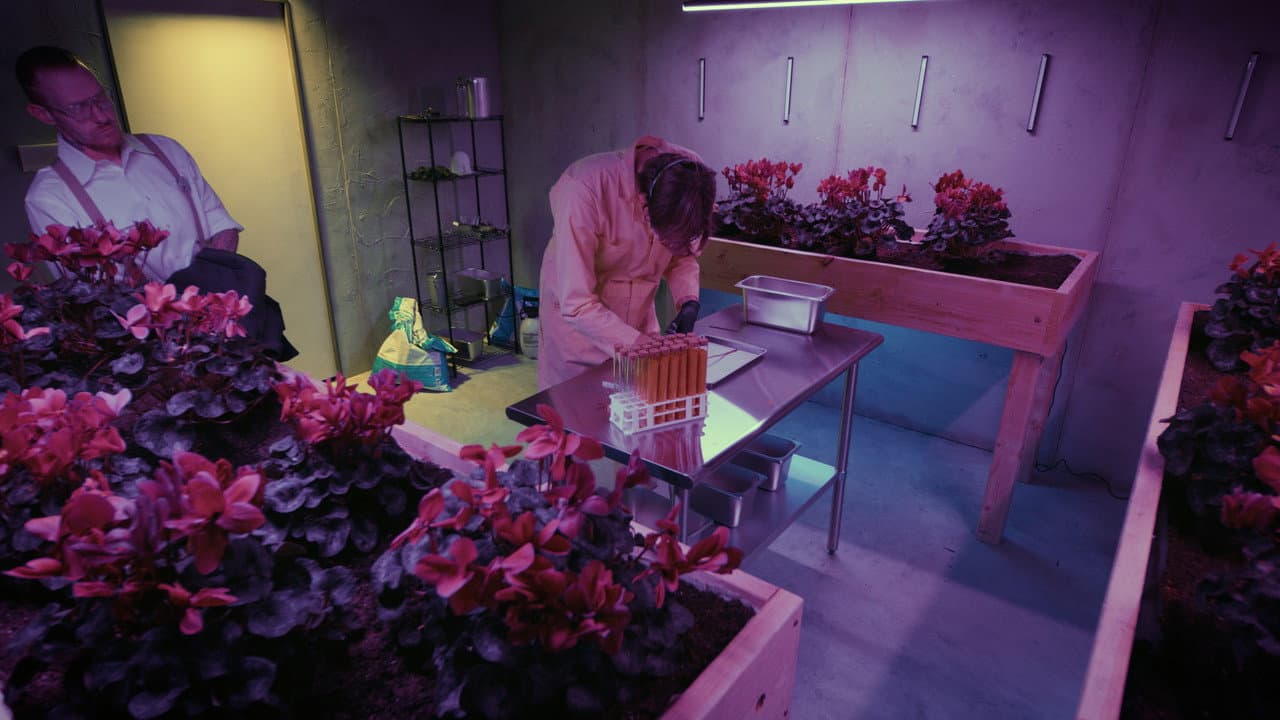
The film is set in a corporate prison where indebted workers perform forced labor. It follows a young pollen worker nearing the end of his sentence whose plans are complicated when a dying cellmate offers him a path to redemption and escape.
About this release
There is something almost quaint about the corporate dystopia as a science-fiction premise — workers ground down by institutional debt, their labor extracted in exchange for a freedom that keeps receding just over the horizon. And yet the genre keeps finding new pressure points to press. Through The Vent, a science-fiction drama produced by Buhler Productions, arrives on April 28, 2026, and its premise suggests the subgenre still has oxygen left in it.
The setup is compact and classical in its construction: inside what the film describes as a corporate prison, workers are required to repay debts through forced labor. The protagonist is a young pollen worker — an occupation that implies a world in which the biological systems humans once took for granted have been industrialized, parceled out, and placed behind a paywall of some kind. He is nearing the end of his term, close enough to freedom that caution would seem like the obvious strategy. Then a dying cellmate arrives and offers him something — described as a path toward both redemption and escape — that makes caution suddenly feel like cowardice, or at least insufficient.
That tension between self-preservation and moral obligation is among the oldest in dramatic storytelling, but the science-fiction frame allows it to be examined under conditions that strip away the comfortable ambiguities of ordinary social life. In a corporate prison, the rules are written by the entity that also profits from compliance with those rules. The question of whether escape is justified, or even possible, carries a different moral weight than it would in a story set in a conventional correctional institution. The "pollen worker" detail gestures at a world where ecological collapse or transformation has reorganized labor entirely, though how far the film develops that backdrop remains to be seen.
Buhler Productions is the studio behind the project, and the film is listed under the working Wikipedia title Turbulence (2025 film), suggesting the production was underway or completed before the release was scheduled for 2026. The discrepancy between a 2025 production title and a 2026 release date is not unusual — films frequently complete principal photography well in advance of their theatrical or platform windows — but it does indicate that whatever the film's current form, it has been gestating for some time before audiences will encounter it.
The original language is English, and the genre classification is science-fiction and drama, which places it in a tradition of films that use speculative settings primarily as emotional and philosophical amplifiers rather than as spectacle. Think less of the effects-heavy end of science-fiction filmmaking and more of the chamber-piece tradition: enclosed spaces, small casts, moral pressure applied slowly until something gives. The cellular, almost architectural logic of the premise — a vent, a prison, a worker moving through confined corridors toward some exit — reinforces that reading. The title itself, Through The Vent, suggests passage, but passage of a physical and possibly metaphorical kind: a way out that is narrow, hidden, and probably not sanctioned by the institution that built the walls.
What the available information does not clarify is the scale of that institution, the specific nature of the debt system that powers it, or the identity of the corporate entity doing the imprisoning. Whether the world of the film is recognizably near-future or more abstractly speculative is also unclear. The pollen worker designation hints at environmental specificity — a world where pollination has become a human occupation, most likely because the insects that once performed it are gone or scarce — but how much the film dwells on that world-building versus using it as backdrop for the central two-character story is an open question. The dying cellmate, described as offering "redemption," raises its own ambiguities: redemption for whom, and from what? The word carries enough freight on its own that it seems deliberate, suggesting the film intends some moral complexity around the relationship between the two men rather than a straightforward escape thriller.
There is also the matter of what the cellmate stands to gain. If he is dying, the promise of escape is useful to him only in a limited sense. Redemption, then, may be the more operative word — something he is seeking to achieve or bestow before he runs out of time. That framing, if the film commits to it, would push the drama toward questions of legacy, guilt, and what one person owes another in conditions designed to make solidarity impossible. Corporate prisons, after all, function precisely by isolating workers in their individual debt burdens. A dying man offering connection is, in that context, a form of institutional disruption even before anyone climbs through any ventilation shaft.
With no vote counts or critical aggregation yet attached to the title, there is no external consensus to reference. The film enters the calendar year in relative quiet — a production from a studio without a high public profile, scheduled for late April 2026, with a premise that rewards careful attention rather than promising immediate spectacle.
Those likely to seek it out first are viewers drawn to science-fiction that operates at the human scale: stories in which the speculative infrastructure exists to make a small number of characters feel the pressure of large, indifferent systems. Fans of work in that vein — intimate, morally serious, set in worlds that feel adjacent to uncomfortable contemporary realities around labor and debt — will find the premise of Through The Vent at least worth tracking as more information emerges.
Comments
Sign in to join the conversation.
Loading…