Details
- Language
- English
- Studio
- MUBI
- TMDb Rating
- 6.1 (378 votes)
- Directed by
- Jane Schoenbrun
- Written by
- Jane Schoenbrun
Rating · Quality score from voters
TMDb
6.1/10
IMDb
7.1/10
Rotten Tomatoes
93%
Metacritic
89/100
Popularity · Search interest now
Rising
22.5
Based on TMDb activity
Starring

Hannah Einbinder
Kris

Gillian Anderson
Billy

Amanda Fix
Young Billy

Arthur Conti
Alex

Eva Victor
DJ Ella Giastic

Zach Cherry
Will

Sarah Sherman
Kris' Agent

Patrick Fischler
Rudolph

Dylan Baker
Jeffrey

Jasmin Savoy Brown
Mari

Quintessa Swindell
Julie

Kevin McDonald
Anthony / County Sheriff
Jack Haven
Little Death

Aren Buchholz
Thor
F
Florence Barrett
Flo
Where to watch
Links may earn Incoming a commission at no extra cost to you.
Incoming Editorial TeamVerified
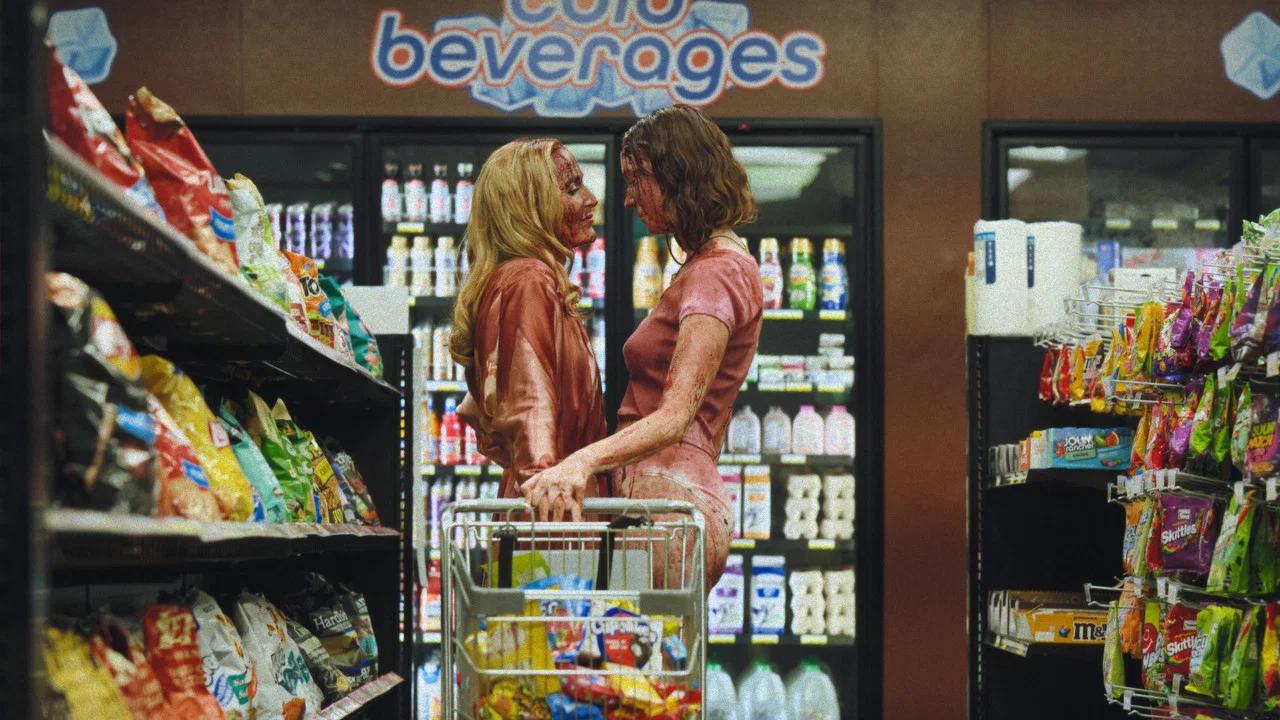
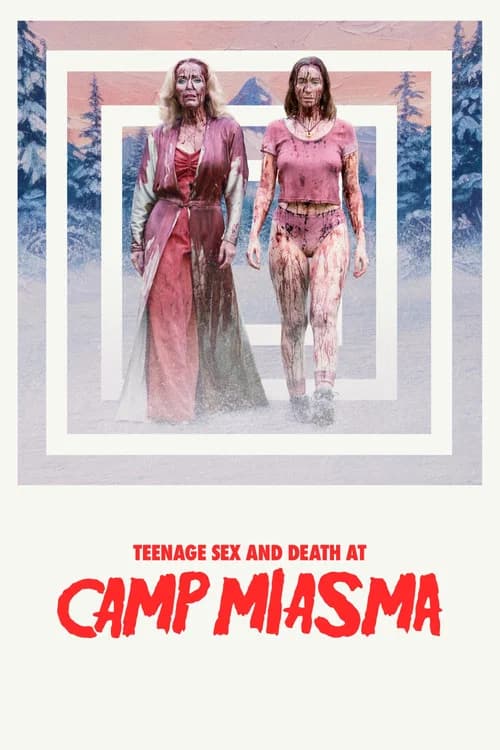
Teenage Sex and Death at Camp Miasma is a horror-comedy from MUBI, releasing theatrically and on the platform on August 6, 2026. The film follows a young director tasked with reviving a flagging slasher franchise who becomes entangled with the original film's reclusive star.
Trailer
Gallery (21)
Key features
- ·Horror-comedy genre
- ·MUBI production and release
- ·Slasher franchise revival premise
- ·Reclusive actress storyline
- ·Theatrical and streaming via MUBI
FAQ
When and where does Teenage Sex and Death at Camp Miasma release?
The film releases on August 6, 2026. It is a MUBI production, so it is expected to be available through MUBI's platform, potentially alongside a theatrical release in select markets as is typical for MUBI titles.
Where can I watch Teenage Sex and Death at Camp Miasma online?
The film is produced and distributed by MUBI, making MUBI the primary streaming destination. Availability may vary by region depending on MUBI's distribution agreements.
Is Teenage Sex and Death at Camp Miasma part of a franchise?
The film is set within the fictional Camp Miasma slasher franchise, which exists as part of the story's premise rather than as a real pre-existing series. The plot follows a director attempting to resurrect that in-universe franchise after years of poorly received sequels.
What genre is Teenage Sex and Death at Camp Miasma?
The film is classified as horror and comedy. Its premise — a meta engagement with slasher franchise filmmaking, a reclusive actress, and a blood-soaked spiral into desire and delirium — suggests the kind of genre-aware tone common to horror-comedies that treat their source conventions as subject matter.
About this release
There is something almost self-aware about the title alone. Teenage Sex and Death at Camp Miasma, scheduled for release on August 6, 2026, through MUBI and Plan B Entertainment, announces its intentions with the bluntness of a grindhouse marquee while quietly suggesting that it knows exactly what it is doing. The film is a horror-comedy-romance — an unusual trinity of genres that rarely coexist with any particular grace — and its premise layers meta-fictional intrigue on top of what might otherwise read as a straightforward franchise resurrection.
The Camp Miasma slasher franchise, by the description available, had already entered the long, unglamorous decline that claims most horror properties of its type: years of slapdash sequels, a fandom that had ceded to apathy. The original film apparently produced at least one notable star, now reclusive, whose circumstances have become something of a mystery. None of this is unusual for the genre — the history of American slasher cinema is littered with beloved originals followed by diminishing returns, and the stories of actresses who defined those films only to step away from Hollywood form their own minor literary tradition. What is notable here is that the plot of this new installment makes that exact dynamic its subject matter. A young director, enthusiastic about reviving the franchise, travels to meet the original film's star. What follows is described as a blood-soaked world of desire, fear, and delirium. The film is, in other words, about the very process of its own making — or at least about the psychology animating that process.
The involvement of MUBI is worth noting. The streaming and theatrical distributor has established a fairly consistent identity around arthouse and formally adventurous cinema, and its name attached to a slasher property — even a self-conscious one — represents a particular kind of positioning. Plan B Entertainment, the co-producing studio, has a longer and more varied track record, but MUBI's imprint tends to signal that a film expects to be taken seriously on aesthetic terms, or at least to be considered as something more than a genre exercise. Whether a movie that announces teenage sex and death in its title can fully satisfy the expectations of both a MUBI subscriber and a Camp Miasma devotee is an open question — and probably the most interesting tension the project carries into its release.
The director at the center of all this is described as young and enthusiastic, which tells us something about the tone the production may be aiming for without revealing much about the specific filmmaking sensibility on offer. The choice to hand a franchise to a newcomer or a less-established voice is familiar enough — horror has long served as an entry point for directors looking to demonstrate what they can do with limited resources and genre constraints — but the fact that the director is also a character within the narrative is unusual. The film appears to be reflexive not just thematically but structurally, folding the act of creative resurrection into the story being told. That kind of mise en abyme can be exhilarating or exhausting depending on how it is handled, and nothing in the available information resolves that uncertainty.
What the film's genre designations do clarify is that horror alone is insufficient as a frame. The comedy and romance labels sit alongside horror in the metadata, and the description's language — desire, delirium, the two women falling together into something dangerous — suggests that the relationship between the young director and the reclusive actress is itself a central concern, not merely a plot mechanism. The blood-soaked setting appears to be the context in which an intimate, complicated bond develops, which places the film somewhere in the vicinity of horror films that have used genre dread as a vehicle for exploring female interiority and same-sex desire. That is a tradition with its own evolving canon, distinct from the more straightforward franchise-revival picture the title might at first imply.
The August release date is interesting in its own right. Summer is historically hospitable to horror, particularly horror with a self-aware streak, and a mid-summer drop gives the film room to occupy a cultural conversation that tends to be thirsty for something slightly strange. MUBI's distribution model generally involves both theatrical runs and streaming availability, which means the film is likely to reach audiences who would never have sought out a Camp Miasma sequel alongside those who follow the franchise specifically.
Several things remain genuinely opaque. The identity of the reclusive actress — what exactly makes her shrouded in mystery, what her relationship to the original film's history actually involves — is entirely unaddressed in what has been made public. Likewise, what the film looks like, who directed it, and who is performing in it are all absent from the available information, which is notable for a film releasing in August 2026. The production appears to be keeping its cast and crew either unannounced or closely held, which may itself be a deliberate strategy for a story about concealment and revelation.
The audience most likely to seek this out is bifurcated in an interesting way: MUBI's subscriber base, predisposed to horror that functions as something else — as character study, as formal provocation, as genre critique — and a slasher fandom curious whether the Camp Miasma name is being used cynically or with genuine affection. Both groups will arrive with different questions, and the film's success may depend on whether it can make those questions feel, for ninety minutes or so, like the same question.
Our coverage
- August 2026 Movie Guide: A Shelved Tax Write-Off, an Amazon Tearjerker, and 4 Hidden Gems
From Coyote vs. Acme's miraculous un-canceling to Amazon's devastating tearjerker and Blumhouse horror, these are the 6 films worth your ticket money in August 2026.
Comments
Sign in to join the conversation.
Loading…