
Details
- Language
- English
- Studio
- My Accomplice
Popularity · Search interest now
Low
0.6
Based on TMDb activity
Incoming Editorial TeamVerified
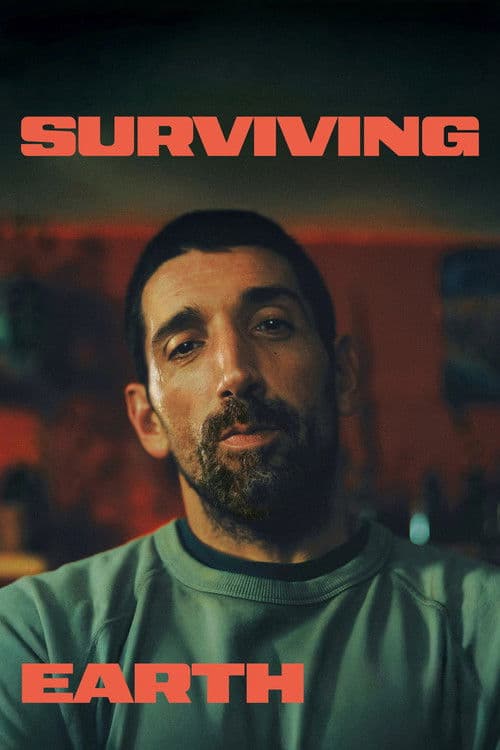
Years after fleeing military conscription during the Yugoslav conflict, Vlad is building a community in Bristol, working as a drugs counsellor and pursuing success with his riotous Balkan band. But integration isn’t as easy as he hoped, and the trauma of his past life is difficult to repress. Can he overcome his demons and create a new life for those he loves the most?
About this release
Surviving Earth, a drama produced by My Accomplice, Sona Films, and Film4 Productions, is scheduled for release on Friday, April 24, 2026. The film follows Vlad, a man who fled military conscription during the Yugoslav conflict and has since built a life in Bristol — working as a drugs counsellor and performing with what the film's materials describe as a riotous Balkan band. The central tension, as the production frames it, is whether Vlad can contain the psychological weight of his past long enough to secure a stable future for the people around him.
Film4 Productions, the Channel 4–backed financing arm responsible for a long line of British independent features, lends the project a particular institutional context. Film4 has historically supported character-driven, socially conscious British drama, and Surviving Earth fits recognizably within that tradition — a film concerned with displacement, assimilation, and the psychological costs of survival. The presence of My Accomplice and Sona Films alongside Film4 suggests a co-production structure of the kind that has become standard for mid-budget British independents seeking to spread financial risk while retaining creative control, though the specific terms of that arrangement are not known from available information.
The film's genre classification spans drama and music, a pairing that signals something more than background atmosphere. The Balkan band Vlad leads is not incidental color — it appears to function as both a communal anchor and an expressive outlet within the story. Balkan music as a narrative device carries its own freight: rooted in the folk traditions of a region defined by turbulent 20th-century history, it carries associations of resilience, communal identity, and cultural persistence across borders. Whether the film uses that resonance deliberately or treats the band primarily as a social setting is one of the more interesting open questions the available material doesn't resolve.
Bristol as a setting is quietly specific. The city has a long history as a destination for immigrant and refugee communities, and its music scene — eclectic, politically engaged, with deep roots in sound system culture and cross-cultural fusion — gives the Balkan band subplot a plausible social geography. A drugs counsellor working in Bristol also places Vlad at a particular intersection of public health and community infrastructure, suggesting the film may be interested in the institutional structures through which newcomers try to establish legitimacy and belonging, not just the internal psychological experience of immigration.
The Yugoslav conflict backdrop positions this story in a specific historical moment — the wars of the 1990s that accompanied the dissolution of Yugoslavia — without, on the basis of available information, specifying which particular phase or theater of that conflict shaped Vlad's experience. The Yugoslav wars were plural and distinct: the conflicts in Slovenia, Croatia, Bosnia-Herzegovina, and Kosovo each had different characters, different actors, and different international profiles. The film's materials mention only military conscription and flight, which locates Vlad as someone who refused participation rather than someone displaced by direct violence — a moral and legal distinction that carries real weight. Whether the film dwells on that distinction, or treats it as settled background, isn't clear from what's been made public.
The question of time elapsed is also left open in an interesting way. The synopsis describes Vlad as "years after" his departure, which is deliberately vague. The Yugoslav conflicts concluded, in their various phases, between 1991 and 1999. A story set in 2026 would place the events of flight anywhere from roughly 27 to 35 years in the past, which is a different psychological register than the immediate aftermath of trauma — it's the territory of suppressed memory, of a life apparently reconstructed but not fully integrated. The drugs counsellor role is resonant here: Vlad's professional expertise lies in helping others navigate dependency and recovery, a role that often attracts people with their own unresolved histories and that the film seems likely to use as a structural irony.
What remains genuinely unknown is the film's tone. The description of the Balkan band as "riotous" suggests energy and perhaps comedy, or at least scenes of communal warmth that counterbalance the psychological weight of Vlad's internal life. Balkan brass and folk ensembles have a global popular profile partly because of their capacity for exuberant performance, and a film that incorporates live music performance sequences operates differently from one that treats music as purely diegetic background. Whether Surviving Earth plays those sequences for joy, for pathos, or for something more complicated — and whether the music sequences are formally ambitious or conventionally handled — the available material doesn't say.
The English-language designation in the metadata is worth noting, since a film about a Yugoslav emigrant in Bristol might reasonably incorporate Serbian, Croatian, or Bosnian dialogue. Whether the film is primarily English-language by narrative choice, by production convenience, or by some combination is not specified.
Surviving Earth seems likely to draw viewers with an interest in the specific texture of British immigrant experience — not the high-drama version built around crisis and bureaucratic hostility, but the slower, more ambiguous version in which someone has apparently succeeded by external measures and is still contending with what that cost. Audiences for Film4's back catalog of socially observant drama will find the institutional provenance familiar, and anyone drawn to the intersection of music, diaspora identity, and psychological realism has reason to pay attention to how the film handles its more distinctive elements.
Comments
Sign in to join the conversation.
Loading…