Details
- Language
- English
- Studio
- World of Wonder
- TMDb Rating
- 5.3 (42 votes)
- Directed by
- Adam Shankman
- Written by
- Connor Wright, Christina Friel
- Theme
- found familyunderdog
Rating · Quality score from voters
TMDb
5.3/10
Rotten Tomatoes
85%
Metacritic
62/100
Popularity · Search interest now
Rising
27.5
Based on TMDb activity
Starring


Where to watch
Links may earn Incoming a commission at no extra cost to you.
Incoming Editorial TeamVerified
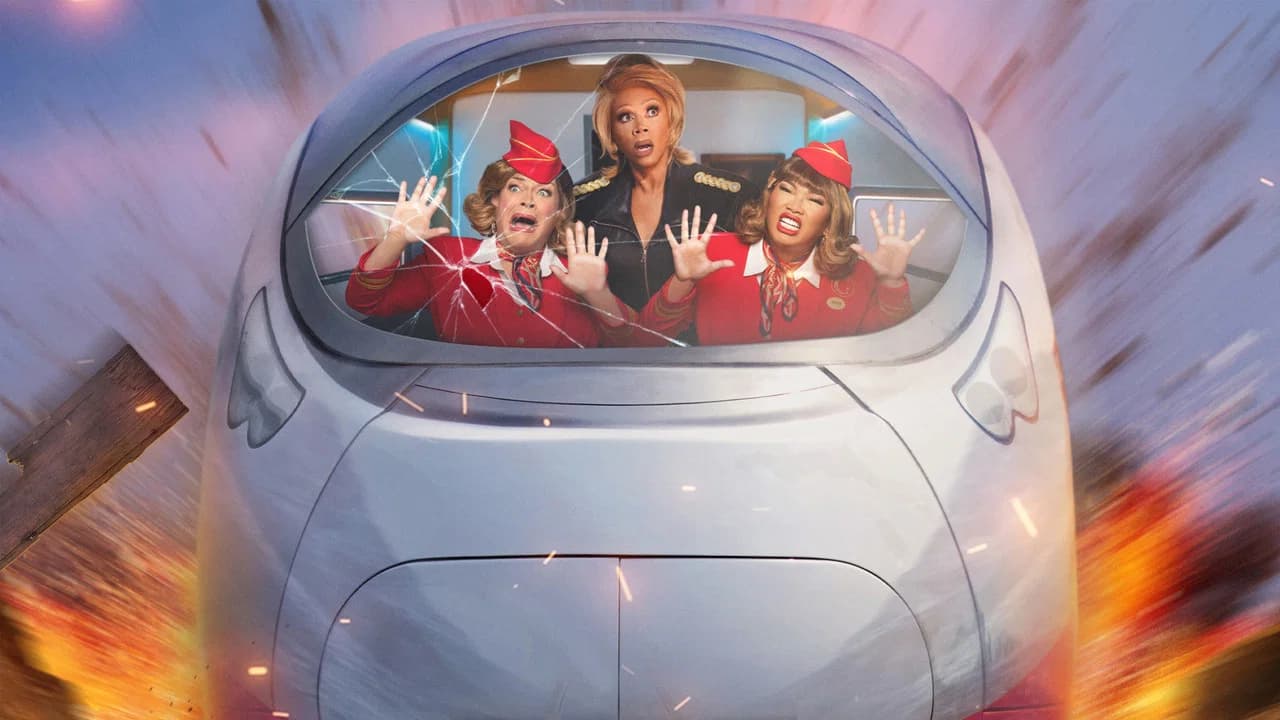
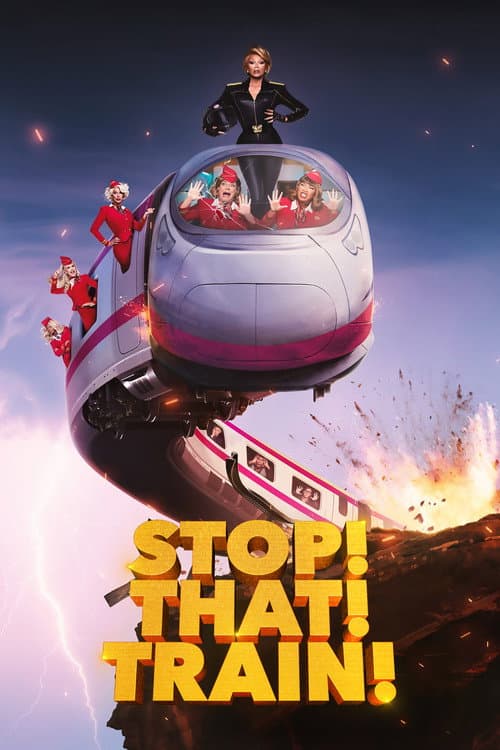
Stop! That! Train! is an upcoming comedy film set for release on June 12, 2026. It follows two train stewardesses who find themselves aboard a high-speed train threatened by a catastrophic storm on a collision course with Los Angeles.
Trailer
Gallery (20)
Key features
- ·Comedy film releasing June 2026
- ·High-speed train disaster premise
- ·Ensemble cast of train staff and officials
- ·Set aboard the fictional Glamazonian Express
FAQ
When does Stop! That! Train! release?
Stop! That! Train! is scheduled for release on June 12, 2026.
What is Stop! That! Train! about?
The film follows two train stewardesses, Tess and DeeDee, who must prevent a high-speed train from crashing into Los Angeles after a severe storm system threatens the Glamazonian Express.
What genre is Stop! That! Train!?
Stop! That! Train! is a comedy film with a disaster-plot premise.
About this release
On June 12, 2026, the action-comedy Stop! That! Train! arrives from producers World of Wonder and Unapologetic Projects, two companies whose prior work has skewed toward queer-inflected entertainment and unabashedly campy sensibilities. The film follows best friends Tess and DeeDee, train stewardesses who manage to escape their deadening shifts aboard the unglamorous Stank Rail for what they hope will be a more glittering posting on the Glamazonian Express. What they get instead is a national crisis: a catastrophic weather event called the Stormaganza threatens to send the high-speed train hurtling directly into Celebration, Florida, and the two women — stationed in coach — must somehow coordinate a rescue effort with the snobby first-class attendants, a co-conductor described as hot but not particularly sharp, and a sitting President of the United States named Judy Gagwell.
That premise — two working-class women dragged into a disaster scenario by forces beyond their control, while class friction provides the comic engine — fits neatly into a tradition of disaster-comedy hybrids that stretches back decades. The genre has always found its footing in the collision between the absurd scale of the catastrophe and the very ordinary people left to manage it. Where Stop! That! Train! immediately distinguishes itself, at least on paper, is in the specificity of its world-building. Stank Rail and the Glamazonian Express are not generic conveyances — the names alone signal a film that is deliberately heightened, one that has decided its internal logic will be operatic rather than grounded. Adding a President named Judy Gagwell to the passenger manifest suggests the film is less interested in plausibility than in escalation.
World of Wonder, one of the two studios attached, has a long history of producing content with a sensibility that treats camp not as an accident but as a considered aesthetic choice. Unapologetic Projects signals something similar in its name alone. Together, they suggest a production environment in which the excesses of the premise — a weather event called a Stormaganza, a president who is apparently both sitting head of state and fellow train passenger — are not bugs being tolerated but features being cultivated. Whether that cultivation extends to the script's construction, its pacing, or its visual execution is not yet answerable from what's been released publicly.
The characters as described operate in fairly distinct registers. Tess and DeeDee function as audience surrogates — relatable, slightly put-upon, suddenly thrust into heroics. The first-class attendants represent a class antagonism that the disaster will presumably dissolve, at least partially, in the film's final act. The co-conductor's particular combination of physical appeal and limited cognition is a recurring type in ensemble comedies: the character who is useful in certain narrow circumstances and a liability in others. President Gagwell is the variable that's hardest to read from the available information. A sitting president on a commercial high-speed train during a Stormaganza is a premise with some internal logic — perhaps she's the reason the train matters, perhaps her presence is incidental to the central threat, perhaps she functions as a kind of deus ex machina who turns out to need rescuing herself. The film's marketing hasn't resolved this, which is either a deliberate choice to preserve a payoff or simply a consequence of early promotional materials focusing on the broader hook.
Celebration, Florida — the real-life planned community built adjacent to Walt Disney World — is a curious choice of target. It is a place with a particular reputation in American culture: a meticulously designed town that has accumulated an outsized symbolic weight about the nature of manufactured happiness, corporate urbanism, and the uncanny. Whether the film engages with any of that or simply needs a Florida destination with a name that plays well in trailers is an open question. The choice is specific enough to register as intentional.
The film is available to purchase or rent digitally through Amazon Video, Apple TV Store, Fandango At Home, and Plex at launch, with no streaming home listed in the initial release window. That distribution shape — transactional digital without a subscription platform — places the film in a position where it will need to generate enough word-of-mouth or niche-community enthusiasm to move units without the passive discovery that a streaming library provides. Films operating in this space tend to rely heavily on audience self-identification: people who see themselves in the premise or the sensibility make an active effort to seek it out.
That audience is likely to include viewers who follow World of Wonder's output closely, those with a general appetite for disaster-comedy as a form, and a demographic that responds to ensemble casts of women navigating institutional hierarchies — here refracted through the unusually specific lens of railroad hospitality. The Metacritic score of 62, drawn from a relatively early critical sample, suggests a modestly mixed reception rather than a consensus in either direction, which may mean the film's pleasures are particular enough that they register differently depending on the viewer's tolerance for sustained camp. At thirty-two votes on TMDB with an average of roughly 5.1, the audience response visible so far is early and thin enough to be inconclusive.
What's clear is that Stop! That! Train! is not trying to be a film for everyone. Its premise is too ornate, its nomenclature too deliberately ridiculous, its setting too pointed for that. It is a film that has made decisions and seems prepared to live with them — which, in a summer full of more hedged entertainments, is at least a legible artistic position.
Comments
Sign in to join the conversation.
Loading…