Details
- Language
- English
Popularity · Search interest now
Low
0.2
Based on TMDb activity
Hype score
leaderboard →79
/ 100↑ +8.9 in 24h
#51 globally#33 in movie
30-day trendWP 77 · YT 94
Silver Rush generates moderate film research interest.
Where to watch
Not currently available for streaming or purchase.
Links may earn Incoming a commission at no extra cost to you.
Incoming Editorial TeamVerified
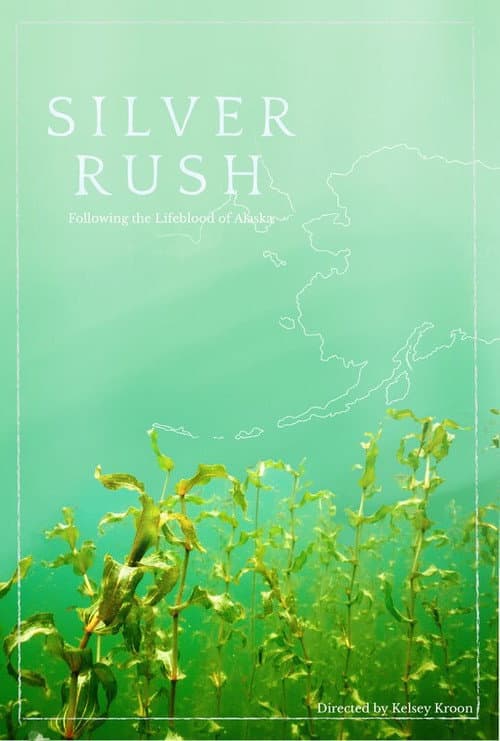
Silver Rush is a thrilling 12-minute documentary that follows the incredible journey of salmon along Alaska’s Kenai River. The film chronicles the salmon’s perilous migration from the river’s mouth, where they face dipnetters to the Russian River, where they fight their way up waterfalls. Along the way, they encounter predators such as eagles and bears, as they work to reach their spawning grounds. Highlighting their critical role as a keystone species, Silver Rush underscores the essential connection between the salmon, Alaska’s ecosystems, and its people, illustrating how this species’ survival is vital to the region's balance and prosperity.
About this release
Silver Rush, a documentary short running twelve minutes, is scheduled for release on Friday, April 24, 2026. The film follows silver salmon — coho — along Alaska's Kenai River, tracing their migration from the river's mouth upstream to the Russian River, where they navigate waterfalls to reach their spawning grounds.
The premise is compact and the runtime reflects it. Twelve minutes is closer to a long-form natural history segment than a feature documentary, which places Silver Rush in a tradition of focused wildlife films that treat a single species or ecosystem as a lens for something larger. The film's stated interest is not only in the salmon's physical journey but in the animal's role as a keystone species — one whose presence or absence restructures the ecosystem around it. That framing suggests the filmmakers are after more than spectacle, though the Kenai River corridor provides considerable spectacle on its own terms.
The journey the film documents is genuinely dramatic on a biological level. Salmon returning from the ocean must run a gauntlet of human activity before they encounter any wilderness at all. The Kenai River's dipnet fishery — in which Alaska residents are permitted to catch salmon by hand-held nets during specific windows — is among the most visually distinctive subsistence and personal-use fisheries in North America. That the film begins here, at the river's mouth, where human and fish interests converge in an almost medieval-looking practice, and then moves into the wilder reaches of the drainage, implies a deliberate narrative arc: from the managed and the contested toward the elemental. Bears and eagles appear along the route as predators, but within the film's ecological argument they are also downstream recipients of marine nutrients that the salmon carry inland from the ocean — a transfer of energy that enriches the riparian forest whether or not the salmon complete their run.
What the available description does not clarify is how the film handles the human dimension beyond the dipnetters. The Kenai Peninsula has a dense and complicated relationship with salmon, involving sport fishing, commercial fishing, Indigenous subsistence rights, and conservation management, all of which intersect with the same fish. The description gestures toward the connection between salmon and Alaska's people, but whether Silver Rush engages with that complexity or keeps its focus on the animal's physical passage remains an open question. A twelve-minute runtime would seem to argue for discipline and constraint — there is not room for much institutional or policy material — though filmmakers working at this length sometimes achieve compression that longer works cannot.
The waterfalls of the Russian River section offer an obvious visual climax. Salmon ascending falls are among the more reliably arresting images in wildlife filmmaking, and the Kenai drainage produces this in volume during the return migration. Whether the film uses this as a straightforward payoff or complicates it — salmon that complete the spawning run die, and their decomposing bodies are themselves a resource for the ecosystem — is not clear from what has been released. The keystone species framing, however, suggests the filmmakers are at least aware that the story does not end with successful spawning.
The original language is English, and the film appears to have been produced with a general audience in mind rather than a specialist one. No distributor or streaming platform has been identified in the available information, which is somewhat unusual for a release with a confirmed date, and may indicate a festival or educational release strategy rather than a conventional theatrical or streaming rollout.
People likely to seek out Silver Rush include natural history enthusiasts, educators looking for short-form material on Pacific salmon ecology, and viewers with a specific interest in Alaska's landscapes and fisheries. At twelve minutes, it asks very little in the way of commitment, which may also make it useful for classroom contexts or as supporting material alongside longer programming. Whether it circulates widely will probably depend on how it reaches audiences — a film this short, on this subject, with no marquee names attached, tends to find its viewers through institutional channels or word of mouth among people already invested in the topic.
Comments
Sign in to join the conversation.
Loading…