Details
- Language
- English
- Studio
- Filmbarr
- TMDb Rating
- 6.0 (1 votes)
- Directed by
- Sandra Sciberras
- Written by
- Andrew O'Keefe
- For
- family
Rating · Quality score from voters
Rotten Tomatoes
64%
Popularity · Search interest now
Rising
20.8
Based on TMDb activity
Starring








Where to watch
Links may earn Incoming a commission at no extra cost to you.
Incoming Editorial TeamVerified
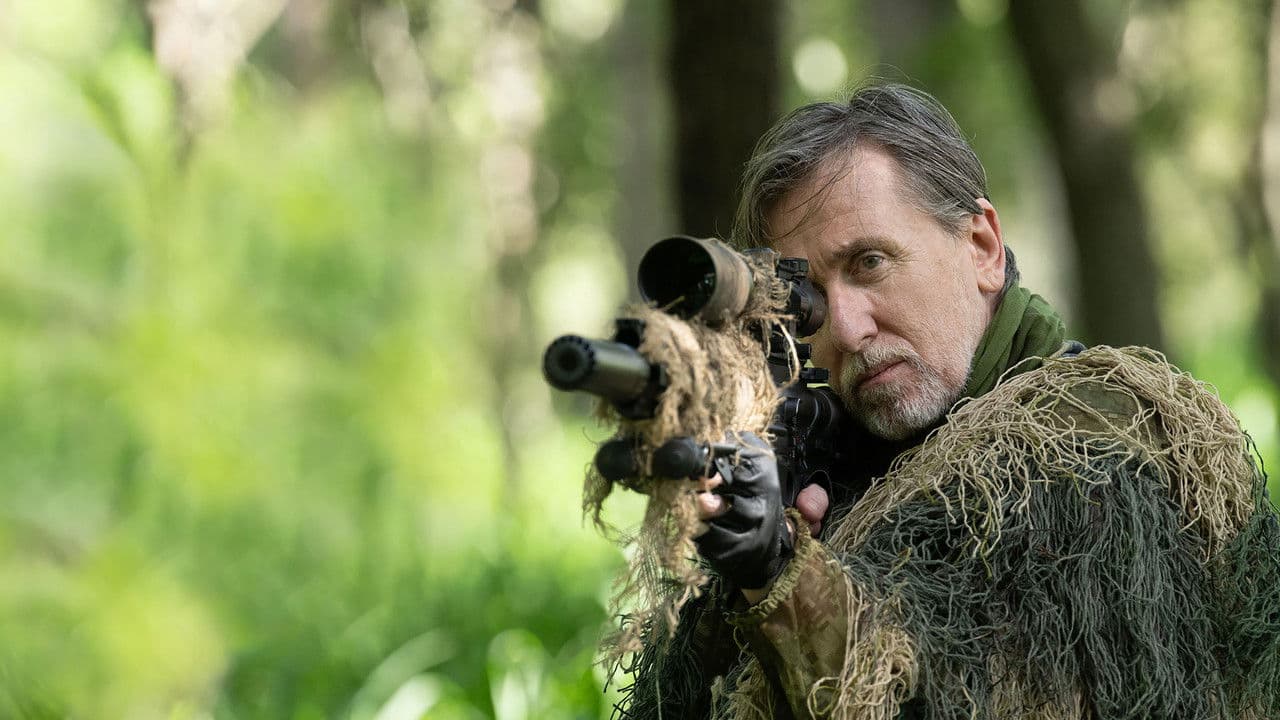
When a former elite sniper is hunted down by the ruthless warlord who once held her captive, she must fight to the death to protect the daughter she has raised in hiding, on a remote Australian farm.
Trailer
Gallery (6)
About this release
Seven Snipers is an English-language action thriller set for release on April 30, 2026, produced by Filmbarr, Monster Pictures Studios, and Head Gear Films. The film centers on a former elite sniper who, after years of living under the radar on a remote Australian farm, finds herself hunted by the warlord who once held her captive. At stake is not only her own survival but the safety of the daughter she has quietly raised in that isolation. What begins, by synopsis, as a pursuit narrative quickly announces itself as something more layered — a story about the tension between a violent past and a deliberately constructed domestic life, and about what happens when those two worlds become impossible to keep separate.
The action-thriller genre has long been comfortable with the premise of the specialist dragged back into danger. From the stoic gunman forced out of retirement to the operative whose cover is blown, the template is well-worn. What Seven Snipers does with that template, at least on paper, is shift the emotional axis. The protagonist is not merely a professional trying to escape a criminal organization or a government that burned her. She is a mother. The child she is protecting is not incidental to the plot — she is, by the description, the specific thing worth fighting to the death for. That shift in stakes tends to change the texture of an action film considerably, placing less emphasis on technical competence as an end in itself and more on what competence is being marshaled to protect.
The Australian setting is worth noting on its own terms. Remote Australian farmland is not a typical backdrop for this kind of film. The genre more commonly plants itself in urban environments — European cities, anonymous warehouses, crowded airports — or in generic wilderness that could be anywhere. A specific Australian rural landscape implies a kind of geographic isolation that functions both practically and thematically: it explains how a person could disappear for years, and it frames the eventual violence as an intrusion into a hard-won stillness. Whether the film fully exploits that specificity remains to be seen, but the choice is a deliberate one, and it separates Seven Snipers from a great many of its genre contemporaries on the level of setting alone.
The production consortium behind the film brings together three companies — Filmbarr, Monster Pictures Studios, and Head Gear Films — whose collaboration suggests a mid-budget international co-production arrangement rather than a major studio release. Head Gear Films in particular has a track record of financing English-language genre pictures that circulate in international markets. That context matters for understanding what kind of film this is likely to be in terms of scale and ambition. It is probably not a massive set-piece spectacle, and that is not necessarily a limitation. Tighter budgets in action cinema often encourage a more grounded, character-driven approach to tension, relying on performance and geography rather than volume.
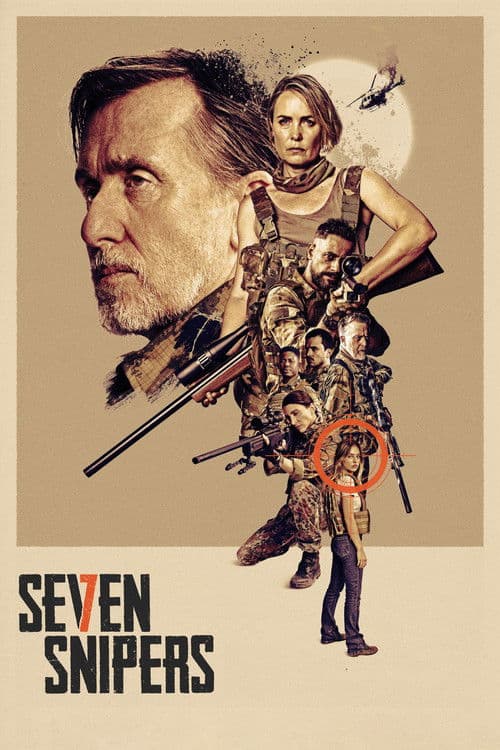
The title itself, Seven Snipers, is one of the more curious details available. The synopsis speaks of a single protagonist — a former sniper, one woman, one farm, one daughter — and yet the title is plural and specifically numerical. The "seven" implies either a roster of antagonists, a tactical unit sent after her, or some other configuration that the synopsis does not make explicit. This gap between title and description is not alarming, but it is genuinely interesting. It suggests that what arrives on screen may be more ensemble or ensemble-adjacent than the core premise implies. A protagonist facing a coordinated group of seven rather than a single pursuing warlord would substantially change the mechanics of the film's third act, and likely its middle sections as well. The warlord figure described in the synopsis may be at the center of that group rather than operating alone.
There are other open questions that the available information does not address. The identity of the filmmakers — director, writer, lead cast — is not part of the current record, which makes it difficult to situate Seven Snipers within any particular creative lineage or to anticipate the stylistic choices it might make. The performance at the center of this kind of film is usually its critical variable. A story about a woman protecting her child from a former captor lives or dies on whether the audience can feel both her tactical authority and her fear. Without knowing who is occupying that role, the film's potential remains an open question rather than an answerable one.
The warlord himself, described as "ruthless" — the only characterization the synopsis offers — is sketched very lightly. Whether he is given dimension beyond that descriptor, or whether Seven Snipers is primarily interested in the protagonist's interiority and treats him as a force rather than a character, is something the film will have to answer for itself.
Audiences drawn to grounded action thrillers — films less interested in franchise mythology than in a contained, high-stakes situation with a clear emotional through-line — are the most obvious constituency for Seven Snipers. Those with particular interest in action cinema that foregrounds a female protagonist operating outside typical genre conventions will likely find the premise worth tracking. The Australian setting adds a further degree of distinction for viewers attuned to the ways geography shapes genre.
Comments
Sign in to join the conversation.
Loading…