Details
- Language
- English
- Studio
- Steamboat Pictures
Popularity · Search interest now
Low
0.0
Based on TMDb activity
Where to watch
Not currently available for streaming or purchase.
Links may earn Incoming a commission at no extra cost to you.
Incoming Editorial TeamVerified
Three stories of failure over the course of a single night.
Gallery (3)
About this release
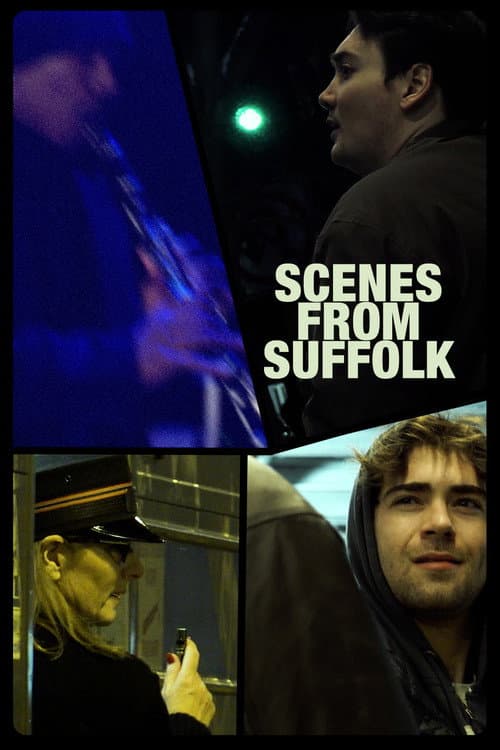
Scenes From a Marriage this is not — though the title's echo of Bergman's 1973 miniseries may be intentional, may be coincidental, and the film itself will settle that question when it arrives. Scenes From Suffolk, a drama-comedy produced by Steamboat Pictures and Raise The Rent Productions, is scheduled for release on April 25, 2026. What is known about it amounts to a single, clean premise: three stories of failure, unfolding over the course of one night.
That premise belongs to a recognizable tradition in film — the anthology structure, or the more loosely braided multi-storyline format that allows a single feature to hold several characters at once without committing to one protagonist's arc. The approach has a long history in both drama and comedy, and it tends to attract filmmakers who are more interested in texture and accumulation than in conventional narrative resolution. The night-as-container is a particularly well-worn device: it imposes a natural unity of time while permitting the kind of tonal variability that daytime, with its ordinary obligations, tends to resist. Nights in film are when things come apart, when decisions made in the afternoon produce their consequences, when people end up somewhere they didn't expect to be.
The genre classification here — drama and comedy simultaneously — suggests the filmmakers are not interested in keeping those registers cleanly separated. That combination is less a hedge than a description of a particular emotional register, one in which failure is neither tragic nor farcical but something that partakes of both. The specificity of the setting, Suffolk, is worth noting. Suffolk is a county in eastern England, largely rural, with a coastline and a distinct regional character that is neither the glamour of London nor the postindustrial melancholy that tends to stand in for English working-class life in contemporary cinema. Choosing Suffolk as the frame for three stories of failure implies a particular social and geographic texture — one that is quieter, perhaps more provincial, than audiences accustomed to British films set in major cities might expect.
The two production companies attached — Steamboat Pictures and Raise The Rent Productions — are both present in the metadata without further elaboration. No director is listed in the available information, nor are any cast members named. The film is in English, which, given the Suffolk setting, is unremarkable. The production background is otherwise opaque: there is no information about how the film was developed, who wrote it, or how long it has been in production. For a film arriving in April 2026, the absence of that apparatus — the named director, the cast announcement, the festival premiere — is itself a data point, though what it indicates is genuinely unclear. Some films travel quietly to their release dates; others are works-in-progress that arrive without fanfare because the promotional machinery hasn't yet engaged.
The premise raises questions that the available material does not answer. Three stories of failure over one night: are these stories connected by character, by location, or only by the shared timestamp and the thematic condition of failure? Anthology films make different choices on this axis, and those choices determine whether the film accumulates meaning across its segments or delivers each one as a discrete experience. The comedy-drama hybrid raises a further question of proportion and sequencing — whether the three stories share a tonal approach or whether the film modulates between them, moving from something lighter to something heavier, or mixing registers within each individual narrative. And the word "failure" itself carries considerable range. Failure of nerve, failure of relationship, professional failure, moral failure — the premise holds all of these possibilities without distinguishing among them.
What the film is not, based on the information available, is a genre exercise or a franchise entry. There is no predecessor, no sequel relationship, no source novel or existing IP that shapes expectations in advance. It arrives as an original work, which means audiences will encounter it without the scaffolding of prior knowledge that often guides reception. That is either a freedom or a liability, depending on how the film handles the work of establishing its world and its stakes in the time it has.
The audience most likely to seek out Scenes From Suffolk on or after April 25, 2026, is one already disposed toward British drama of an intimate, non-spectacular variety — viewers who find the anthology or multi-story format congenial, who are comfortable with failure as subject matter rather than obstacle to be overcome, and who are willing to let a film's geographical and tonal specificity do some of the orienting work that plot and character revelation might otherwise perform. Whether the film rewards that patience is precisely what remains to be seen.
Comments
Sign in to join the conversation.
Loading…