




The Last Sunrise
RomanceAug 26, 2026
The Last Sunrise
Details
Rating · Quality score from voters
Popularity · Search interest now
Based on TMDb activity
Links may earn Incoming a commission at no extra cost to you.
Incoming Editorial TeamVerified
Pride & Prejudice is a drama and romance film produced by StudioCanal, released on September 16, 2005. Set among the landed English gentry of the Georgian era, it follows the Bennet family as financial pressures and social expectation drive five daughters toward marriage.
Pride & Prejudice was released on September 16, 2005. It was produced by StudioCanal and has since become available on both streaming platforms and digital rental services.
The film is available to stream on BritBox, BritBox via Amazon Channel, and BritBox via Apple TV Channel. It can also be rented digitally through Amazon Video, Apple TV Store, and Google Play Movies.
The film follows Mr. Bennet, a gentleman in Hertfordshire, whose estate is entailed away from his five daughters to a distant cousin. With the family's financial future dependent on the daughters making suitable marriages, the story traces love and social obligation among the English landed gentry of the Georgian era.
The film is classified as drama and romance. It is set within the social world of Georgian-era England, where questions of marriage, class, and financial security shape the characters' lives.
The film that would become one of the more durable adaptations of Jane Austen's novel arrives in cinemas on September 16, 2005, produced by StudioCanal, Working Title Films, and Scion Films. It is a drama and romance set among the landed English gentry of the Georgian era, following the Bennet family of Hertfordshire — a gentleman, his wife, and their five daughters — as they navigate the particular anxiety of entailment: upon Mr. Bennet's death, the family estate passes not to his children but to a distant male cousin, leaving the daughters' futures contingent almost entirely on whom they marry.
That premise is, of course, among the most familiar in English literature. Austen's 1813 novel has accumulated adaptations across nearly every decade of the twentieth century and into the twenty-first, ranging from the BBC's celebrated 1995 television serial, which ran to six episodes and starred Colin Firth as Mr. Darcy, to various stage and radio treatments. Working Title Films, the British production company behind this version, has a consistent commercial record with period literary material, and the involvement of StudioCanal and Scion Films as co-producers places this squarely within a well-financed tradition of British heritage cinema aimed at international audiences. Austen adaptations have historically performed reliably in both the United Kingdom and North America, and this production enters a market that has shown little sign of Austen fatigue.
What distinguishes one Austen adaptation from another is rarely the source material — the plot, the characters, and the social architecture are fixed — but rather interpretive choices: how much irony the filmmakers preserve, how the central romantic antagonism between Elizabeth Bennet and Mr. Darcy is modulated in tone, and how the production design handles the period setting. A feature film, constrained to a single sitting rather than a multi-episode serial, must compress a novel whose pleasures are largely cumulative and conversational. That compression always involves sacrifice, and the choices made about what to cut or condense tend to define how a new adaptation positions itself relative to its predecessors.
The structured information available ahead of the release does not detail who directed the film, who wrote the screenplay, or who was cast in the principal roles. These are not trivial omissions in the context of an Austen adaptation. The director's sensibility — whether the camera lingers on landscape as emotional register, whether dialogue is treated as the primary event or subordinated to visual storytelling — shapes the entire experience. The identity of the actress playing Elizabeth Bennet, a role that has made and reshaped careers, is the kind of casting decision that precedes and colors how audiences and critics approach the film. Without that information in the record here, it remains genuinely open how this production has chosen to interpret the central character and her relationship with Darcy.
Similarly, the screenplay's approach to the novel's famous narrative voice — Austen's free indirect discourse, the dry, close observation that floats between omniscient narrator and character interiority — presents a structural challenge that any adapter must solve. That ironic distance is difficult to transfer to cinema without either voice-over narration, which risks feeling literary and inert, or a performance register that can carry the weight Austen's prose normally provides. How this production resolves that tension is not yet known from the available materials.
The setting in Hertfordshire, and the world of the novel more broadly, also offers production designers a choice between the picturesque and the historically accurate. The landed gentry of the early nineteenth century occupied a material world that could be rendered either as the warm, candlelit, slightly muddy reality of modest country houses or as something more conventionally sumptuous. The film's tone — whether it emphasizes the economic precariousness underlying the romantic comedy or the pleasures of the social world the Bennets inhabit — will depend significantly on those production choices.
The story's engine, beyond the romantic plot, is the entailment and what it means for five daughters of varying temperament and practicality. Mrs. Bennet's single-minded focus on marrying off her children is often played for comedy, but it sits atop something genuinely precarious: a family whose security is entirely dependent on the marriage market. How a 2005 film handles that material — whether it leans into the comedic tradition of treating Mrs. Bennet as a figure of gentle ridicule, or whether it allows her anxieties some dignity — will say something about what this particular adaptation wants to be.
Audiences most likely to seek this out in theaters are those who come to it with prior affection for the novel or for earlier adaptations, though Austen's continued presence on school curricula and popular reading lists means that the potential audience extends well beyond committed enthusiasts. The Working Title imprimatur, associated with British films that have crossed over commercially in the United States, suggests the film is positioned for wide release rather than limited arthouse distribution. For viewers curious how the story reads on screen in the post-1995 BBC era, September 16 offers a chance to find out.
The Last Sunrise
RomanceAug 26, 2026
The Last Sunrise 📈 Trending
Your Heart Will Be Broken
RomanceMar 26, 2026
Your Heart Will Be Broken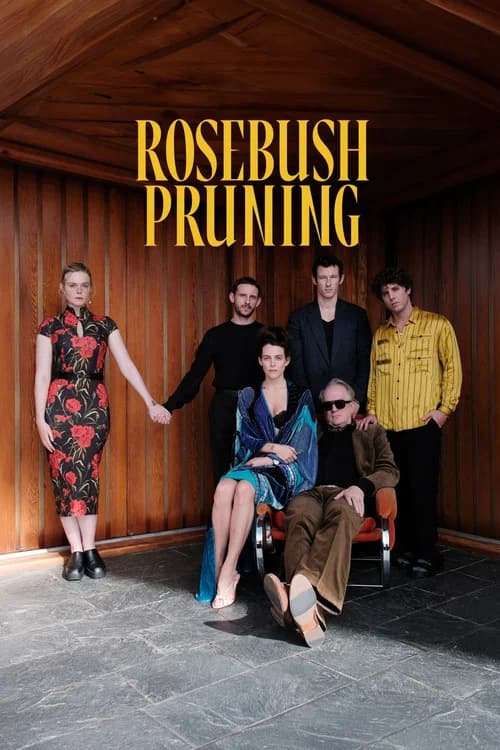 📈 Trending
Rosebush Pruning
ComedyApr 23, 2026
Rosebush Pruning
Voicemails for Isabelle
RomanceJun 20, 2026
Voicemails for Isabelle 📈 Trending
Wildwood
AnimationOct 19, 2026
WildwoodReleased 🔥 Hot
The End of Oak Street
Science FictionAug 12, 2026
The End of Oak StreetSign in to join the conversation.