Details
- Language
- English
- Studio
- Working Title Films
- TMDb Rating
- 7.7 (405 votes)
- Directed by
- Anthony Maras
- Written by
- David Haig, Anthony Maras
- For
- adult
Rating · Quality score from voters
TMDb
7.7/10
IMDb
7.3/10
Rotten Tomatoes
89%
Metacritic
69/100
Popularity · Search interest now
Rising
28.3
Based on TMDb activity
Starring








Where to watch
Links may earn Incoming a commission at no extra cost to you. Streaming data via JustWatch — may not reflect today's catalog.
Incoming Editorial TeamVerified
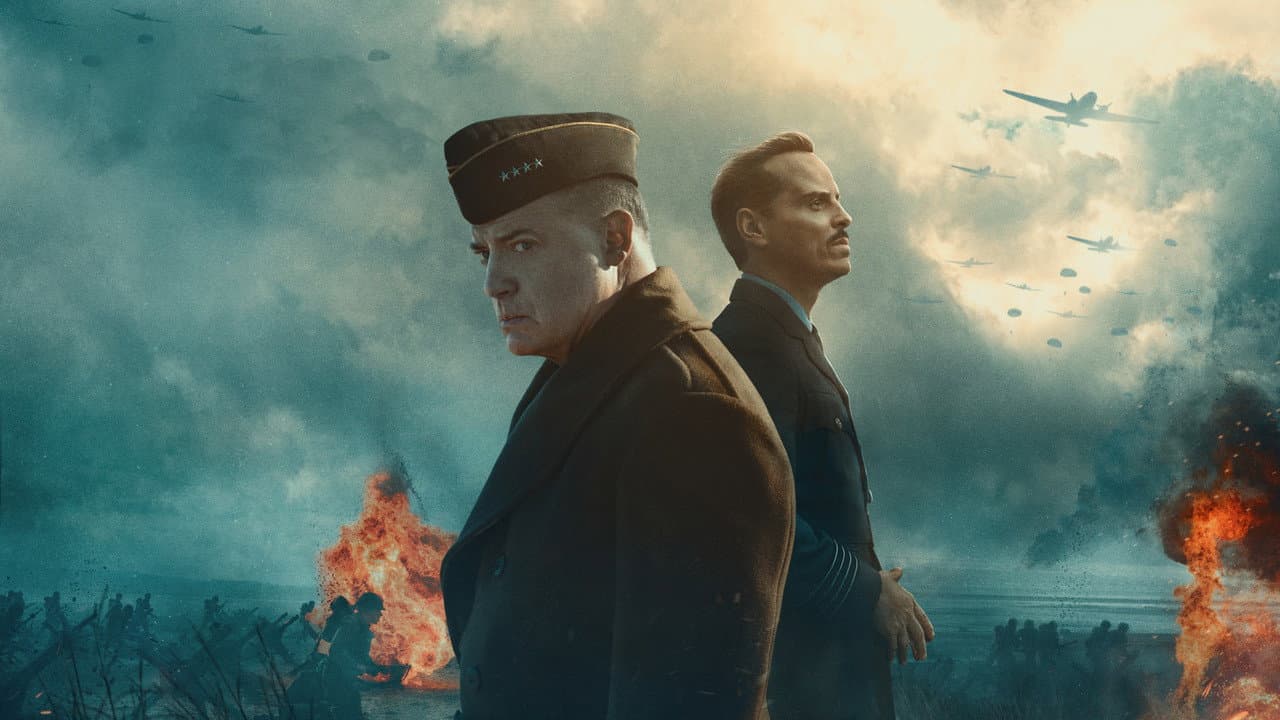
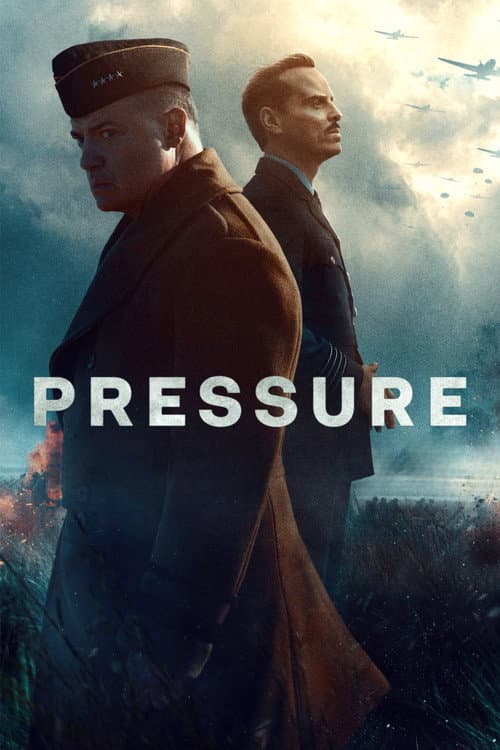
In the tense 72 hours before D-Day, and the fate of the free world hanging in the balance, General Dwight D. Eisenhower and Captain James Stagg face an impossible choice—launch the largest and most dangerous seaborne invasion in history or risk losing the war altogether.
Trailer
Gallery (10)
About this release
Working Title Films and StudioCanal are releasing Pressure, a historical thriller, on May 25, 2026. The film centers on the 72 hours immediately preceding the D-Day landings, narrowing its focus to two figures at the center of the decision: General Dwight D. Eisenhower and Captain James Stagg. The central dramatic problem, as the production frames it, is whether to launch what the film describes as the largest and most dangerous seaborne invasion in history — or to hold, and risk losing the war altogether.
That framing places Pressure in a well-worn but persistently compelling corner of World War II cinema. The D-Day landings have been dramatized from nearly every angle available — the beaches themselves, the airborne drops, the command centers in London and Washington, the intelligence operations feeding false information to German high command. What is somewhat less common is a film that restricts itself almost entirely to the meteorological and command crisis that preceded June 6, 1944. Stagg, a Scottish meteorologist serving as chief weather forecaster to the Supreme Headquarters Allied Expeditionary Force, occupies an unusual position in the historical record: a relatively junior officer whose forecast assessments directly influenced Eisenhower's decision to proceed. That the invasion launched at all — rather than being postponed into a window that historians have argued could have been catastrophically worse — is a matter that turns significantly on what Stagg told Eisenhower about a narrow gap in an otherwise forbidding Atlantic weather system. For a film to find its drama there, in charts and pressure gradients and the word of one officer carried upward to the supreme commander, is a legitimate and underexplored choice.
The 72-hour structural constraint is worth noting. Confining a war film to roughly three days of pre-battle deliberation rather than the battle itself inverts the conventional grammar of the genre. Most World War II films earn their emotional register through combat — the chaos, the casualties, the physical cost of what was decided in rooms like the ones Pressure apparently inhabits. Here, the violence is entirely prospective. The audience knows what is coming, and the film presumably derives its tension from that dramatic irony: the viewer carries the outcome that the characters are still calculating toward. Whether the film has the confidence to sustain that structure across its full running time, without reaching for battlefield footage or flashforward to the landings, is among the more interesting open questions about it.
The production involves Working Title Films alongside StudioCanal UK and StudioCanal — a combination that has historically been associated with British prestige productions with transatlantic distribution ambitions. The film is in English and carries a Metacritic score of 69 and an IMDb rating of 7.7 from just over a thousand votes at the time of this writing, with a TMDB average in a similar range from a somewhat smaller sample. Those figures are preliminary and thin, reflecting early audience engagement rather than any settled critical consensus, but they suggest a modestly favorable initial reception rather than either strong enthusiasm or significant resistance.
What the available information does not reveal is who directs the film, who plays Eisenhower and Stagg, or what specific interpretation of the historical record the screenplay pursues. This matters more than it might for a fictional story. Eisenhower has been depicted on screen numerous times, and any actor stepping into that role carries the weight of prior performances and the audience's familiarity with a face — Eisenhower's particular mid-century American authority — that is part of the cultural furniture. Stagg is considerably less familiar to general audiences, which offers a casting choice with more latitude but also requires the film to build a character with less borrowed recognition. The screenplay's position on the historical disagreements surrounding the weather forecast — there were real tensions among the forecasting teams, and Stagg's recommendations were not universally supported by his colleagues — would also tell a great deal about how dramatically honest the film intends to be.
The choice to release on May 25, 2026 — a Monday, and the Memorial Day holiday in the United States — aligns the film with one of the few calendar moments when American audiences might be receptive to historically inflected war material by default rather than by particular effort. Whether Working Title and StudioCanal are positioning it as a Memorial Day theatrical release or simply landing on that date through distribution scheduling is not specified in the available information, but the alignment is at minimum convenient.
Pressure is likely to draw viewers with a specific appetite for command-room drama and for World War II history that emphasizes decision-making under uncertainty rather than the physical prosecution of battle. It will stream on Peacock Premium and Peacock Premium Plus, and is available to rent or purchase across the major digital platforms, giving it a relatively wide accessibility footprint for audiences who missed or skip a theatrical window. For those who find the mechanics of historical contingency — the question of how close things came to going differently — more interesting than the spectacle of the outcome, the premise alone is enough to make the film worth tracking.
Comments
Sign in to join the conversation.
Loading…