Details
- Language
- English
- Studio
- 18Hz Productions
- TMDb Rating
- 6.2 (73 votes)
- Directed by
- André Øvredal
- Written by
- T. W. Burgess, Zachary Donohue
- For
- mature cw
Rating · Quality score from voters
TMDb
6.2/10
IMDb
5.5/10
Rotten Tomatoes
45%
Metacritic
52/100
Popularity · Search interest now
Rising
15.0
Based on TMDb activity
Starring







Incoming Editorial TeamVerified
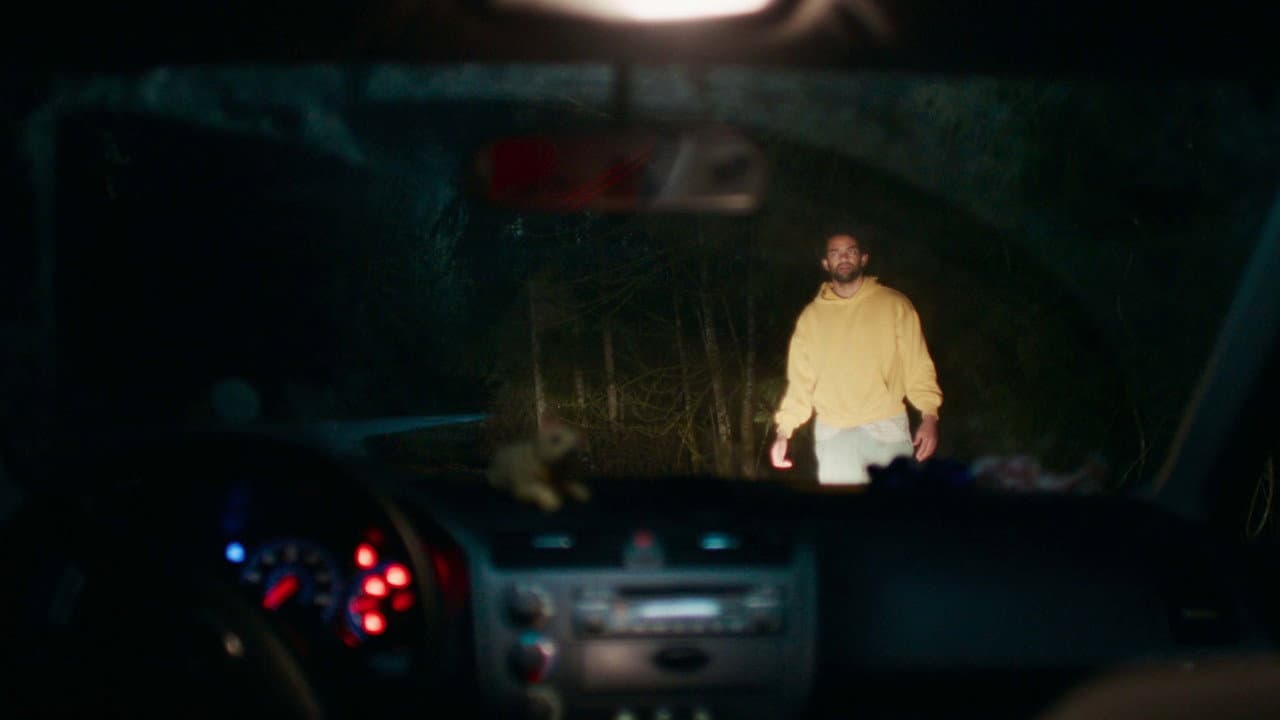
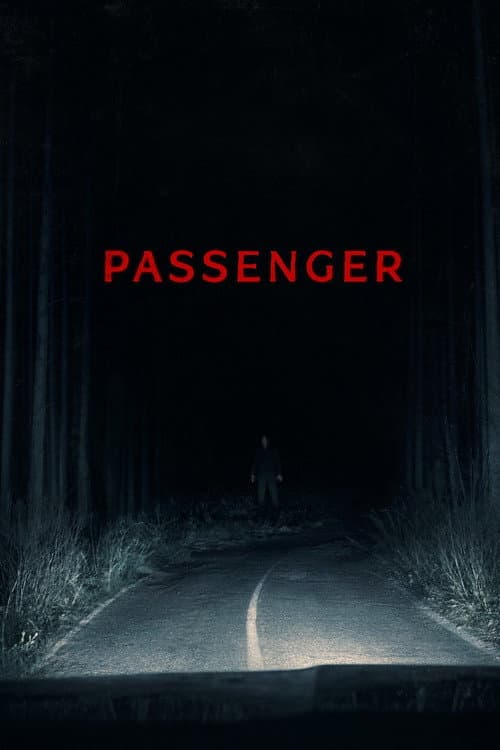
Passenger is an upcoming horror film releasing on May 20, 2026. The story follows a young couple who witness a highway accident and find themselves pursued by a demonic entity known as the Passenger.
Trailer
Gallery (12)
Key features
- ·Horror genre
- ·Supernatural demonic antagonist
- ·Van life road-trip setting
- ·Highway accident inciting incident
- ·Couple as central protagonists
FAQ
When does Passenger release?
Passenger releases on May 20, 2026.
What is Passenger about?
The film follows a young couple who witness a highway accident and are subsequently hunted by a demonic presence called the Passenger.
Is Passenger a supernatural horror film?
Yes, the plot involves a demonic entity that pursues the central characters after they witness a crash.
About this release
Passenger, a horror-thriller produced by 18Hz Productions and Coin Operated and distributed by Paramount Pictures, is scheduled for release on May 20, 2026. The film follows a young couple whose van life travels are upended after they witness a violent highway accident, only to discover that something — a demonic entity referred to as the Passenger — has followed them away from the wreckage and intends to kill them both.
The premise belongs to a well-worn but reliably durable strand of supernatural horror: the idea that bearing witness to tragedy is itself a kind of contamination, that the act of seeing something terrible creates an invisible bond between the survivor and whatever darkness was present at the scene. Films in this tradition have long understood that roads are particularly fertile ground for dread. There is something about the specific vulnerability of travel — the way highways flatten identity, strip away community, and leave people exposed in metal boxes moving at speed through unfamiliar territory — that horror has exploited for decades. Passenger situates itself squarely within that lineage, adding the contemporary texture of van life, a lifestyle that carries its own cultural connotations of freedom and self-sufficiency, and inverting them. The couple's chosen mode of living — mobility as liberation — becomes the mechanism of their entrapment.
The entity at the center of the film is given a proper noun, the Passenger, which is an interesting formal choice. Named demons in horror cinema tend to function differently from unnamed presences. A name implies taxonomy, a kind of folklore specificity — the suggestion that this thing has been encountered before, catalogued, given a designation by whoever survived long enough to do so. Whether the film leans into that implication, building out a mythology around the Passenger, or whether the name is purely functional, a convenient handle for something essentially unknowable, is one of the more interesting structural questions the premise raises without answering.
The production involves three distinct companies — 18Hz Productions, Coin Operated, and Paramount — with Paramount handling distribution. Beyond the studio arrangement, the available information does not specify who directed the film or who wrote the screenplay, which makes it difficult to place Passenger within a particular directorial tradition or to assess it against prior work. Similarly, the cast is not detailed in the available materials. For a film whose horror depends substantially on the audience's investment in the couple at its center, the identities of those performers would ordinarily be among the first things a preview like this might address. Their absence here is notable, though it may simply reflect the state of promotional materials at this stage.
What the premise does establish clearly is a structural duality. Two protagonists, one threat. The Passenger, according to the film's own description, won't stop until it claims them both — which is a notably different formulation from the standard singular-victim possession narrative. Many demonic-presence films organize themselves around one character's psychological deterioration, leaving the other as witness or potential savior. The framing here suggests the threat is distributed, that neither member of the couple is designated the protagonist in the traditional horror sense and neither is designated the expendable one. Whether the film actually honors that structural promise or whether it collapses into a more conventional shape is impossible to say in advance, but it is the element of the setup most likely to determine whether Passenger distinguishes itself from its genre neighbors.
The highway accident itself functions as more than a plot trigger in this kind of story. Accidents on roads occupy a particular psychological register — they are sudden, arbitrary, and visible in a way that most disasters are not. You drive past them. You see things you cannot unsee. The couple here are witnesses rather than participants, which places them in a morally ambiguous position that horror often finds productive. They did not cause the accident. They may not have been able to prevent it. But they stopped, or they passed, or they looked, and now something knows them. The mechanics of how the Passenger attaches itself to the couple, and what the rules of its pursuit are, will likely be among the film's first acts of world-building — that early passage in which the audience is taught what kind of horror film it is watching.
Van life as a setting also carries specific contemporary weight. The lifestyle, which involves converting vans or other vehicles into mobile living spaces and traveling without fixed address, became a significant cultural phenomenon in the years following the mid-2010s and attracted substantial social media documentation. It carries associations with a particular demographic: young, transient, aesthetically self-conscious, often financially precarious in ways softened by a rhetoric of chosen freedom. Dropping a demonic entity into that setting is a reasonably pointed piece of genre irony — the apparatus of liberation becomes a rolling trap, the itinerant freedom of van life revealed as a form of rootlessness that offers no shelter and no community to retreat to.
Audiences drawn to supernatural road horror, to possession-adjacent narratives, or to horror films that use contemporary lifestyle settings as ironic counterpoint to their subject matter are the most natural audience for Passenger. Paramount's involvement in distribution suggests a reasonably wide theatrical release, placing it in the company of studio horror rather than the narrower arthouse or VOD market, which typically means a film aimed at genre fans who may not require independent or prestige framing to engage with the material.
Comments
Sign in to join the conversation.
Loading…