Details
- Language
- English
- Studio
- Aperture Media Partners
- TMDb Rating
- 6.4 (185 votes)
- Directed by
- Ben Wheatley
- Written by
- Derek Kolstad, Bob Odenkirk
- For
- adult
Rating · Quality score from voters
TMDb
6.4/10
IMDb
6.3/10
Rotten Tomatoes
78%
Metacritic
63/100
Popularity · Search interest now
Rising
17.8
Based on TMDb activity
Starring






Where to watch
Links may earn Incoming a commission at no extra cost to you.
Incoming Editorial TeamVerified
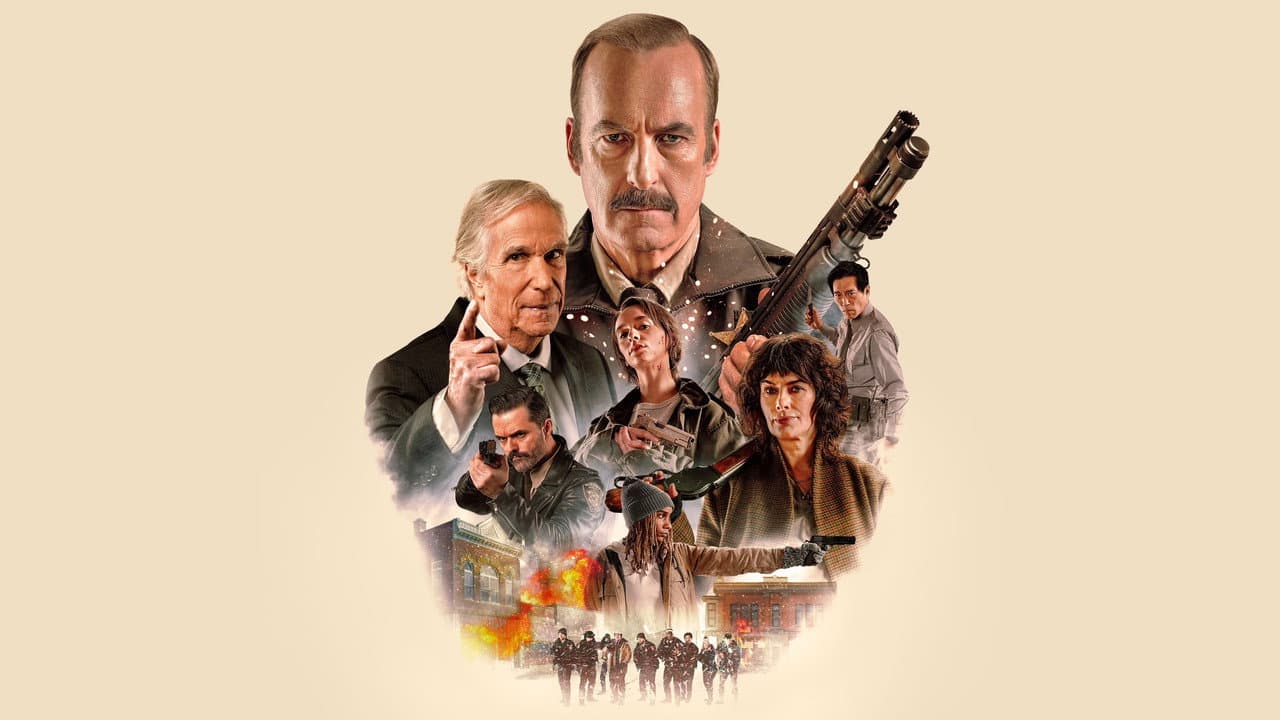
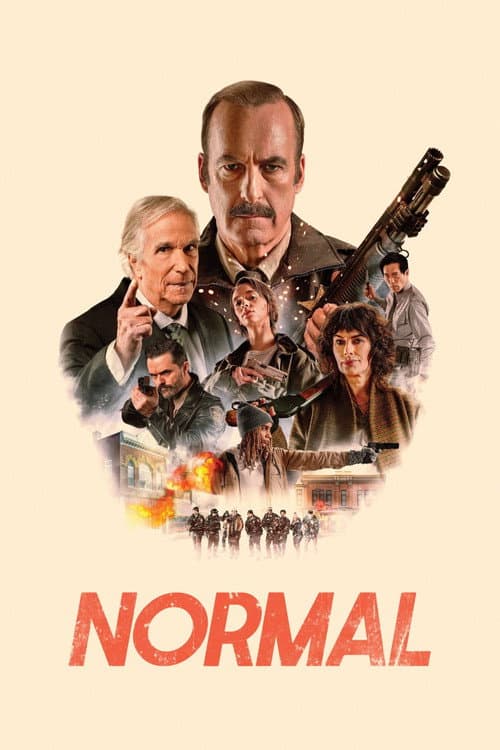
An unassuming substitute sheriff with a troubled past responds to a bank robbery in a small, sleepy town and unknowingly uncovers something far more explosive.
Trailer
Gallery (21)
About this release
Normal, a feature from Aperture Media Partners, QWGmire, and OPE Partners, is scheduled for release on April 16, 2026. It is an action-crime thriller built around a deceptively simple premise: a substitute sheriff with an unspecified troubled past responds to a bank robbery in a small, quiet town and stumbles into something considerably larger and more dangerous than the initial call suggested.
The setup belongs to a well-worn tradition in American crime cinema — the reluctant lawman, the ordinary-seeming community that turns out to harbor extraordinary corruption or violence, the single inciting incident that pulls a damaged protagonist back into a world they may have been trying to leave behind. Films in this lineage tend to succeed or fail on the degree to which they complicate their own apparent simplicity. The "sleepy town" and the "troubled past" are familiar furniture, almost self-consciously so, and the title Normal seems to acknowledge that directly, pressing on the gap between surface appearance and what lies underneath. Whether the film leans into that irony deliberately or deploys it as straightforward genre machinery is among the more interesting unanswered questions going in.
What the available information leaves open is considerable. The production involves three companies — Aperture Media Partners, QWGmire, and OPE Partners — but no director, writer, or cast is surfaced in the metadata. This is not necessarily unusual for a mid-budget genre picture at this stage of its promotional cycle, but it does mean that the film's authorial identity remains entirely opaque ahead of release. A thriller of this kind can be shaped enormously by who is behind the camera: the difference between a procedural grind and something more atmospheric or formally ambitious often comes down to directorial sensibility rather than premise. The premise here is functional but not distinctive on its own terms.
The description's language is worth pausing on. The substitute sheriff is "unassuming" — not merely inexperienced or reluctant, but specifically described as someone who does not project authority or draw attention. That quality, combined with a troubled past that remains unspecified, suggests the film is at least nominally interested in a protagonist defined by what they conceal rather than what they project. The bank robbery, similarly, is framed not as the central conflict but as a trigger — the thing that causes the character to "unknowingly uncover" something else. The real subject of the film, then, is whatever that something else turns out to be, and the bank robbery functions more as an entry point than a narrative destination. That structure, the small crime that opens a trapdoor into a larger conspiracy or institutional rot, has produced some of the more durable American thrillers of recent decades, though it has also produced a great deal of competent formula filmmaking that mistakes scale revelation for genuine escalation.
The origin country is not listed, which is a minor curiosity for an English-language production, though it may simply reflect incomplete metadata rather than anything meaningful about the film's provenance or funding structure.
On the question of what the film's "something far more explosive" actually refers to, the available material offers nothing. This is presumably intentional on the part of the marketing, since the withheld revelation is the engine of a thriller's trailer-cut and word-of-mouth cycle. But it also means that potential audiences are being asked to invest based almost entirely on archetype — the burdened loner, the deceptive normalcy of a small town, the promise of escalation. For viewers who find that archetype reliably engaging, that may be sufficient. For those who need a stronger hook — a recognizable filmmaker, a cast name, a more specific tonal signal — the pitch as currently framed provides little additional purchase.
The film does not appear to have a streaming home at release, at least based on what's listed. Watch options are purchase and rental across the major digital platforms — Amazon Video, Apple TV, Google Play Movies, YouTube, Fandango At Home, and Plex for rental — which positions it as a transactional VOD title rather than a theatrical wide release or a streamer exclusive. That distribution context is relevant: transactional crime thrillers occupy a particular niche in contemporary viewing habits, often attracting audiences who might not travel to a multiplex for a genre picture but will readily queue one up at home on a weeknight. The format suits a film whose premise is deliberately unshowy.
The audience most likely to seek out Normal is one with a sustained appetite for crime-thriller procedurals in the regional American mode — the kind of viewer drawn to stories about institutional failure in isolated communities, or to protagonists carrying damage that the plot is structured to excavate. The film's success with that audience will depend almost entirely on execution — on whether the "troubled past" is rendered with any specificity, whether the small-town setting feels observed rather than assembled from available parts, and whether whatever lies beneath the bank robbery justifies the film's own implicit promise that nothing here is quite as ordinary as it looks.
Comments
Sign in to join the conversation.
Loading…