







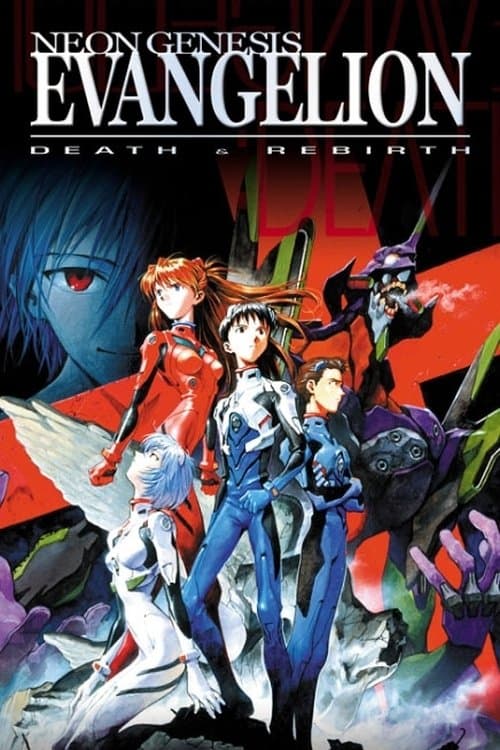
Neon Genesis Evangelion: Death and Rebirth
movie · prequel of
Neon Genesis Evangelion: Death and Rebirth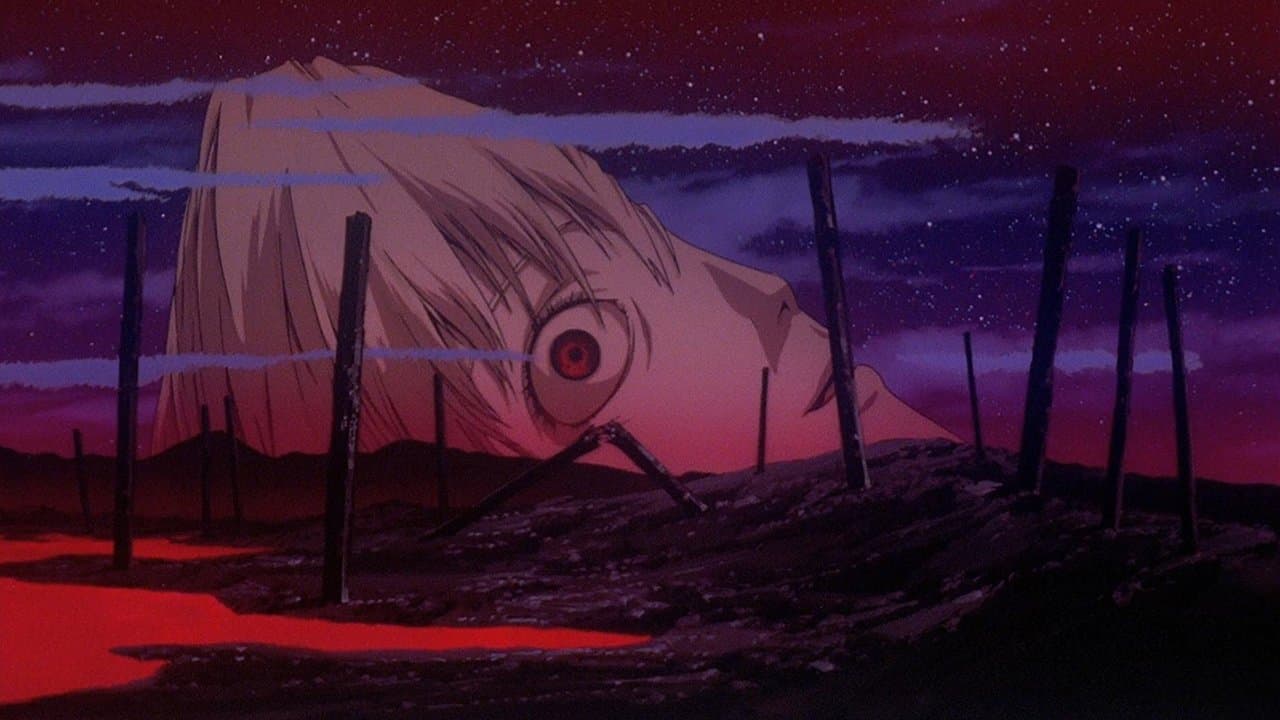
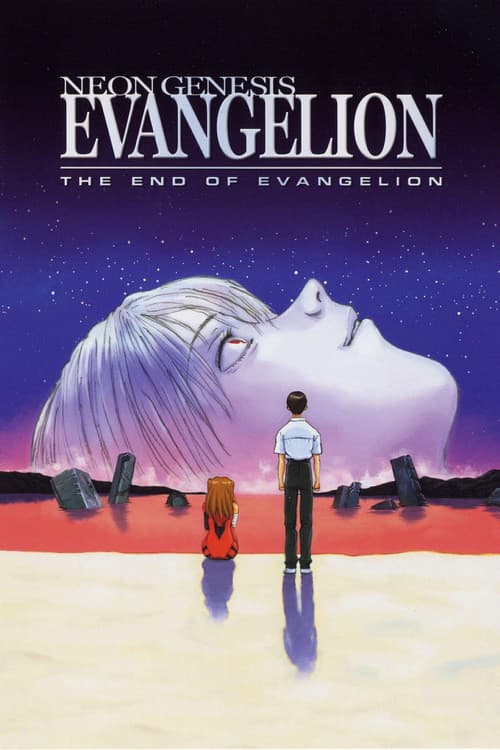
新世紀エヴァンゲリオン劇場版 Air/まごころを、君に
Details
Rating · Quality score from voters
Popularity · Search interest now
Based on TMDb activity
Links may earn Incoming a commission at no extra cost to you. Streaming data via JustWatch — may not reflect today's catalog.
Incoming Editorial TeamVerified
Neon Genesis Evangelion: The End of Evangelion is a 1997 Japanese animated film produced by GAINAX, releasing July 19, 1997. An alternate ending to the Neon Genesis Evangelion television series, it follows the final conflict between SEELE, NERV, and the fate of humanity through the Human Instrumentality Project.
The film released theatrically in Japan on July 19, 1997. It was produced by GAINAX and is part of the Neon Genesis Evangelion Collection franchise.
The film is available to stream on Netflix and Netflix Standard with Ads. It can also be purchased digitally through Amazon Video, the Apple TV Store, and Google Play Movies.
The film was produced by GAINAX, the Japanese animation studio behind the original Neon Genesis Evangelion television series. No individual director is specified in the available data.
Yes, it is part of the Neon Genesis Evangelion Collection franchise. The film functions as a theatrical alternate ending to the original Neon Genesis Evangelion anime television series.
The film spans animation, science fiction, drama, fantasy, and action. It combines large-scale military conflict with psychological and existential themes centered on its protagonist, Shinji Ikari.
SEELE orders a full assault on NERV to destroy the Evangelion units before Gendo Ikari can advance his own plans for the Human Instrumentality Project. Shinji Ikari is pushed to his psychological limits as he is forced to decide the fate of humanity.
Neon Genesis Evangelion: The End of Evangelion, produced by GAINAX alongside movic and Star Child Recording, opens in Japanese theaters on July 19, 1997. It carries the subtitle Air / My Pure Heart for You — rendered in Japanese as 新世紀エヴァンゲリオン劇場版 Air/まごころを、君に — and arrives as a theatrical entry in the Neon Genesis Evangelion franchise, one of the more discussed and argued-over properties in animated science fiction.
The Evangelion series established its premise across a television run: a near-future world scarred by a catastrophe called the Second Impact, in which a paramilitary organization called NERV fields enormous biomechanical weapons known as Evas to fight beings called Angels. Piloting those Evas falls largely to teenagers, and the series used that premise not primarily as an action delivery mechanism but as a sustained, sometimes clinical examination of depression, identity, and the costs of asking damaged people to perform impossible tasks. The central figure, Shinji Ikari, is unusual among his genre peers — passive, avoidant, prone to paralysis — and the series made his psychological state a structural concern rather than a character flaw to be overcome on a tidy arc. That approach generated considerable audience friction, which the television ending, produced under constrained circumstances, did little to resolve in conventional narrative terms.
The End of Evangelion positions itself as an alternate conclusion to that television series, or a complement to it, depending on how one reads the relationship between the two. The film is divided into two parts — Air and My Pure Heart for You — which correspond to what would have been the final two episodes rendered under different material and creative conditions. The plot, as described, operates on a large scale: the organization SEELE moves against NERV with a full military assault, attempting to destroy the Evas before NERV's commander, Gendo Ikari, can execute his own version of a plan called the Human Instrumentality Project. Shinji, caught between these institutional forces and their competing apocalyptic intentions, is pushed toward a decision about the fate of humanity itself.
That framing is worth pausing on. The Human Instrumentality Project, as a concept within Evangelion, involves the dissolution of individual human consciousness into a collective whole — a prospect the series treated with genuine ambiguity rather than as a straightforward villain's scheme. Both SEELE and Gendo want it; they differ on the terms of control. Where the television series examined this largely through Shinji's internal experience, the film apparently approaches it through an external military and political escalation before arriving at something similarly interior. Whether those two modes — the tactical and the psychological — cohere is one of the more open questions the premise raises.
What GAINAX had access to for the theatrical production that it may not have had for the television finale matters here, though the specifics of those production circumstances aren't detailed in the available material. What can be said is that The End of Evangelion is a GAINAX production released in 1997, in the period following the original broadcast, and that it carries the franchise's designation as a theatrical film rather than a television special or an OVA — distinctions that carry some weight in the Japanese animation industry in terms of production scope and distribution ambition.
The film's presence on Netflix and its availability for purchase across major digital platforms — Amazon Video, Apple TV Store, Google Play Movies, YouTube, and Fandango At Home — means it has a contemporary distribution footprint well beyond what a 1997 Japanese theatrical release would have initially reached. That accessibility has presumably contributed to its audience over time, though the vote counts on major tracking platforms (over 75,000 IMDB ratings, just under 1,900 on TMDB) suggest a following that is engaged but not mass-market in scale. A Rotten Tomatoes score of 92 percent, aggregated from available reviews, indicates that critical reception has been favorable, though the nature and timing of those reviews isn't specified here.
Shinji's position in the narrative — forced to decide the fate of humanity while at the limits of his sanity — raises an obvious structural question. Evangelion, as a property, has consistently resisted the convention of the reluctant hero who rises to the occasion. Shinji's defining quality across the television series is not that he is reluctant but that he is genuinely unable to function in the way the story's mechanics require. Placing that character at the center of an apocalyptic choice, rather than routing around him or resolving his psychology before the climax, is either a formal commitment or a provocation, and the film's dual-part structure suggests it doesn't resolve quickly.
The genres listed — animation, science fiction, drama, fantasy, and action — span enough ground to be nearly meaningless as individual descriptors, but their combination points at something accurate about Evangelion as a franchise: it has never settled comfortably into any single one of them. The action is present but has never been the primary draw. The science fiction is more interested in psychology and eschatology than in technology. The drama is abnormally interior. That combination has always been the source of both its appeal and its difficulty as a viewing experience.
Viewers likely to seek this out fall into recognizable categories: those who have watched the television series and are treating the film as the conclusion they were left without, fans of the broader franchise returning for a piece of the continuity, and newcomers drawn by its availability on Netflix who have encountered Evangelion's reputation without having seen its ending. For any of those groups, the film offers something the television series did not complete — though what exactly it completes, and whether that completion satisfies, is the question the film itself will have to answer.
Neon Genesis Evangelion: Death and Rebirth
movie · prequel of
Neon Genesis Evangelion: Death and RebirthSign in to join the conversation.