 Cool
↑ 0.324h
Details
- Language
- English
- Directed by
- Jacob A. Dodd
Popularity · Search interest now
Low
0.0
Based on TMDb activity
Starring
Where to watch
Not currently available for streaming or purchase.
Links may earn Incoming a commission at no extra cost to you.
Incoming Editorial TeamVerified
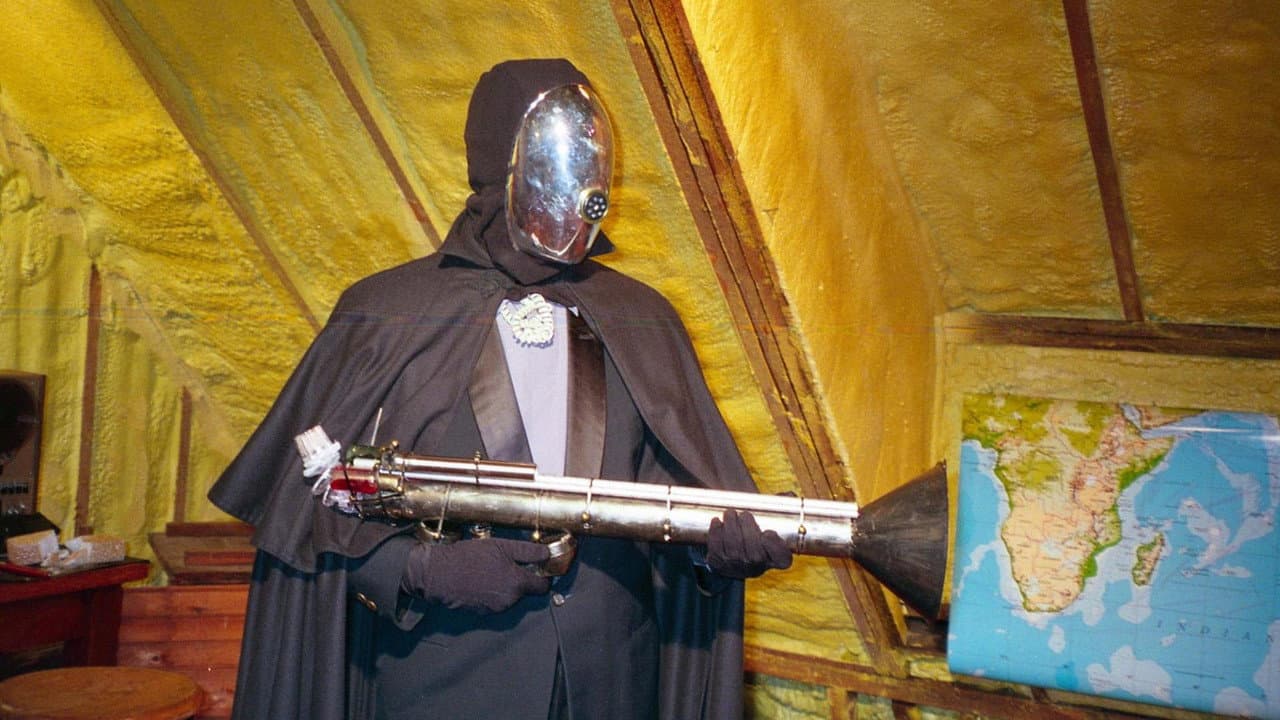
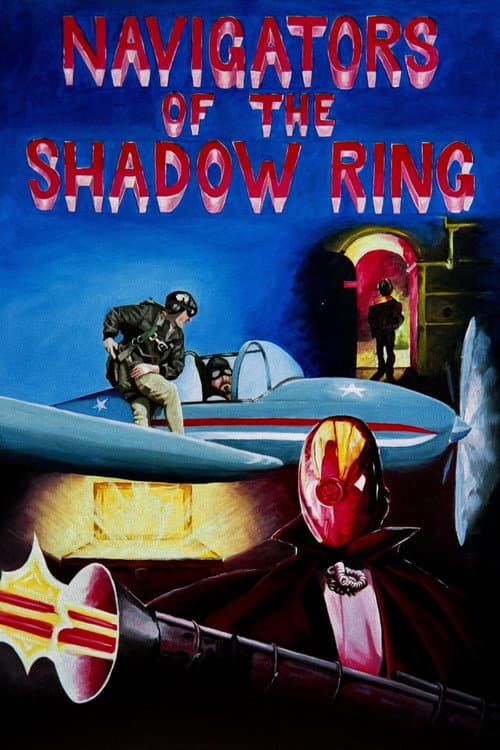
During the international conflicts of the 1950s, a modest crop dusting pilot searches for his heroic brother after he vanished at the hands of a masked villain obsessed with bringing the world's superpowers to their knees.
Gallery (3)
About this release
Navigators of the Shadow Ring is scheduled for release on April 25, 2026. The film is an English-language adventure and science-fiction production, and beyond those broad classifications, relatively little has been formally disclosed about the people behind it.
The premise is set during the international conflicts of the 1950s, a period that has served as a reliable backdrop for a certain kind of genre storytelling — one that borrows the geopolitical anxieties of the early Cold War and routes them through pulp adventure conventions. Here, a crop dusting pilot, a figure of deliberate modesty, sets out to find his brother, who has disappeared after an encounter with a masked villain whose stated ambition is to bring the world's superpowers to their knees. The logline carries recognizable DNA: the ordinary man thrust into extraordinary circumstances, the missing sibling as emotional engine, the costumed antagonist whose goals operate at a civilizational scale. These are elements that trace back through decades of adventure serials, mid-century science fiction paperbacks, and the kind of Saturday matinee plotting that later informed everything from the Indiana Jones films to the more grounded espionage thrillers that emerged from that same postwar imaginative soil.
What distinguishes the setup here, at least on paper, is the specific texture of the protagonist. Crop dusters occupy a particular American mythology — isolated, itinerant, skilled in a way that is practical rather than glamorous. The choice to anchor an adventure narrative of apparent international scope in that particular profession suggests either a deliberate tonal contrast between the small and the vast, or a story that takes its time before escalating. Whether the film leans into the period's visual language — the paranoia of classified programs, the aesthetics of early Cold War institutional architecture, the specific quality of postwar American optimism curdling at the edges — remains unknown from what has been made public.
The science-fiction designation alongside adventure raises its own questions. The 1950s setting combined with science fiction could mean any number of things: retrofuturist technology, speculative Cold War programs, something more explicitly extraterrestrial, or simply the kind of heightened physics that action-oriented films of this type have always permitted themselves without labeling. The masked villain's ambition to destabilize superpowers is a premise that works equally well in a grounded espionage register and in a more overtly fantastical one. Which direction the film takes will determine quite a lot about what kind of experience it actually is.
The popularity metric attached to the film at this stage is very low, which suggests it has not yet accumulated significant public awareness — not uncommon for a production still more than a year from release and without a wide marketing campaign in evidence. That obscurity also means that standard reference points — director, cast, production company, budget scale — are not yet part of the public record in any confirmed form. There is no established franchise context here, no announced sequel pipeline, no known source material being adapted. It appears to be an original work, or at least one whose origins have not been publicly connected to a prior property.
That absence of context is genuinely open-ended in a way that cuts both directions. A film with no predecessor and no marquee attachment can be a low-stakes genre exercise assembled without particular ambition, or it can be the kind of project that finds its audience quietly after release. There is no basis yet for placing it in either category. What the premise does invite is comparison to a particular mode of mid-budget period adventure that has intermittently found favor — films that use historical settings to give science fiction or action narratives a texture of specificity, where the 1950s backdrop is doing real atmospheric work rather than functioning as mere decoration. Whether Navigators of the Shadow Ring belongs to that tradition in any meaningful sense, or whether it uses the period more casually, is not answerable from what is currently available.
The title itself is worth noting, if only because it does not map cleanly onto the described premise. Shadow Ring suggests concealment, orbit, encirclement — images that could connect to the villain's operation, to some piece of technology or geography central to the plot, or to something else entirely that the synopsis does not address. Titles of this construction often point toward a MacGuffin or a named organization around which the plot rotates, and there is likely an explanation that the synopsis simply does not provide. That gap is fairly routine at this stage of a film's promotional cycle, but it does mean that the most structurally interesting element of the film — whatever the Shadow Ring actually is and why it matters — remains entirely opaque.
The audience most likely to track this release in advance is probably one with an appetite for period-set genre adventure and science fiction, particularly viewers drawn to mid-century Americana and the specific romanticism attached to postwar aviation and Cold War intrigue. The crop duster as protagonist will appeal to those who prefer genre heroes with callused rather than polished credentials. Beyond that narrow initial cohort, the film's wider reach will depend almost entirely on what becomes known about its creative principals and how it presents itself visually once promotional materials begin to circulate in earnest.
Comments
Sign in to join the conversation.
Loading…