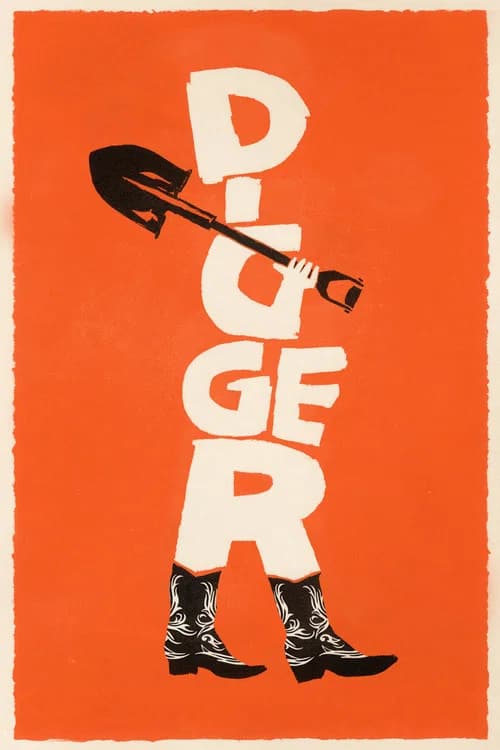
 ⭐ Popular
Digger
ComedySep 28, 2026
Digger
Details
Popularity · Search interest now
Based on TMDb activity
Incoming Editorial TeamVerified
Moor (Мавр) is a Kazakh-language action film releasing on April 29, 2026. It follows a nameless war veteran who returns to a corruption-ridden city to protect his missing brother's family while confronting enemies and a hostile system.
Moor is scheduled to release on April 29, 2026.
The film is in Kazakh (kk).
The film follows a nameless, wordless war veteran who returns to a dangerous, corrupt city to find his missing brother's wife and protect his brother's family, while fighting enemies and the corrupt system around him.
The original title is Мавр (transliterated as Mavr).
A Kazakh-language action drama titled Moor — subtitled in Cyrillic as Мавр — is scheduled for release on April 29, 2026, produced by Short Brothers and Arizona Films.
The film centers on an unnamed Kazakh veteran described as tireless, impervious to pain, and without speech. He returns from war to a large, corruption-saturated city, where he takes it upon himself to punish those characterized as greedy and powerful while searching for his missing younger brother's family — specifically the brother's red-haired wife. The premise is blunt in its moral architecture: a man stripped of ordinary human markers (name, voice, sensation) is dropped into a social environment defined by institutional rot and personal danger. The tagline-level framing, "kill or be killed," positions the character less as a psychological study than as an instrument of a particular kind of justice narrative.
That narrative tradition — the silent, near-mythological avenger operating outside the law in a morally compromised urban landscape — has deep roots across world cinema, from the samurai films of Kurosawa to the spaghetti Westerns that borrowed from them, and forward through the wave of Central and East Asian action cinema that gained international attention in the 2000s and 2010s. What distinguishes the Moor premise from the standard Western iteration of this archetype is its specific geographic and cultural grounding. Kazakhstani cinema has grown considerably in international visibility over the past two decades, producing work that ranges from art-house entries to genre films aimed at domestic audiences. A Kazakh-language film built around a veteran protagonist navigating post-war reintegration and urban corruption carries connotations specific to Central Asian post-Soviet experience — though how explicitly the film engages with that context remains, based on available information, an open question.
The production involves two companies, Short Brothers and Arizona Films, though no further detail about their prior work or the specific roles each played in this production is available from the materials at hand. Similarly, no director, writer, or cast is listed in the available data, which is an unusual gap for a film scheduled for release in 2026. That absence means the film's creative lineage — whether it comes out of an established voice in Kazakhstani genre filmmaking or represents a newer entry — cannot be assessed here. The Wikipedia entry exists, suggesting at least some formal documentation of the project, but the vote counts on aggregator platforms register at zero, indicating that the film has not yet screened widely enough to generate audience data.
The synopsis raises several questions that the available framing deliberately leaves open. The protagonist's muteness — whether literal or figurative — is a choice that will define the entire viewing experience; silent protagonists in action cinema function very differently depending on whether the silence is treated as trauma, as mythic abstraction, or as a production constraint. The red-haired wife of the missing brother is an oddly specific visual detail in a description that otherwise traffics in archetypes, and her function in the plot — whether she is a victim to be rescued, a figure with her own agency, or something more structurally complex — is entirely unclear from what's been shared. The "big, dangerous city" is unnamed, which leaves open whether the film is set in a recognizable Kazakhstani urban environment or something more stylized. The description of the protagonist as a "tireless Kazakh master" suggests a martial or craft-based identity beyond simple soldier, but what that mastery entails in practice — combat discipline, a specific fighting tradition, something else — is not elaborated.
The genre classification is listed simply as drama, which either reflects a distributor's conservatism about genre labeling or suggests the film intends to weight its action elements within a more contemplative or socially engaged frame. The two are not incompatible. Central Asian cinema has a history of genre films that carry considerable dramatic weight — stories of displacement, systemic injustice, and masculinity under pressure that use familiar genre structures to explore conditions particular to the region. Whether Moor is closer to that tradition or to a more straightforwardly commercial action-drama is something the available materials don't resolve.
The Cyrillic subtitle, Мавр, translates directly to "Moor," a word with historical and literary weight in European tradition — most prominently associated with Shakespeare's Othello, though also used in earlier European contexts to denote North African or Muslim identity. Whether the title is invoking any of that resonance, functioning as a character nickname, or operating as something else entirely in the Kazakhstani context is not clear from the available information, and reading too much into it without more grounding would be a mistake.
Audiences likely to seek this out in April 2026 will include those with an existing interest in Central Asian cinema, viewers who follow the action-drama genre internationally, and anyone drawn to the particular subgenre of the near-mythic avenger narrative in non-Western settings. The lack of attached names makes it difficult to track interest through any specific creative following, but the premise alone — wordless veteran, urban corruption, missing family member, systemic rebellion — is coherent enough to function as a premise on its own terms for genre-oriented audiences.
⭐ PopularDigger
ComedySep 28, 2026
Digger ⭐ Popular
Primetime
ThrillerSep 23, 2026
Primetime ⭐ Popular
Michael
MusicApr 22, 2026
Michael 📈 Trending
Peddi
ActionJun 3, 2026
Peddi 🔥 Hot
The Social Reckoning
DramaOct 7, 2026
The Social Reckoning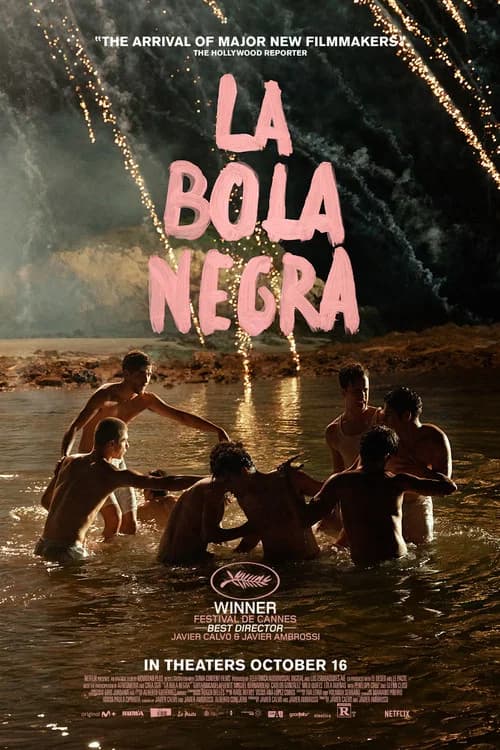
LA BOLA NEGRA
DramaSep 25, 2026
LA BOLA NEGRASign in to join the conversation.