
The Last Sunrise
RomanceAug 26, 2026
The Last Sunrise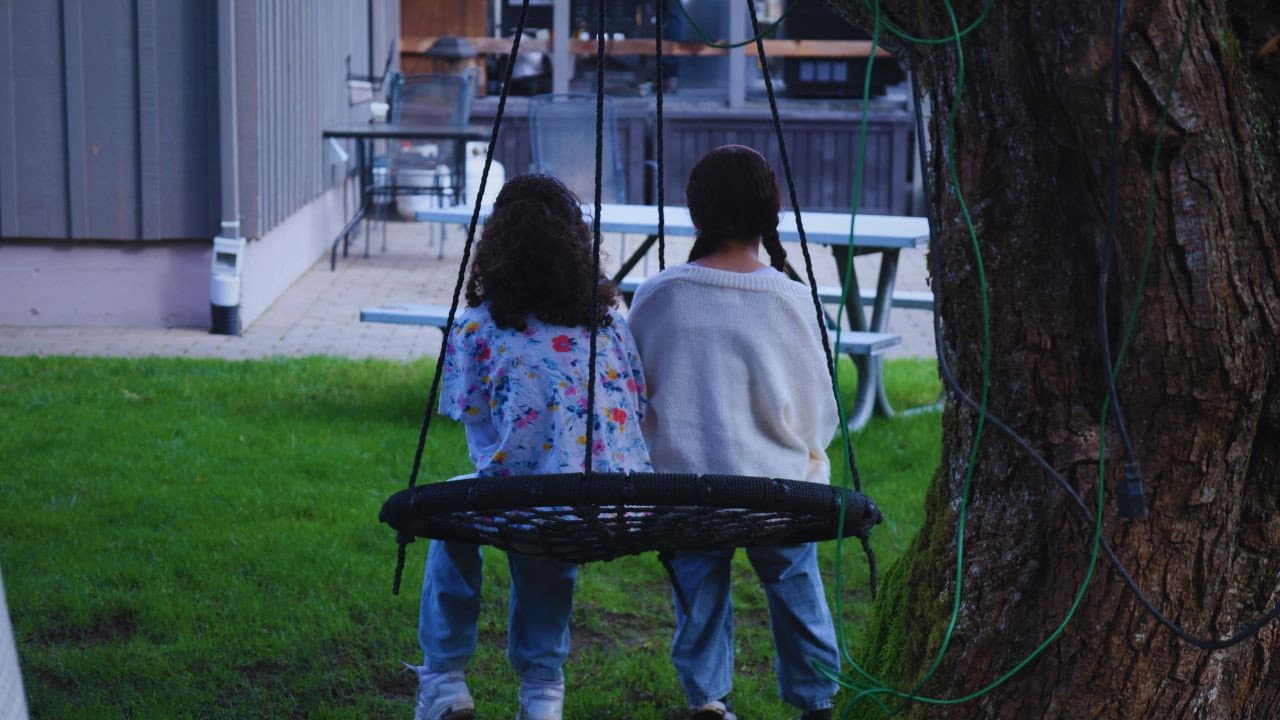
Details
Popularity · Search interest now
Based on TMDb activity
Not currently available for streaming or purchase.
Links may earn Incoming a commission at no extra cost to you.
Incoming Editorial TeamVerified
After the end of a short relationship with her best friend, Clara, Sophie struggles to understand what went wrong and has to decide who to blame for all that happened.
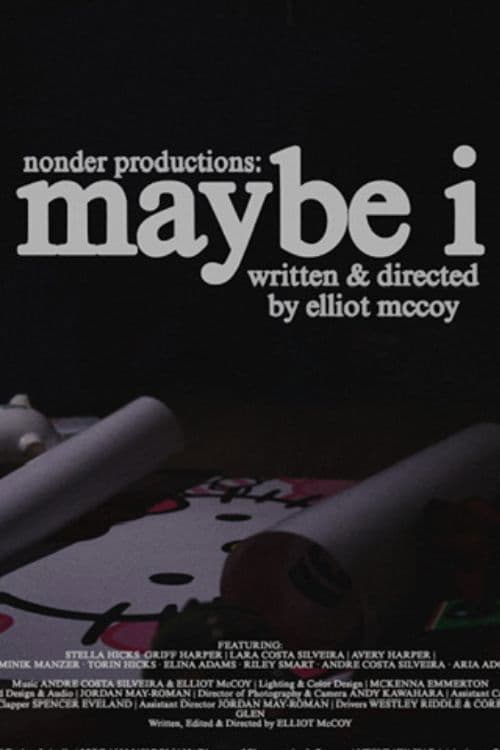
Maybe I is a drama and romance film releasing on Friday, April 24, 2026. The film centers on Sophie, a woman navigating the aftermath of a brief romantic relationship with Clara, who was also her closest friend. What the story tracks, at least in the terms available, is the psychological and emotional work of figuring out what went wrong — and, harder still, where to assign responsibility.
The premise is compact but loaded. A short relationship ending between two best friends is a scenario with a particular kind of grief attached to it: the loss isn't just romantic but structural. When a friendship becomes something else and then collapses, both versions of the relationship disappear at once. The film seems to be interested in that specific double-loss, and in the mental loops — the replaying, the reframing, the self-interrogating — that follow it. Sophie's central struggle, as described, isn't just heartbreak but the problem of interpretation: what actually happened, and who, if anyone, is to blame.
That framing — "who to blame" — is an interesting choice of language for a romance drama, and it suggests the film may be less interested in the warmth of the relationship itself than in the forensics of its failure. Many films in this genre are organized around the rekindling of something lost or the catharsis of acceptance. Maybe I appears to sit at an earlier, messier stage: the phase before any resolution has been reached, when a person is still deciding how to understand events that feel both recent and already fixed, already done to them by forces they can't quite name.
The title itself operates in this register. "Maybe I" is an incomplete sentence — a fragment that could extend in almost any direction. Maybe I caused this. Maybe I misread it. Maybe I should have known. The refusal to complete the thought is tonally precise for a story about someone who cannot yet complete their own account of what happened. Titles like this, sitting at the edge of self-accusation without committing to it, tend to signal films that are formally interested in ambiguity — in not letting the viewer settle too quickly into a verdict about whose fault anything is.
The film is in English, which, combined with the absence of further production context in the available information, leaves its setting, its scale, and its production background largely uncharted from this vantage point. What isn't known publicly at this stage is considerable: the director, the cast playing Sophie and Clara, the country of production, the distribution arrangement — none of these details are confirmed in the available record. For a film arriving in April 2026, that relative quiet around the production is notable. It could indicate a smaller independent release, the kind that arrives without a long marketing runway, or simply that the promotional apparatus hasn't yet engaged. Either way, the film reaches its release date as something of an unknown quantity in terms of the people who made it.
What can be said is that the genre pairing — drama and romance — is broad enough to encompass a wide range of tonal registers. A film about a failed friendship-romance could play as intimate chamber drama, as something rawer and more naturalistic, or as a more stylized interior study of grief and self-examination. The source description offers no visual language, no directorial sensibility, and no sense of how Sophie's retrospection is structured cinematically — whether the film moves in a linear progression through the aftermath or whether it loops back through the relationship itself. That structural question is not trivial. Films that hold their central relationship mostly in the past, glimpsed through memory or inference, create a very different experience than those that reconstruct events chronologically. The decision will shape how much presence Clara has as a character and how much the film trusts Sophie as a narrator of her own experience.
The question of trust — in Sophie, in her reconstruction of events, in her eventual conclusions about blame — may in fact be the film's central dramatic tension. The phrasing "has to decide who to blame" implies that blame is not obvious, that it is a decision rather than a discovery. That's a philosophically interesting position for a romance drama to take. It resists the tidiness of clear wrongdoing and asks instead how people construct moral accounts of situations they were inside. Whether the film earns that complexity in practice is, of course, the open question that only the film itself can answer.
Viewers drawn to character-driven stories about the emotional aftermath of relationships — particularly those involving the specific complications of romance between people who were friends first — will have reason to seek this out. The premise is narrow in the best sense: focused, psychologically specific, organized around a kind of interiority that the genre can accommodate well when it chooses not to rush toward resolution. Whether Maybe I commits to that difficulty or finds a softer path through it will become clear when it opens in April 2026.
The Last Sunrise
RomanceAug 26, 2026
The Last Sunrise 🔥 Hot
Sense and Sensibility
RomanceSep 23, 2026
Sense and Sensibility 📈 Trending
Peddi
ActionJun 3, 2026
Peddi 🔥 Hot
Cocktail 2
RomanceJun 19, 2026
Cocktail 2 ⭐ Popular
Digger
ComedySep 28, 2026
Digger 🔥 Hot
The Social Reckoning
DramaOct 7, 2026
The Social ReckoningSign in to join the conversation.