Details
- Language
- English
- Studio
- Bright Sun Films
- Directed by
- Michiel Oakes, Shawn Cooke, Bryce Huber, Chris Gates, Rony Celis, Megean McBride Sanchez, Vik Chopra, John Shaw
- Theme
- found familysurvival
- For
- adult
Popularity · Search interest now
Low
0.9
Based on TMDb activity
Starring
Incoming Editorial TeamVerified
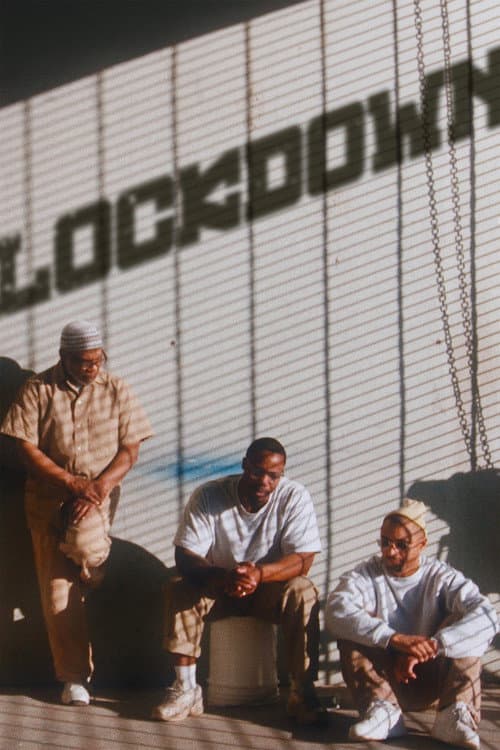
Lockdown is an upcoming drama film set for release on April 24, 2026. The story centers on a group of incarcerated men navigating a sudden prison lockdown, exploring themes of confinement, solidarity, and human connection.
Gallery (6)
Key features
- ·Prison drama set during a lockdown
- ·Themes of confinement and solidarity
- ·English-language film
- ·Scheduled release April 24, 2026
FAQ
When does Lockdown release?
Lockdown is scheduled for release on April 24, 2026.
What is Lockdown about?
The film follows a group of incarcerated men who face the emotional and psychological weight of a sudden prison lockdown, with solidarity and human connection at the center of the story.
What genre is Lockdown?
Lockdown is a drama set within a prison environment, focusing on themes of confinement and human connection.
About this release
There is a particular kind of confined-space drama that has occupied filmmakers for decades — stories in which physical restriction becomes the pressure system through which character is revealed. Lockdown, a thriller-drama produced by Bright Sun Films and Unincarcerated Productions, arrives on April 24, 2026, and positions itself squarely within that tradition, setting its action inside a prison during a sudden lockdown and tracing what happens to the men caught inside it.
The premise, as it has been described, is elemental: a group of incarcerated men, already living within one system of confinement, find that system suddenly tightened further. A lockdown within a prison collapses an already narrow world into something smaller still — cells become more cell-like, common spaces vanish, the routines that make incarceration bearable disappear. The film's apparent interest lies in what fills that vacuum. According to the available material, the emotional weight of confinement and the possibilities of solidarity and human connection are the territory the story means to explore. That framing places Lockdown closer to the psychological end of its genre range than to the procedural or action-oriented end, even if it carries a thriller classification alongside its drama designation.
The production company pairing is worth noting. Bright Sun Films is one of the listed studios, joined by Unincarcerated Productions — the latter name carrying an obvious thematic resonance with the subject matter, suggesting at minimum an intention to engage seriously with the experience of incarceration rather than use it purely as an atmospheric backdrop. Whether that intention is reflected in research partnerships, in the casting of people with lived experience of the prison system, or in some other form of production practice is not clear from what has been made public. But the choice to attach a company with that name to a film about men inside a prison is unlikely to be accidental.
The genre combination — thriller and drama — is a familiar and somewhat elastic pairing in contemporary film. At one pole, prison thrillers tend toward escape plots, corrupt-warden confrontations, or physical violence as the primary dramatic engine. At the other, prison dramas have historically used incarceration as a lens for examining race, class, justice, and the interior lives of people the broader culture tends to overlook. Lockdown appears, from its described premise, to lean toward the latter. The lockdown event functions less as a heist setup or an escape catalyst and more as a crucible — a condition that strips circumstances back and forces a reckoning. The phrase "only way through the darkness" in the source description is suggestive of a film interested in survival that is emotional and relational rather than physical.
That said, the thriller designation is not merely decorative. A lockdown in a real prison context carries genuine tension: it typically signals that something has gone wrong — a fight, a contraband discovery, a threat — and the period of restriction that follows can be dangerous, unpredictable, and psychologically destabilizing. Whether the film makes dramatic use of whatever incident triggers the lockdown, or whether that incident remains largely off-screen and ambient, is one of the more consequential structural choices the film will have made. The difference between those two approaches produces almost entirely different films — one in which plot mechanics drive the tension, and one in which tension is the atmosphere rather than the engine.
Several questions remain open. The cast has not been detailed in available material, which makes it difficult to assess the film's profile or how it has approached the community of characters at its center. Ensemble dramas set in closed spaces live and die on the specificity of their character work, and the number and variety of perspectives the screenplay develops will shape whether the film's stated interest in solidarity feels earned or schematic. Similarly, the director's identity and prior work are not part of the available record, which leaves the visual and tonal sensibility of the project largely unknown. Prison settings have been rendered in drastically different registers by different filmmakers — from the clinical to the expressionistic — and the choice matters enormously for how the emotional material lands.
The film's language is listed as English, and both production companies appear to be working within an English-language context, though the specific national setting of the prison — and by extension the specific legal and social context in which these men are confined — is not identified. That context tends to shape the meaning of a prison story considerably; the carceral landscape in the United States, for instance, carries particular historical and political freight that would inflect a story about solidarity and confinement in ways that differ from a British or Australian setting.
The release is set for a late-April date in 2026, a period that falls outside the traditional prestige-season windows of autumn and the December holidays, and also outside the summer blockbuster corridor. Films released in that stretch often belong to a middle tier — serious enough in intent to avoid summer spectacle positioning, but arriving before the festival-driven awards circuit heats up. That positioning doesn't prejudge the film's quality, but it does suggest the distributors are likely aiming at a general adult audience rather than a specialized arthouse release or a mainstream action draw.
The audience most likely to seek out Lockdown is probably that of the thoughtful genre film — viewers who follow character-driven thrillers, who have engaged with prior works that treat incarceration as subject rather than setting, and who are willing to sit with discomfort for the duration of a drama about men whose circumstances the film seems determined to render with some degree of seriousness. Whether the film earns that seriousness will only be answerable in April.
Comments
Sign in to join the conversation.
Loading…