 🔥 Hot
Sense and Sensibility
RomanceSep 23, 2026
Sense and Sensibility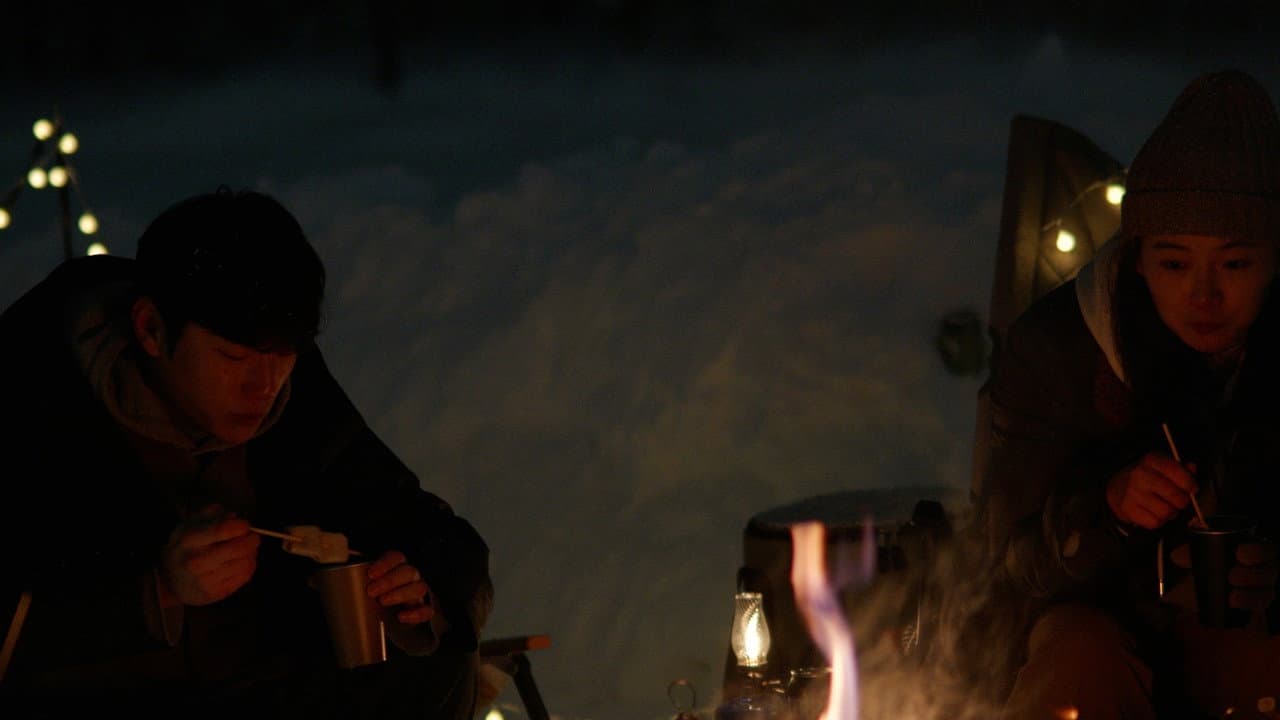
Details
Popularity · Search interest now
Based on TMDb activity
Not currently available for streaming or purchase.
Links may earn Incoming a commission at no extra cost to you.
Incoming Editorial TeamVerified
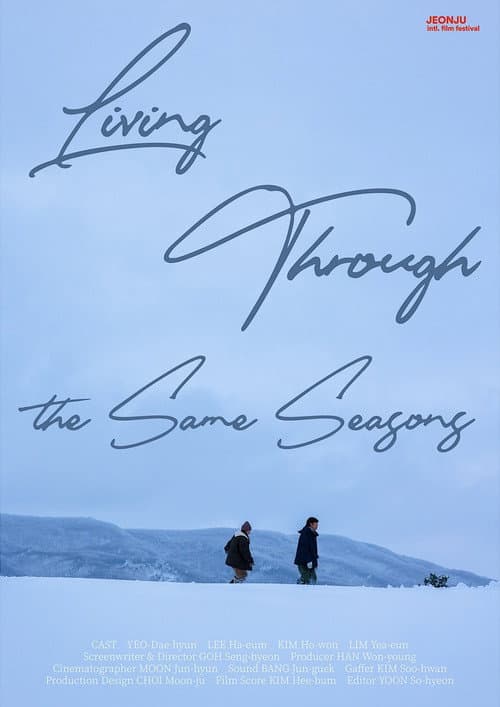
Se-hun and Jeong-i, two people who express their hearts in vastly different ways. A journey through four seasons—winter, spring, summer, autumn, and back to winter again. How will the time we shared be remembered?
A Korean-language drama-romance called Living Through the Same Season — subtitled in the original Korean as 같은 계절을 보낸다는 건 — is scheduled for release on May 1, 2026, from the production company Go-Cine.
The film's premise is structured around a single, quietly ambitious formal conceit: two people, Se-hun and Jeong-i, move through an entire cycle of seasons together — winter, spring, summer, autumn, and then back to winter again — while expressing emotional connection in what the synopsis describes as "vastly different ways." That return to winter, the completion of a full loop rather than an arrival at some neutral midpoint, gives the narrative shape an unusual quality. The story doesn't seem to be building toward an escape from its starting conditions so much as a re-encounter with them, presumably transformed by whatever the intervening months have deposited.
Seasonal structuring in romantic drama has a long history in Korean cinema and television, where the passage of time is frequently used not merely as backdrop but as emotional architecture — a way of externalizing interior states that characters themselves struggle to articulate. The four-seasons framework here is given an additional beat by that fifth stop, the return winter, which suggests the film is at least as interested in memory and retrospection as it is in the accumulation of experience. The closing question posed by the synopsis — "How will the time we shared be remembered?" — frames the entire cycle less as a courtship and more as an act of retrospection in progress, or perhaps both simultaneously.
What the available information does not reveal is the specific nature of the contrast between Se-hun and Jeong-i's modes of expression. The synopsis notes that the two characters express their hearts in "vastly different ways," which is a description capacious enough to accommodate a wide range of dramatic and tonal approaches. Whether those differences are drawn along lines of temperament, communication style, circumstance, or something more specifically rendered is not indicated. Similarly, nothing in the structured data establishes who wrote or directed the film, which makes it difficult to situate the work within any particular artistic tradition or filmmaking sensibility. Go-Cine is listed as the sole studio, but no further production context is provided.
The film is also arriving without any existing vote count or average score from audiences, which is consistent with a title that has not yet screened publicly in any documented capacity. That absence of early reception data is simply a function of the timeline — the release date is set for May 1, 2026 — but it does mean that whatever reputation the film develops will be built entirely from that date forward, without the cushion of festival buzz or advance critical response to shape expectations.
The genre combination of drama and romance, in a Korean-language film organized around a seasonal cycle and the retrospective question of shared memory, places this work in recognizable territory for audiences already engaged with contemporary Korean cinema. That audience has grown considerably in the years since Korean film and television achieved broader international visibility, and a film like this one — intimate in apparent scale, grounded in interpersonal emotional dynamics rather than high-concept plotting — is precisely the kind of release that tends to find its footing through word of mouth and streaming availability rather than wide theatrical exposure, though nothing in the available data specifies its distribution path.
The structural choice to end where the story begins — in winter — carries the implication that the film may be less concerned with resolution in any conventional sense than with the texture of time as it is experienced between two people who are not, or not simply, on the same emotional frequency. Romance narratives that foreground incompatibility of expression rather than incompatibility of feeling tend to occupy a somewhat different emotional register than those organized around obstacle and reunion. Whether Living Through the Same Season leans into that quieter, more ruminative mode or uses the seasonal structure as a scaffold for more conventional romantic plotting remains to be seen.
Go-Cine's involvement as the producing studio is the one institutional anchor the available data provides, though without additional filmography context it functions primarily as a point of attribution rather than a signal of any particular aesthetic orientation.
Audiences likely to seek this out in May 2026 include those already oriented toward Korean-language romantic drama — a category that has demonstrated genuine cross-cultural reach — as well as viewers drawn to films that take a structural approach to the experience of time in relationships. The film's central question, about how shared time eventually sediments into memory, is universal enough in its emotional logic to travel across contexts, and the deliberate pacing implied by a full seasonal cycle suggests it is pitched at viewers with patience for that kind of slow accumulation.
🔥 HotSense and Sensibility
RomanceSep 23, 2026
Sense and Sensibility
The Last Sunrise
RomanceAug 26, 2026
The Last Sunrise 🔥 Hot
Peddi
ActionJun 3, 2026
Peddi 📈 Trending
Cocktail 2
RomanceJun 19, 2026
Cocktail 2 ⭐ Popular
Digger
ComedySep 28, 2026
Digger 🔥 Hot
The Social Reckoning
DramaOct 7, 2026
The Social ReckoningReleasedSign in to join the conversation.