Details
- Language
- English
- Studio
- Audacious Productions
Popularity · Search interest now
Low
0.2
Based on TMDb activity
Where to watch
Not currently available for streaming or purchase.
Links may earn Incoming a commission at no extra cost to you.
Incoming Editorial TeamVerified
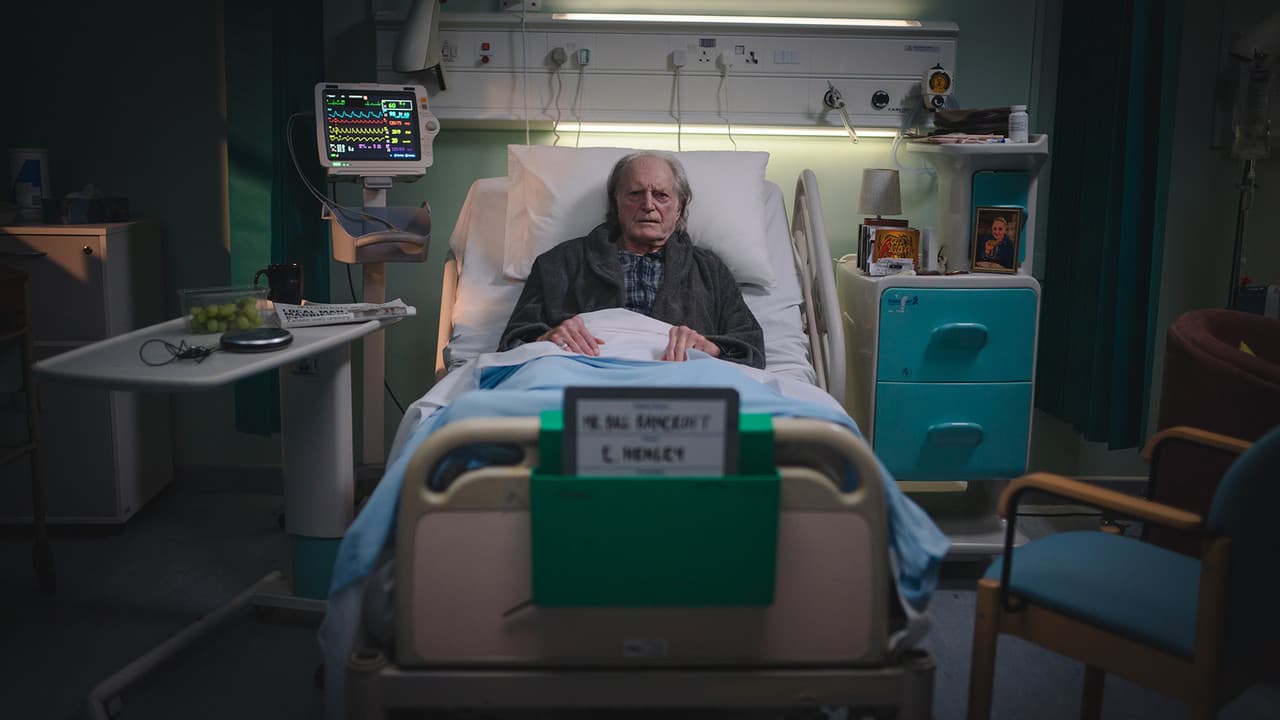
BILL is in end of life care waiting for the sweet release of death - but unfortunately for him he is stuck in an infinite time loop, causing the day to restart the second his heart stops... A darkly comic yet sweet and hopeful film all about enjoying the time you have left and saying the important things to the important people.
About this release
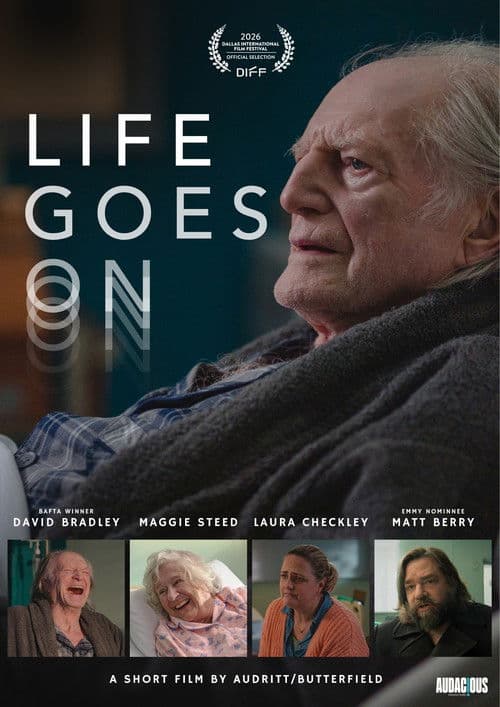
A darkly comic film about a dying man who cannot die, Life Goes On is set for release on April 25, 2026, from Audacious Productions.
The premise is blunt and strange in equal measure: Bill, a man in end-of-life care, finds himself caught in a time loop that resets the moment his heart stops. He is, by every conventional measure, trying to finish — and the universe, or at least the film's internal logic, won't let him. The day keeps beginning again. Death, typically the one appointment no one misses, becomes something he cannot keep.
That setup places Life Goes On in a well-worn structural tradition. The time loop as narrative device has a long cinematic history, and its recurrence in recent decades has stretched it across genres in ways its earliest practitioners probably wouldn't have predicted. What began as a mechanism for science fiction — the repetition of a single day as puzzle or trap — has since been applied to romantic comedy, action, horror, and now, apparently, the peculiar subgenre of the terminal-illness drama. The tonal shift involved in transporting a loop narrative into a hospice setting is not a small one. Films about people facing death tend toward earnestness, toward the accumulation of final conversations and reconciliations. Dropping a mechanical absurdity into that space — the protagonist literally dying over and over and waking up again in the same hospital bed — risks tonal chaos. The described intention here, "darkly comic yet sweet and hopeful," is easier to state than to execute.
The film comes from Audacious Productions, and the metadata available describes it as an English-language comedy-drama. Beyond that production context, specifics about the creative team — the writer, director, and cast — are not included in the available information, which is itself notable this far from release. Films that carry recognizable names in those roles tend to have that information circulating early. Whether the absence here reflects an unconventional marketing posture, an emerging talent behind the camera, or simply early-stage promotion is unclear.
What the source description does sketch, fairly precisely, is the film's thematic ambition. The loop is framed not as a horror or a punishment but as a kind of enforced mindfulness — a mechanism that compels Bill to engage with the time he has rather than simply wait for it to end. The phrase "saying the important things to the important people" suggests the familiar architecture of a film about relationships restored or completed under pressure, except the pressure here is also structurally comic: Bill's situation is absurd before it is poignant. He keeps dying. That's funny, if the film can hold the right angle on it. It is also, presumably, an opportunity to keep staging the same set of conversations and encounters differently, as loop narratives typically do, each iteration revealing something that the last didn't.
The question the premise raises most insistently is how much of the film's interest lies in the mechanism versus the character. Time loop films live or die — the phrase is unavoidable here — on whether the person at the center generates enough interior life to make repetition meaningful rather than tedious. Harold Ramis and Bill Murray worked through that problem in one direction in 1993; other films have worked through it in others, some more successfully than their predecessors. What distinguishes Bill's situation from most loop protagonists is that he is not a healthy person arbitrarily trapped. He is already in the process of dying. He has already, by the logic of end-of-life care, moved into a terminal phase. The loop doesn't interrupt an ordinary life — it interrupts a conclusion. That asymmetry is the film's most genuinely unusual formal choice, and how it uses that asymmetry will likely determine whether it feels like a genre exercise or something with its own particular shape.
The "hopeful" register mentioned in the source description is worth attending to. Hopeful is not the same as sentimental, though they are adjacent, and a film about a man who keeps dying and waking up again has obvious potential for both. The darkly comic element provides a kind of structural protection against easy pathos — as long as the film is willing to be genuinely funny about death, it earns a certain permission to be sincere about it too. Whether Audacious Productions has navigated that balance will only become clear when the film is available, but the intention, at least, is legible: this is not meant to be a tearjerker with jokes, nor a comedy that happens to be set in a hospital. The two registers are described as coexisting, which is the harder ambition.
The April 2026 release positions the film in what is typically a competitive theatrical window — spring tends to draw a mix of awards-adjacent holdovers and platform releases testing wider audiences. Without more information about distribution strategy, it's difficult to know what kind of release this is or how broadly it will be available from opening.
Audiences drawn to character-driven comedies with macabre premises, or to films that approach mortality with something other than reverence, will have reason to track this one. So will viewers who have found the time loop premise durable across genres and are curious whether it can carry the particular weight of a hospice setting without collapsing under it.
Comments
Sign in to join the conversation.
Loading…