
Details
- Language
- Norwegian
- Studio
- Handmade films in Norwegian Woods
- TMDb Rating
- 6.1 (387 votes)
- Directed by
- Pål Øie
- Written by
- Vilde Eide, Kjersti Helen Rasmussen, Natasha Arthur
- Mood
- atmospherictense
- Theme
- supernaturalsurvival
- For
- adult
Rating · Quality score from voters
TMDb
6.1/10
IMDb
4.9/10
Rotten Tomatoes
67%
Popularity · Search interest now
Popular
66.5
Based on TMDb activity
Starring


Where to watch
Links may earn Incoming a commission at no extra cost to you.
Incoming Editorial TeamVerified
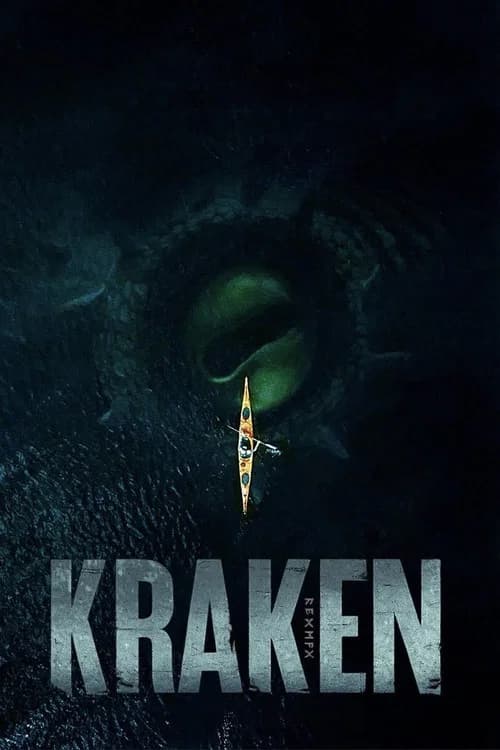
A marine biologist is doing research on a fish farm when she encounters several strange occurrences. Along with the brutal deaths of two teenagers, all signs point to the deep fjord; can there be more to the depths than the eye can see?
Trailer
Gallery (16)
About this release
A marine biologist stationed at a fish farm becomes the reluctant center of something far darker than routine research. That is the premise of Kraken, a Norwegian horror-action-thriller produced by Handmade Films in Norwegian Woods and Nordisk Film Norway, scheduled for release on February 6, 2026. Shot in Norwegian — the film's original language — it arrives from two production entities with roots in Scandinavian filmmaking, positioning it within a distinct regional tradition that has, over the past two decades, found considerable international appetite for its particular brand of cold-water dread.
The setup is economical in the way that effective creature-feature premises tend to be. A scientist arrives at a working fish farm, the kind of industrial-aquatic environment that is both mundane and quietly strange — nets suspended in dark water, the hum of mechanical systems, the sense that what lies below the surface is, by definition, unexamined. Strange occurrences begin accumulating. Two teenagers are killed, brutally, and the film's logline points a finger toward the deep fjord nearby. Whether "the depths" harbor something biological, supernatural, or some layered combination of the two is, at this stage, left deliberately open. The title, Kraken, is not subtle about the direction of travel, but the degree to which the film commits to a literal sea-monster reading versus something more ambiguous remains to be seen.
The Norwegian fjord as a horror setting carries its own weight. The geography — extreme depth, limited visibility, isolation from populated centers, water cold enough to disorient the senses — maps neatly onto the mechanics of fear. Scandinavian genre filmmaking has leaned into this terrain before, most visibly in troll-mythology horror (Trollhunter, 2010) and in various cold-country survival thrillers that use landscape as a co-antagonist. Kraken situates itself within that lineage while reaching back further, to the long literary and folkloric history of the kraken itself: a creature of Norse and wider Northern European mythology, typically depicted as something vast and cephalopod-like, lurking at depths that precede human understanding. The name alone carries centuries of accumulated unease, which the filmmakers are presumably counting on.
What is notably absent from the publicly available information is any confirmed director, lead cast, or specific production background. This is not unusual for a film more than a year from release, but it means the preview audience is, for now, evaluating an outline rather than a complete picture. The marine biologist protagonist is described in general terms — her name, her specific research focus, her institutional affiliation, if any, are not yet public — and the two teenagers whose deaths set the plot in motion remain similarly anonymous in the materials. This kind of withholding can be strategic; it keeps the monster, and the film's specific interpretation of it, intact as a reveal. It can also simply reflect the early stage at which production details tend to trickle out.
The production partnership between Handmade Films in Norwegian Woods and Nordisk Film Norway is worth noting. Nordisk Film is among the oldest continuously operating film companies in the world, with deep infrastructure in Scandinavian distribution and production. Its involvement typically signals a project with professional resources behind it and some expectation of regional theatrical presence. Whether Kraken is being positioned for international distribution beyond the Nordic territories, or will travel primarily through the digital rental and purchase channels already listed — Amazon Video, Apple TV, Google Play Movies, YouTube, Fandango At Home, and Plex — is not yet confirmed. The absence of any announced streaming home is itself a minor data point; either a deal has not yet been struck, or the film is being routed more deliberately toward transactional digital releases.
The horror-action-thriller triple classification is a somewhat ungainly combination that may reflect genuine genre hybridity or may simply reflect the way films get tagged in aggregation systems. Pure creature features often skew more toward horror and thriller than toward action proper, but action elements — pursuit sequences, physical confrontation with whatever inhabits the fjord — could push the film's pacing in directions that distinguish it from slower, more atmospheric Scandinavian genre work. The presence of both a professional adult protagonist and teenage victims also suggests a structure familiar from American creature and slasher hybrids, where scientific knowledge and adolescent recklessness occupy different parts of the same narrative ecosystem.
The film's TMDB vote average of 6.4 from 225 votes is a faint early signal, likely reflecting festival screenings, advance industry viewings, or audiences who have encountered it through prior regional release, though no such release has been confirmed in the available materials. A score in that range, from a limited sample, is broadly consistent with a film that satisfies its core audience without generating significant crossover enthusiasm — though 225 votes is far too small a sample to treat as predictive.
Viewers likely to seek out Kraken in early 2026 will be drawn from at least two overlapping groups: fans of Scandinavian genre cinema who have followed the export market for Nordic horror and thriller productions, and the broader audience for creature features and marine-horror specifically, a subgenre that resurfaces in waves and tends to perform reliably in digital-rental environments. For both groups, the film's setting and premise are the primary draw; the execution, as with most genre films, is what will determine whether it circulates beyond its initial release window.
Comments
Sign in to join the conversation.
Loading…