Details
- Language
- English
- Studio
- Sony Pictures Animation
- TMDb Rating
- 8.0 (2.9k votes)
- Directed by
- Chris Appelhans, Maggie Kang
- Written by
- Maggie Kang, Danya Jimenez, Hannah McMechan, Chris Appelhans
- For
- kid friendly
Rating · Quality score from voters
TMDb
8.0/10
IMDb
7.4/10
Rotten Tomatoes
92%
Metacritic
77/100
Popularity · Search interest now
Rising
38.4
Based on TMDb activity
Starring








Incoming Editorial TeamVerified
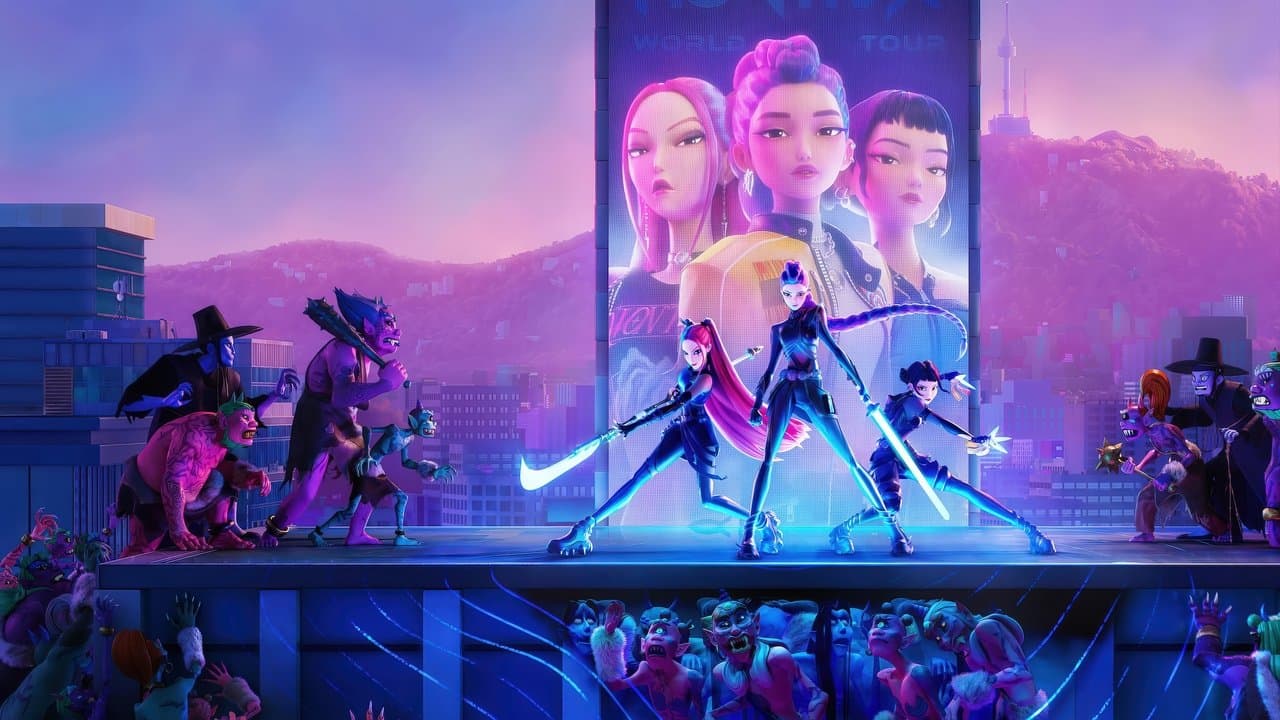
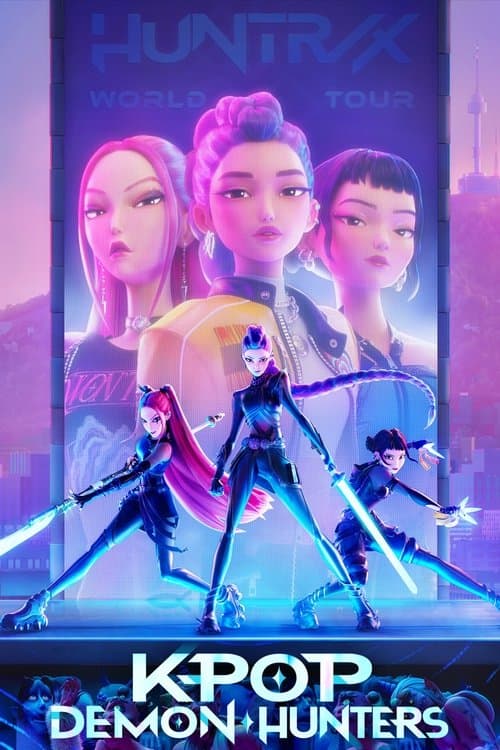
When K-pop superstars Rumi, Mira and Zoey aren't selling out stadiums, they're using their secret powers to protect their fans from supernatural threats.
Trailer
Gallery (21)
About this release
Sony Pictures Animation's KPop Demon Hunters arrives on Netflix on June 20, 2025, an English-language animated feature sitting at the intersection of fantasy, music, and comedy. The premise is economical and immediately legible: three K-pop superstars — Rumi, Mira, and Zoey — lead double lives, filling stadiums by day and deploying unspecified supernatural abilities to protect their fanbase from unspecified supernatural threats by night. It is, in rough outline, a superhero origin story grafted onto the mechanics of idol-group mythology, filtered through animation.
Sony Pictures Animation is the studio behind the project, which places it within a production house that has spent the better part of the last decade working to establish a distinct visual and tonal identity in American animation. The film arrives in English, though the K-pop setting implies a cultural specificity that will be worth watching for — how much the production engages with the actual aesthetics, industry pressures, and fan-culture dynamics of Korean pop music, versus how much it uses that setting as broadly recognizable shorthand for glamour, choreography, and devoted audiences, remains one of the more interesting open questions about the finished film.
The genre blend the metadata describes — fantasy, music, comedy, animation — is not unusual on paper, but the particular combination here has a specific texture. Music-themed animated films have traditionally leaned toward either earnest biography (fictionalized or otherwise) or jukebox-style spectacle; KPop Demon Hunters appears to treat its musical premise more as character architecture than as narrative engine. The demon-hunting conceit suggests the story's actual momentum will come from action and comedic genre play rather than from the performance sequences themselves, though those sequences, in an animated K-pop context, will presumably be elaborate set pieces in their own right.
The three protagonists — Rumi, Mira, and Zoey — are identified by name in the film's premise, but almost nothing about their individual characterizations, the nature of their powers, or the specific demons they are contending with has been made available in the film's public-facing materials. The group-of-three structure is a durable template: it allows for internal dynamics, role differentiation, and the kind of friction-and-solidarity arcs that ensemble storytelling depends on, but without knowing how the film distributes personality across those three figures — who is skeptical, who is earnest, who provides comic relief, whether those functions shift — it is impossible to assess whether the screenplay leans on the template or does something more particular with it.
Similarly, the supernatural threat is almost entirely undefined in what's been made public. The word "demons" covers an enormous range of tonal registers in fantasy narrative, from genuinely menacing to broadly comic, and the balance a film strikes between those registers tends to determine whether it reads as an action comedy or a comedy that occasionally gestures toward stakes. The film is categorized as comedy first, fantasy second, which suggests the threat level is probably calibrated toward fun rather than dread — but the actual visual and narrative treatment of those threats, and how seriously the film takes its own mythology, won't be clear until the film itself is available.
The TMDB vote average of 8.025, drawn from nearly 2,900 votes, is notable context. That score, on a platform where early voting can be skewed by promotional activity, enthusiast communities, or advance screenings, suggests the film has already generated a meaningful and largely positive response from some audience. It doesn't tell us much about critical reception or about how broadly that enthusiasm generalizes, but it does indicate that whoever has seen the film or engaged with it prior to wide release has done so with some warmth. Whether that response comes primarily from animation fans, K-pop fans, or a genuinely crossover audience is not discernible from the number alone.
The Netflix streaming release — available both in a standard tier and in the platform's ad-supported tier — positions this as a wide, accessible debut rather than a theatrical event. This is a meaningful contextual signal. Animated features that stream on release, rather than opening theatrically, tend to court different viewership patterns: they reach audiences who might not have gone to a theater but will queue something up on a Friday night, and they often find their most engaged viewers through family or friend group co-viewing rather than solo consumption. A film about fans and fan community, with an audience that skews toward K-pop's own deeply communal fanbase, seems reasonably well-suited to that mode of discovery.
The people most likely to seek this out on release day are K-pop fans who will be alert to how the film handles the culture they're embedded in — whether it feels like genuine engagement or costuming — alongside animation audiences who follow Sony Pictures Animation's output as a matter of course. Children who consume animated content broadly, and their accompanying adults, represent a third constituency, and the comedy and fantasy framing suggests the film is working toward that general-family demographic even if the K-pop specificity skews the marketing toward older teens and young adults. Those three groups don't always want the same thing from a single film, and how KPop Demon Hunters navigates their different expectations is one of the more structurally interesting things to watch for when it arrives June 20.
Comments
Sign in to join the conversation.
Loading…