
Starring





Incoming Editorial TeamVerified
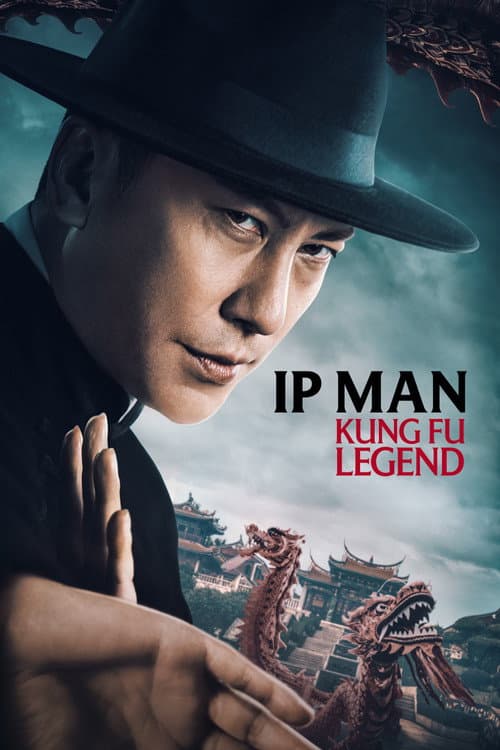
Ip Man: Kung Fu Legend is a Chinese-language martial arts film set in 1950s Hong Kong, releasing on April 24, 2026. The story follows Ip Man as he resists a coalition of British merchants and Chinese triads, becomes framed for murder, and must survive a series of threats inside prison.
Trailer
Gallery (1)
Key features
- ·Chinese-language martial arts film
- ·Set in 1950s Hong Kong
- ·Theatrical release April 24, 2026
- ·Prison-set action sequences
- ·Ip Man as central protagonist
- ·Triads and British merchants as antagonists
FAQ
When does Ip Man: Kung Fu Legend release?
Ip Man: Kung Fu Legend releases in theaters on April 24, 2026.
What is Ip Man: Kung Fu Legend about?
The film follows Ip Man in 1950s Hong Kong as he opposes a coalition of British merchants and Chinese triads demolishing factories, is subsequently framed for murder, and must survive threats from within prison.
What language is Ip Man: Kung Fu Legend in?
The film is in Chinese (Mandarin/Cantonese as produced).
Is Ip Man: Kung Fu Legend connected to the Donnie Yen Ip Man films?
The structured data available does not confirm a direct connection to any specific prior Ip Man film series; it is a separate production based on the same historical figure.
About this release
A new entry in the long-running Ip Man franchise, produced by Kai Pictures, is scheduled for release on Friday, April 24, 2026. The film carries the title Ip Man: Kung Fu Legend and arrives as the latest Chinese-language action picture built around the historical figure of Ip Man, the Wing Chun grandmaster who trained Bruce Lee and has become one of the most reliably bankable figures in contemporary martial arts cinema.
The Ip Man franchise has occupied a particular position in the action genre since the original film established its template: a composed, almost stoic protagonist navigating colonial pressure, ethnic tension, and physical violence with a combination of moral clarity and technical precision. Those films leaned heavily on the historical weight of the character — his years in Foshan during the Japanese occupation, his later life in Hong Kong — and used that weight to give their fight sequences a stakes that pure spectacle films rarely achieve. The franchise became a reference point for a generation of martial arts productions, and returning to it now, in 2026, places Kung Fu Legend in a lineage with strong audience expectations about tone, choreography, and the particular kind of dignity the central character is expected to project.
The setting for Kung Fu Legend is 1950s Hong Kong, a period that invites a specific political texture. The premise involves British merchants and Chinese triads operating in collaboration to expand their territorial and commercial interests, specifically through the forcible demolition of factories in disregard of the workers who depend on them. Ip Man, the film's synopsis makes clear, positions himself as an advocate for those workers, which draws him into confrontation with both power structures simultaneously. This is a recognizable dramatic architecture for the franchise — the protagonist caught between colonial authority and criminal organization, compelled to act on behalf of people with no institutional recourse — but the 1950s Hong Kong setting gives it a somewhat different historical texture than earlier entries, which were more explicitly concerned with the Japanese occupation of mainland China during World War II.
The narrative complication arrives when Ip Man is framed for murder and imprisoned. The synopsis indicates that within the prison, the triads arrange multiple attempts on his life, creating an enclosed action environment that shifts the film's geometry considerably from the open confrontations typical of the genre. The prison setting functions as a compression device: it removes the protagonist's mobility and social resources while forcing him to work within a controlled, surveilled space. Whether the film resolves his imprisonment through combat, legal vindication, or some combination of the two is not addressed in the available material, though the synopsis frames the central question explicitly — can he overcome these traps, escape the danger, and clear his name — suggesting that all three outcomes are in play simultaneously.
What the available information leaves genuinely open is the question of casting. The franchise's most prominent recent incarnation centered on Donnie Yen in the title role across four films, and his presence was instrumental in establishing the physical and emotional register audiences associate with the character. Whether Kung Fu Legend continues with Yen, introduces a different actor in the role, or reconceives the character entirely is not addressed in the structured data. This is not a trivial gap. The franchise has enough name recognition to generate interest on its own, but the specific interpretation of Ip Man — his stillness, his economy of movement, the way he carries the character's famous restraint — has varied meaningfully across different productions, and the choice of lead performance will shape how closely this film aligns with audience expectations built by the earlier entries.
Similarly, the film's directing and choreography credits are not specified in the available information. Martial arts cinema at this budget level and franchise pedigree tends to stand or fall on the design of its fight sequences, and the question of who is composing the physical language of the film is one that interested viewers will likely find unresolved until more production information surfaces. The 1950s Hong Kong setting and the prison environment both offer distinct choreographic possibilities — confined spaces, period-specific weapons and social hierarchies, the contrast between Ip Man's Wing Chun precision and the blunt force of triad enforcers — but how those possibilities are realized depends entirely on creative choices that haven't been disclosed.
The film is produced in Mandarin or Cantonese, consistent with the franchise's Chinese-language origins, and is being released by Kai Pictures. The April 2026 date positions it in a spring window that has historically been hospitable to action releases with international audience ambitions.
Viewers who have followed the Ip Man franchise through its previous entries will be the most natural audience for this film, particularly those drawn to its combination of period setting, colonial-era political conflict, and Wing Chun-based action choreography. The prison narrative and the explicit framing device also suggest an appeal to audiences who respond to stories of institutional injustice resolved through individual skill and persistence — a structure with broad cross-cultural legibility that has helped the franchise travel well beyond its Chinese-language core market.
Comments
Sign in to join the conversation.
Loading…