 🔥 Hot
Sense and Sensibility
RomanceSep 23, 2026
Sense and Sensibility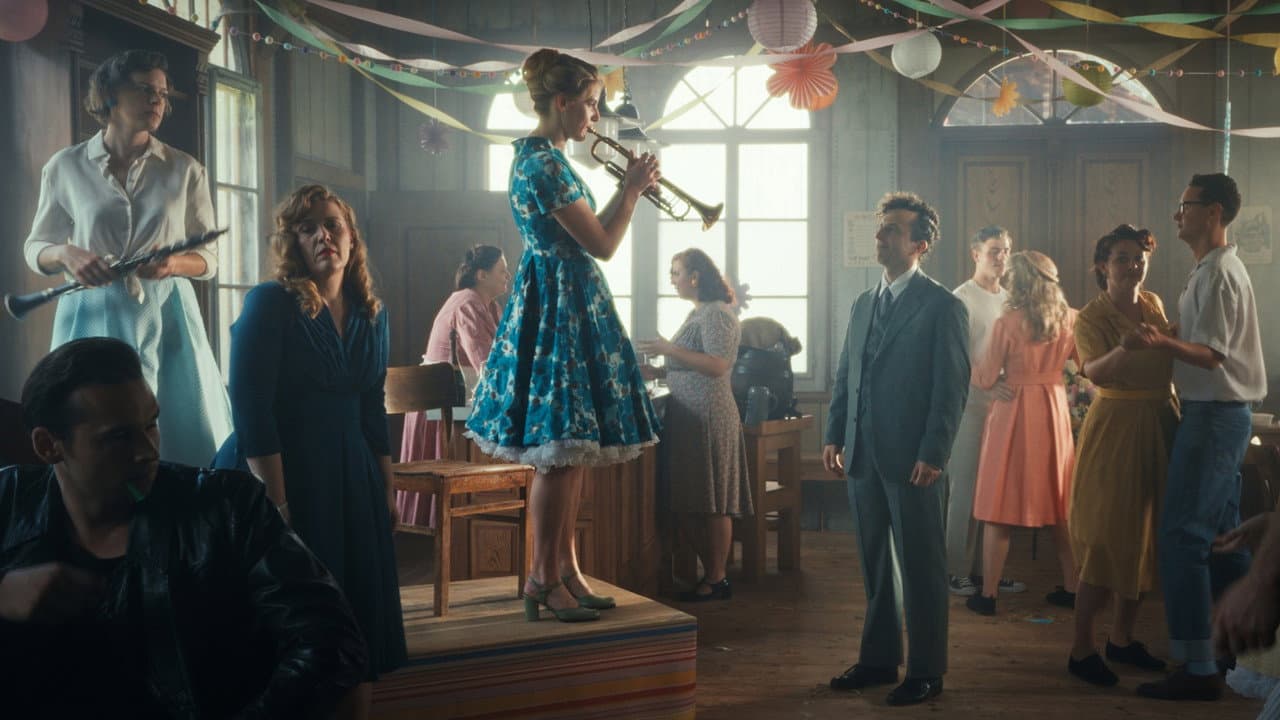
Details
Popularity · Search interest now
Based on TMDb activity
Not currently available for streaming or purchase.
Links may earn Incoming a commission at no extra cost to you.
Incoming Editorial TeamVerified
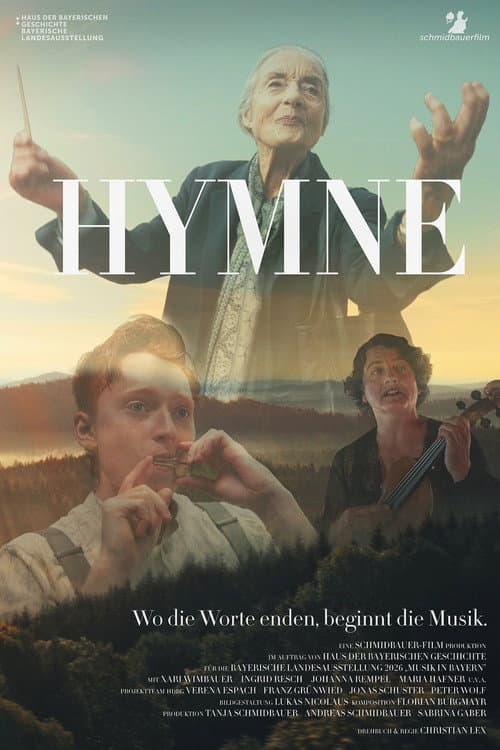
Across generations, a single instrument connects people from different eras - from an emigrating zither player in the Bavarian Forest in 1881, to the persecuted and the lovers of the 20th century, to a deaf young woman in present-day Munich - weaving them into a polyphonic, musical hymn to memory, loss, and solidarity.
A German-language film titled Hymn — in its original release Hymne — is scheduled to open on April 25, 2026, produced by Schmidbauer-Film. What the project announces about itself is unusual in its structural ambition: a narrative that spans roughly 140 years, organized not around a family bloodline or a recurring place but around a single musical instrument — a zither — and the successive lives it touches.
The premise moves in three broad temporal layers. The earliest begins in 1881 in the Bavarian Forest, where a zither player emigrates, carrying the instrument out of the region and, presumably, into a chain of custody the film intends to trace. The middle passages concern unnamed persecuted individuals and lovers of the twentieth century — a deliberately open description that could encompass any number of historical pressures across a century marked by two world wars, displacement, and political upheaval in German-speaking Europe. The contemporary thread lands in present-day Munich, where a deaf young woman becomes the instrument's current bearer, a detail that introduces a pointed tension: an object defined by sound arriving in the hands of someone who experiences the world without it.
The zither itself is an instrument with a specific regional identity. It belongs to the folk traditions of Bavaria and Austria, closely associated with Alpine musical culture, and carries cultural connotations of rootedness, community, and a certain kind of pre-modern European continuity. That the film begins with one being carried away from the Bavarian Forest — emigration implying departure, rupture, the difficulty of keeping things intact — suggests the instrument is being used not as a symbol of stable heritage but of what heritage looks like when it is uprooted and passed through circumstances that threaten to destroy it. The choice of a zither rather than a more universally familiar instrument is itself a curatorial decision, one that anchors the film in a specific geographic and cultural imagination rather than reaching for easy universality.
Multi-generational narratives linked by an object have a long tradition in European art cinema and literary fiction — the conceit appears in novels and films where a painting, a letter, or a piece of jewelry becomes the connective tissue across centuries. What distinguishes the structure described here is the explicit inclusion of historical persecution as one of its chapters, which raises questions about how the film handles that material relative to the more intimate stories surrounding it. A format that treats emigration, persecution, and a deaf woman's contemporary experience as chapters in a single polyphonic composition invites scrutiny of how those threads are weighted against one another, whether the film allows each period its own texture or pulls them into a kind of aesthetic equivalence that flattens their differences.
The description uses the word "polyphonic" deliberately — it is a musical term applied to narrative structure, suggesting that these storylines run simultaneously or in close counterpoint rather than strictly sequentially. Whether that means the film intercuts between eras, uses sound and music as transitional tissue, or structures itself in some other way is not addressed in the available materials. The musical nature of the central object does open possibilities: a film about a zither could engage seriously with the instrument's actual sound, could use music as a structural device in ways that go beyond score, could allow the deaf protagonist's relationship to vibration and silence to comment on what the previous generations heard and felt. These remain possibilities rather than confirmed approaches.
What is also open is the question of the emigrating zither player as a character. The 1881 departure from the Bavarian Forest is the chronological origin point, but it is not clear whether this figure anchors the film in the way that a protagonist typically does, or whether all three temporal layers receive roughly equal weight. The phrase "weaving them into a polyphonic, musical hymn" suggests the goal is synthesis rather than hierarchy, but the practical question of how a feature-length film balances 1881, the twentieth century, and the present — without one era feeling like a framing device for the others — is among the more interesting production challenges the project sets for itself.
Schmidbauer-Film, the producing studio, is a German production company. The film is classified as a historical drama and is being made in German, which places it squarely within a tradition of German-language cinema that has engaged extensively with twentieth-century history, memory, and national identity. That tradition is not a narrow one — it runs from the intimately scaled to the epic — and Hymne appears to be staking out a position on the more lyrical, formally ambitious end of that spectrum, at least as its own materials describe it.
The audience most likely to seek this out will be viewers drawn to European art cinema with an interest in how films handle deep historical time — those who follow German-language productions and have some patience for narratives that privilege mood, structure, and thematic resonance over conventional plotting. The inclusion of a deaf protagonist in a film whose subject is fundamentally musical suggests that the project is asking questions about the nature of hearing, memory, and connection that go beyond the sentimental, which may attract viewers who find that combination of formal premise and historical scope worth examining on its own terms.
🔥 HotSense and Sensibility
RomanceSep 23, 2026
Sense and Sensibility ⭐ Popular
The Odyssey
AdventureJul 15, 2026
The Odyssey ⭐ Popular
Digger
ComedySep 28, 2026
Digger ⭐ Popular
Moana
FamilyJul 8, 2026
Moana ⭐ Popular
The Awakening
HorrorOct 29, 2026
The AwakeningReleased ⭐ Popular
Buddy
HorrorAug 27, 2026
BuddySign in to join the conversation.