Details
- Language
- German
- Studio
- Susanne Brandstaetter Film Production
- Directed by
- Susanne Brandstätter
- Written by
- Susanne Brandstätter
- For
- adult
Popularity · Search interest now
Low
2.7
Based on TMDb activity
Starring

Incoming Editorial TeamVerified
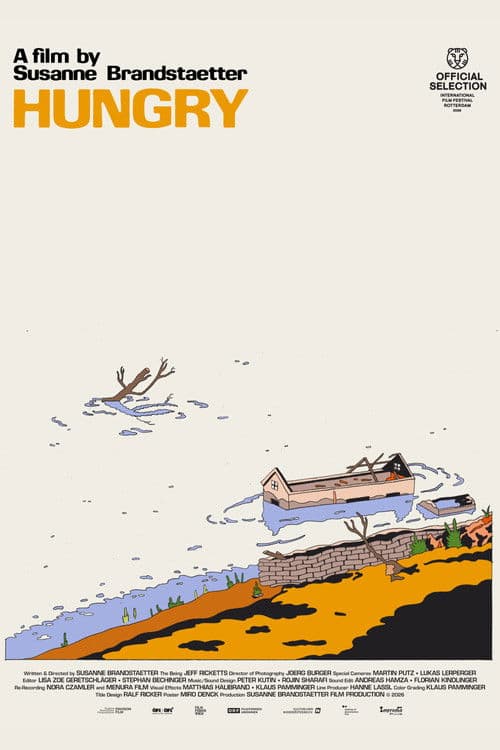
Hungry (original title: Hungrig) is a German-language speculative documentary film scheduled for release on April 24, 2026. Directed by Susanne Brandstätter, it uses a near-future narrative framework built around archival interviews with scientists and experts to examine environmental collapse and the extinction of humankind.
Gallery (2)
Key features
- ·German-language speculative documentary
- ·Release date: April 24, 2026
- ·Directed by Susanne Brandstätter
- ·Near-future narrative framework
- ·Features interviews with international scientists and experts
- ·Themes: environmental collapse, food systems, extinction
- ·Hybrid documentary and fiction format
FAQ
When does Hungry release?
Hungry is scheduled to release on April 24, 2026.
Who directed Hungry?
The film was directed by Susanne Brandstätter, who also conducted the expert interviews featured in the film.
What is Hungry about?
The film follows a mysterious Being in a near-future world devoid of humans, who reconstructs the events leading to humanity's extinction through recovered voice recordings — interviews with scientists and experts about environmental and food-system collapse.
What language is Hungry in?
Hungry is a German-language film, also known by its original title Hungrig.
Is Hungry a documentary or a fiction film?
It is a hybrid work that combines a speculative near-future fictional framework with actual documentary interviews conducted by director Susanne Brandstätter.
About this release
Hungry, or Hungrig in its original German, is a feature film from Susanne Brandstätter Film Production scheduled for release on April 24, 2026. Written and directed by Susanne Brandstätter, it occupies an unusual generic position — part documentary, part science fiction — in which the two modes are not simply blended but set in deliberate tension with each other.
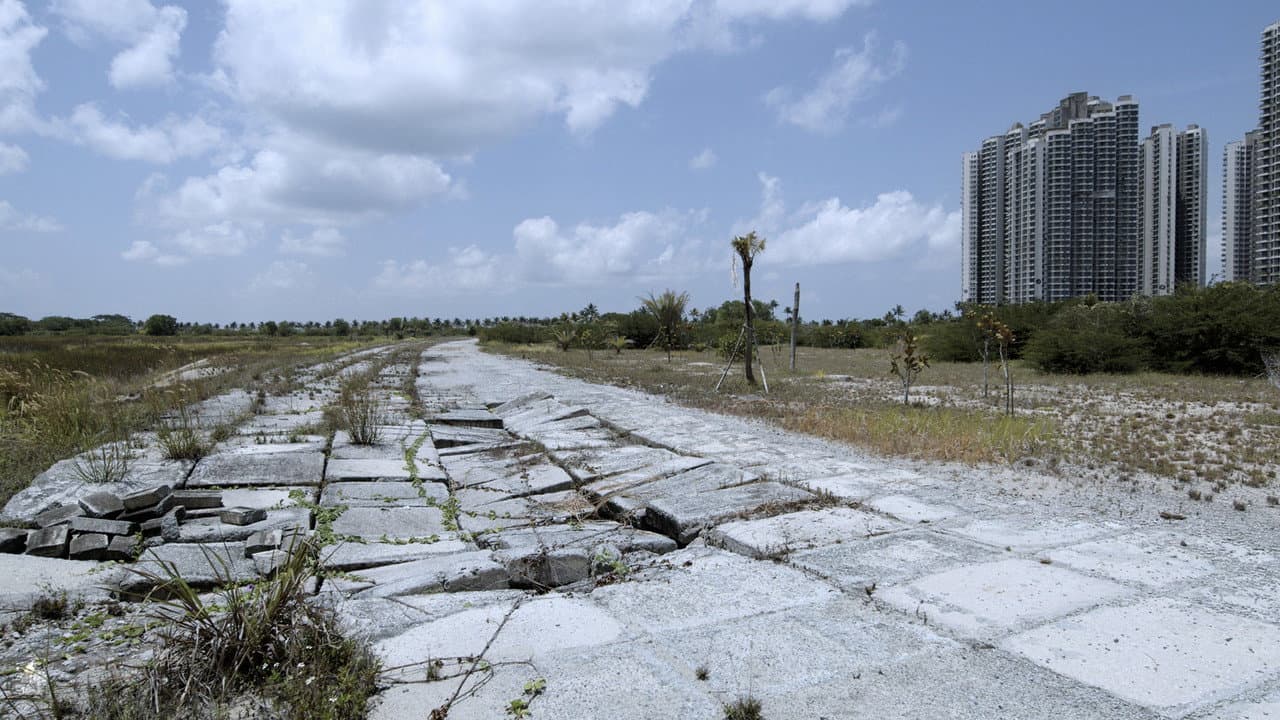
The premise is this: a mysterious Being, unspecified in nature, moves through a near-future world from which nearly all human life has been erased. This entity discovers voice recordings made before whatever catastrophe occurred and uses them to piece together how the world arrived at this state. The recordings are real — interviews that Brandstätter conducted with prominent international scientists and experts, gathered before the film's fictional elimination events took place. What results is a formal construction in which archival documentary footage, or something very close to it, is embedded inside a speculative fiction frame, each interview functioning as both evidence within the Being's investigation and testimony for the audience watching.
That double register is worth pausing on, because it is not how either documentary filmmakers or science fiction directors typically operate. The science fiction tradition has long used the future as a lens for examining contemporary anxieties — environmental collapse, ecological failure, the fragility of food systems — but usually through dramatized characters and scripted scenarios. The documentary tradition, meanwhile, tends to deliver its expert testimony directly, without the intermediary conceit of a post-human investigator sifting through the wreckage. Brandstätter's construction places the viewer in an odd position: watching a fictional being watch real people explain, in real terms, how ecological systems fail. The scientists presumably did not give their interviews knowing they would appear in a narrative about near-total extinction. Whether that framing changes the moral weight of what they say is one of the more interesting questions the film appears designed to raise.
The subject matter itself is drawn from well-documented lines of scientific concern: environmental deterioration, damage to the biosphere, crop failure, and the cascading consequences that follow when food systems break down. These are not fringe anxieties. They appear regularly in reports from intergovernmental bodies, in the scientific literature on soil degradation, biodiversity loss, and climate-linked agricultural disruption. Brandstätter's film draws on expert voices to map this territory, which suggests the documentary layer will carry the film's substantive argument even as the science fiction layer carries its emotional and aesthetic atmosphere.
That argument, according to what is known about the film, is not purely pessimistic. Despite the grim visual register of the near-future sequences — a world largely emptied of life — the expert interviews are said to carry a positive case for intervention. The vicious cycle, as the film frames it, can be broken before the fictional future it depicts becomes real. This is a familiar rhetorical move in environmentally oriented documentary work: show the worst credibly enough that it feels real, then locate the evidence that it remains preventable. The risk is that the fictional severity of the framing strains against the cautious optimism of the scientific testimony, or that the two undermine each other's credibility. Whether Brandstätter's construction manages that tension productively or awkwardly is precisely what cannot be known from the outside.
There is also the question of the Being itself. The film's description is deliberately vague on this point — it is described only as mysterious — and it is not clear whether this entity is given any visual form, any voice, any interior life, or whether it functions more as an abstract organizing principle, a camera-surrogate moving through the devastated landscape. In science fiction, the post-human observer is a common device for defamiliarizing the human world, but the degree to which Hungry commits to that device, and how much of the film's runtime is occupied by the Being's navigation of the future versus the archival interview material, is not disclosed in what has been made public. The balance between those two elements will likely determine whether the film reads primarily as a science fiction experience that incorporates documentary evidence, or as a documentary that uses science fiction staging to make its material feel more urgent.
The film is being produced in German, though many of the scientific experts interviewed are described as prominent and international, which suggests the interview layer will likely be multilingual, with whatever translation or subtitle work that requires. It is a production of Susanne Brandstätter Film Production, with Brandstätter serving as the filmmaker whose work is literally embedded inside the narrative — the interviews she made are the artifacts the fictional Being discovers. That self-referential layer, in which the director's own documentary practice becomes a plot element, adds another fold to an already layered construction.
The audience most likely to seek out Hungry on or around its April 2026 release will include viewers who follow environmentally focused documentary cinema, those drawn to formally experimental nonfiction work, and science fiction audiences with an appetite for cerebral, low-action premises. It is not a film whose description suggests spectacle or genre convention in any comfortable sense; its appeal seems oriented toward people willing to sit with an unusual formal premise and let two distinct modes of filmmaking coexist without one fully consuming the other.
Comments
Sign in to join the conversation.
Loading…