Details
- Language
- English
- Studio
- B8 Production
Popularity · Search interest now
Low
0.3
Based on TMDb activity
Where to watch
Not currently available for streaming or purchase.
Links may earn Incoming a commission at no extra cost to you.
Incoming Editorial TeamVerified
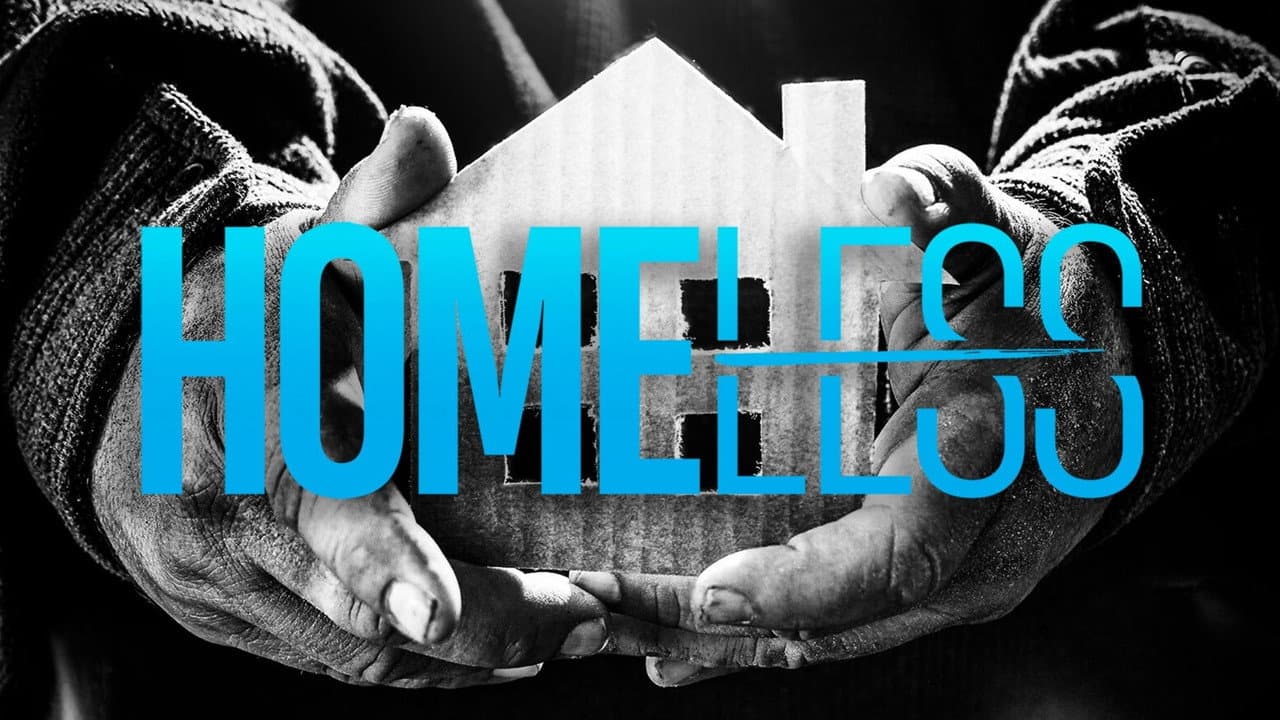
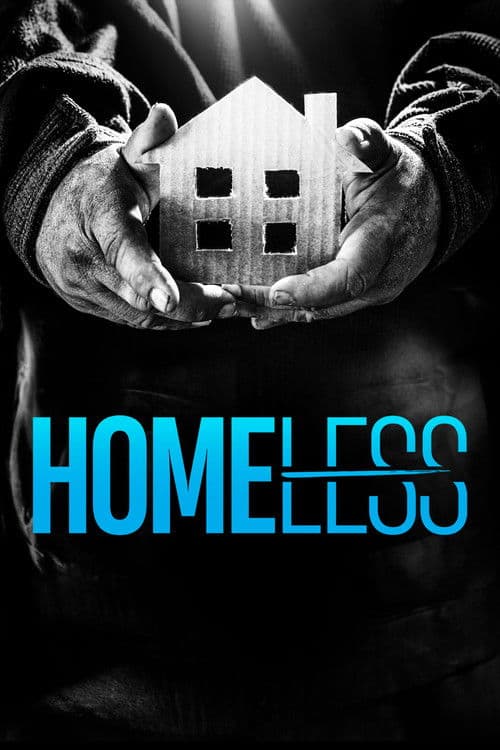
HOMELESS is a documentary that humanizes unhoused people and explores their backgrounds, dreams and struggles to find the way home. The film aims to raise awareness and funds to end homelessness, which is an ever more urgent global challenge: The United Nations Human Settlements Program estimates that 1.6 billion people live in inadequate housing, and the best available data suggests that more than 100 million people have no housing at all.
About this release
A documentary called Homeless, produced by B8 Production and Homeless Project LLC, is scheduled for release on Friday, April 24, 2026. The film takes as its subject the lives of unhoused people — their personal histories, their aspirations, and the particular difficulties of finding stable shelter — framing those individual stories within what the filmmakers describe as an increasingly urgent global crisis.
The scope the film sets for itself is considerable. According to the United Nations Human Settlements Program, roughly 1.6 billion people worldwide live in inadequate housing, and the best available data places the number of people with no housing at all above 100 million. Those figures give the documentary a macro-level argument even before the camera settles on any individual face: homelessness is not a local policy failure or a problem confined to the visible tent encampments of wealthy cities, but a condition affecting a meaningful fraction of the global population. Whether the film travels across multiple countries to make that case, or anchors itself to a particular community while invoking the broader statistics for context, is not yet clear from what has been disclosed.
What is stated is the film's dual ambition — to raise awareness and to raise funds. That combination places Homeless in a recognizable tradition of advocacy documentary, a mode with a long history in the genre. Films that pursue both narrative and instrumental goals tend to navigate a specific tension: the more urgently a documentary argues for action, the more it risks flattening the people it portrays into symbols of a problem rather than individuals with texture and complexity. The stated emphasis on backgrounds, dreams, and the struggle to find a path home suggests the filmmakers are at least aware of that tension and are orienting toward portraiture rather than polemic. Whether the execution bears that out will be the central question when the film opens.
The production companies involved — B8 Production and Homeless Project LLC — are not names with a broad public profile, which leaves the film's creative architecture largely uncharted at this stage. No director, cinematographer, or producer has been publicly foregrounded in the available information, and no details about the subjects themselves, the shooting locations, or the length of production have been shared. That absence is notable if only because documentary filmmaking of this kind typically leans on the credibility and track record of its director as a primary selling point. Films like this often spend years embedded with their subjects before a single frame is shown publicly; whether that is the case here, and who led that process, remains unknown.
The film's language is listed as English, though the scale of the subject — a crisis the United Nations measures in the hundreds of millions — would seem to invite material from well beyond English-speaking countries. It is possible the film uses English as a frame language while drawing on footage and testimony from multiple regions, or it may concentrate on English-speaking contexts while situating them within global data. That structural choice, wherever it lands, will shape how the film's argument is received. A documentary that stays close to American or British cities while citing global statistics risks a kind of selective universalism; one that genuinely moves across continents faces the challenge of coherence and the risk of superficiality.
The fundraising dimension also raises practical questions the promotional materials have not yet addressed. Some documentaries in this space are explicitly tied to nonprofit organizations or campaigns, with ticket sales or streaming revenue directed toward specific programs. Others use advocacy framing more loosely, treating awareness itself as the mechanism of change. What Homeless means when it says it aims to raise funds — whether there is a formal charitable structure, a partnership with a housing organization, or a more general aspiration — is not spelled out. For audiences who might be moved to act after watching, that distinction matters.
The release date, a Friday in late April 2026, places the film in a part of the calendar that documentary distributors have historically used with some success. The awards season push of the fall has passed, and the summer blockbuster period has not yet absorbed all of the cultural oxygen. Documentaries released in this window sometimes find sustained word-of-mouth runs, particularly if they connect to ongoing news cycles. Housing affordability and homelessness have remained consistent subjects of policy debate in the United States and across Europe and the Asia-Pacific region, which means the film is unlikely to feel dated by the time it opens, regardless of when principal photography concluded.
The audience most likely to seek this out in its initial release will probably include people already engaged with housing policy, social work, urban planning, and related advocacy — viewers who follow documentary releases attentively and are receptive to films that combine personal narrative with structural argument. Beyond that core, the film's reach will depend heavily on factors not yet visible: whether it premieres at a festival that generates critical conversation, whether it secures a streaming deal that broadens access, and whether any of the individual stories it tells prove compelling enough to circulate beyond the documentary-going audience. Those questions will answer themselves between now and April.
Comments
Sign in to join the conversation.
Loading…