Details
- Language
- English
- Studio
- Marc Platt Productions
- TMDb Rating
- 7.4 (40 votes)
- Directed by
- Hayley Kiyoko
- Written by
- Hayley Kiyoko, Chloe Okuno, Stefanie Scott
Rating · Quality score from voters
TMDb
7.4/10
IMDb
6.3/10
Rotten Tomatoes
88%
Metacritic
70/100
Popularity · Search interest now
Rising
15.0
Based on TMDb activity
Starring


Where to watch
Links may earn Incoming a commission at no extra cost to you. Streaming data via JustWatch — may not reflect today's catalog.
Incoming Editorial TeamVerified
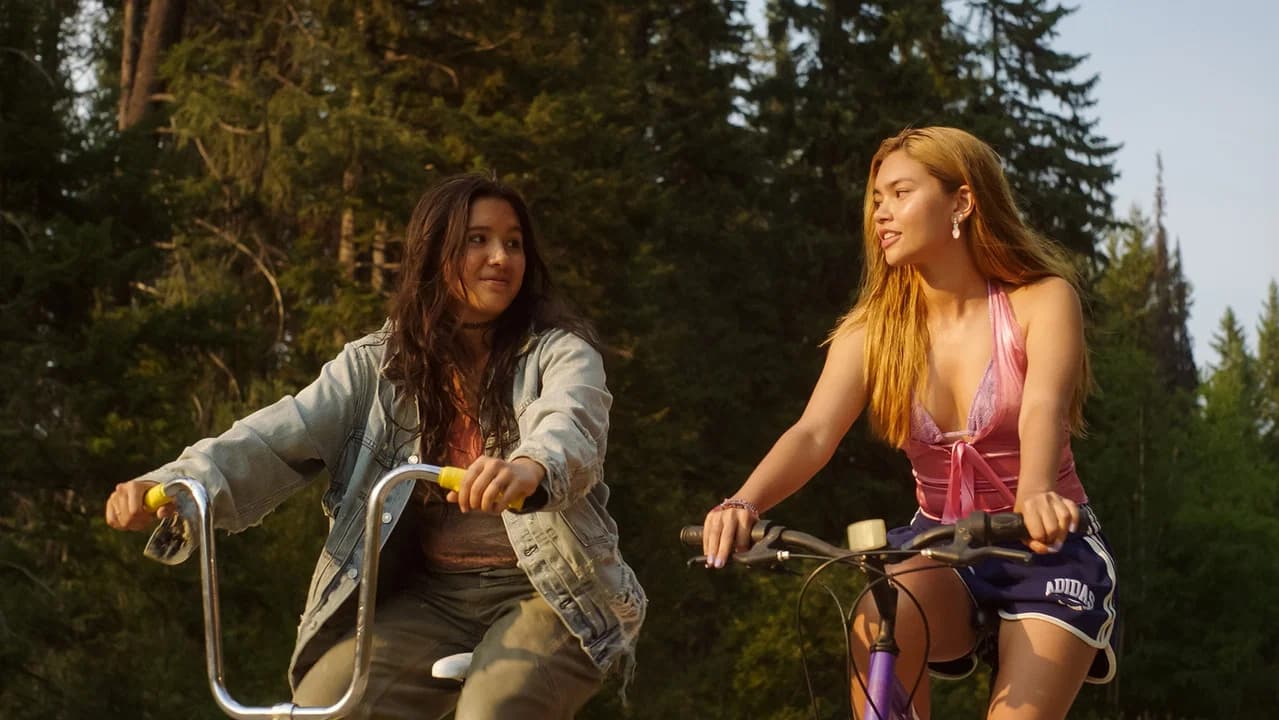
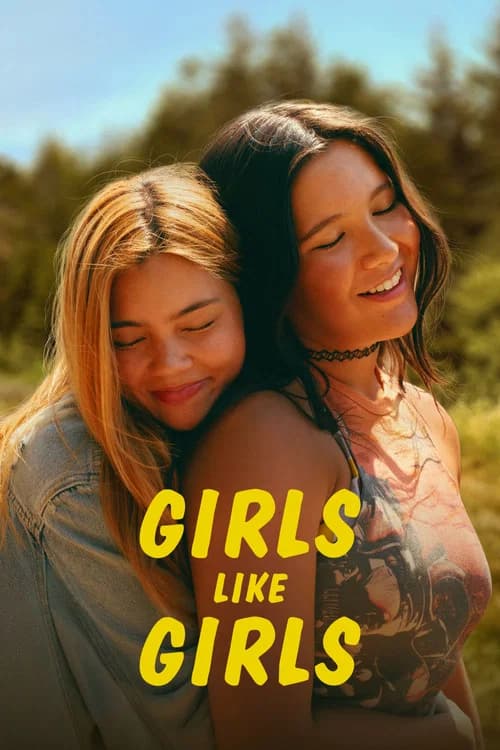
Girls Like Girls is an upcoming drama film releasing June 19, 2026. The story follows Coley, a 17-year-old from rural Oregon, as she navigates intimacy and grief following her mother's death, and the complicated feelings that emerge when she meets a girl named Sonya.
Trailer
Gallery (18)
Key features
- ·Coming-of-age drama
- ·Set in rural Oregon
- ·Teenage grief and romance themes
- ·English language
- ·2026 theatrical release
FAQ
When does Girls Like Girls release?
Girls Like Girls releases on June 19, 2026.
What is Girls Like Girls about?
The film follows Coley, a 17-year-old from rural Oregon, who develops feelings for a girl named Sonya while coping with the loss of her mother. Both characters navigate self-doubt and uncertainty as their relationship develops.
What is the genre of Girls Like Girls?
Girls Like Girls is a coming-of-age drama dealing with grief, identity, and romance.
About this release
Girls Like Girls, a romantic drama produced by Marc Platt Productions, BuzzFeed Studios, and CR8IV DNA, is scheduled for release on June 18, 2026. The film centers on Coley, a seventeen-year-old living in rural Oregon, who is working through grief following the death of her mother. Into this period of emotional upheaval comes Sonya, and the connection between them introduces feelings that Coley struggles to fully accept or articulate. Sonya, for her part, has no prior experience with dating girls and carries her own uncertainty into whatever is forming between them. The film follows both characters as they try to understand what they feel and whether they can act on it.
The premise belongs to a specific and well-worn tradition within the coming-of-age romance genre: two young women, one or both uncertain of their sexuality, in a setting that is geographically or socially isolating, gradually working toward honesty with each other and themselves. Rural Oregon here functions not merely as backdrop but as a condition — a place where the distance between people can be both literal and emotional, where the absence of visible models for certain kinds of relationships can make self-recognition harder. That geographic specificity gives the film a grounding detail that distinguishes it from the more abstractly suburban settings common to the genre.
The combination of studios behind the production is worth noting. Marc Platt Productions has a long history with theatrical and musical material, while BuzzFeed Studios represents a media company that built much of its identity around digital youth culture before moving into longer-form production. CR8IV DNA rounds out the trio. That the three have converged on this particular story — quiet, grief-inflected, concerned with interiority rather than spectacle — suggests the project is positioning itself as something more restrained than the franchise-driven or event-oriented releases that tend to dominate the summer calendar. A June release places it in a crowded window, but the film's apparent scale and subject matter suggest it is not competing directly with tentpole films so much as carving out a different kind of audience attention.
What remains largely open is the question of tone. The source material, as described, presents Coley's grief as the emotional foundation from which everything else grows — her self-doubt, her difficulty connecting, her resistance to new feeling. But the degree to which the film leans into that grief as active dramatic weight, versus using it as backstory that establishes character without returning to it, is not apparent from what has been made public. Grief in young-adult romance films is often narratively convenient rather than genuinely explored: it explains why a character is withdrawn, and then it recedes. Whether the film holds Coley's loss at the center of the story, or eventually subordinates it to the romantic arc, will shape how the film feels tonally — whether it reads as a drama in which romance is one element, or a romance in which grief is an inciting condition.
Similarly, Sonya's interiority remains less defined from what is known. The description emphasizes her unfamiliarity with the situation and her uncertainty, but those are circumstances rather than character. How the film distributes its attention between the two women — whether it grants Sonya as much interiority as Coley, or uses her more as a catalyst for Coley's personal reckoning — is an open question that will determine whether the film feels like a two-person story or a single-protagonist one with a meaningful secondary figure.
The question of self-doubt as structural element is also notable. In many genre entries, self-doubt functions as delay — the mechanism that prevents the romantic resolution from arriving too quickly. But the framing here suggests that self-doubt is less about romantic timing and more about whether Coley can trust her own emotional responses at all, which is a somewhat different problem. That distinction, if the film commits to it, could give the narrative more psychological texture than the standard arc of misunderstanding-and-reconciliation.
Practically, the film is available for digital rental and purchase across Amazon Video, Apple TV, Google Play Movies, YouTube, and Fandango At Home, with no streaming platform listed at this time. That distribution pattern — transactional digital only, no subscription service — means viewers will need to make a deliberate choice to seek it out rather than encountering it incidentally while browsing a platform's library. The audience most likely to do so is probably already oriented toward the genre: viewers who respond to quiet, character-driven romantic dramas, who have an interest in LGBTQ+ stories told from an interior rather than broadly social perspective, and who find the combination of rural setting and adolescent grief a recognizable emotional landscape rather than an unfamiliar one. An early-summer release gives it space ahead of the heavier blockbuster traffic that tends to peak later in June and into July, which may allow it a clearer path to the specific audience that will look for it.
Comments
Sign in to join the conversation.
Loading…