Details
- Language
- English
- Studio
- Anton
- TMDb Rating
- 7.1 (248 votes)
- Directed by
- David Mackenzie
- Written by
- Ben Hopkins
- Mood
- fast pacedtense
- Theme
- survival
- For
- adult
Rating · Quality score from voters
TMDb
7.1/10
IMDb
6.3/10
Rotten Tomatoes
72%
Metacritic
60/100
Popularity · Search interest now
Rising
18.7
Based on TMDb activity
Starring








Where to watch
Links may earn Incoming a commission at no extra cost to you.
Incoming Editorial TeamVerified
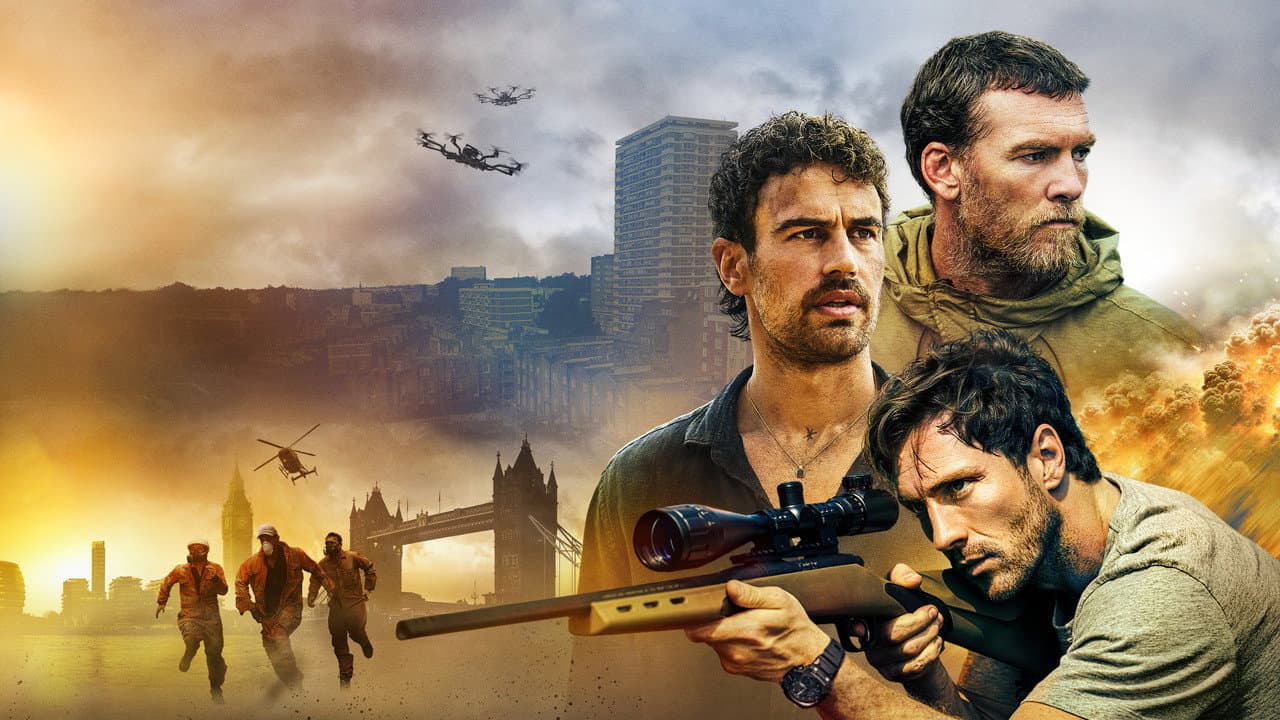
An unexploded WWII bomb is discovered on a busy construction site in the centre of London. Chaos ensues as the military and police begin a mass evacuation against a ticking clock.
Trailer
Gallery (20)
About this release
A wartime relic surfaces in peacetime London at the center of Fuze, a thriller arriving on March 23, 2026, produced by Anton, Sigma Films, and Sky. The premise is elemental: a construction crew breaks ground somewhere in the city and unearths an unexploded bomb left over from the Second World War, and what follows is a race against the device's uncertain stability as military ordnance teams and police attempt to clear a wide swath of one of Europe's most densely populated urban centers. The film occupies the action-thriller genre, but the specific engine driving it — bureaucratic urgency, logistical chaos, and the physics of a device that may or may not detonate — places it closer to procedural drama than to the more conventional action framework its genre tags suggest.
The scenario is not invented from whole cloth. London has, in fact, dealt with this problem repeatedly since the postwar decades. German bombing campaigns during the Blitz left an estimated 10 percent of dropped ordnance unexploded beneath the city, and construction crews continue to uncover these devices with some regularity. Each discovery triggers a version of exactly what the film depicts: evacuation cordons, army bomb disposal units, coordinated responses between emergency services, and occasionally a news cycle that briefly halts normal city life. The subject has a documentary texture to it that the fictional thriller format can either exploit for authenticity or flatten into formula, and which direction Fuze takes will be one of its defining qualities.
The production involves three distinct entities with notably different profiles. Anton is a sales and production company that has been associated with British and international independent cinema, often backing projects with literary or prestige ambitions. Sigma Films is a Scottish production outfit with a long track record in British genre cinema — the company has been behind films that move between arthouse and commercial thriller territory. Sky, as a co-producing broadcaster, brings a financing model that has increasingly positioned the platform as a significant backer of British dramatic features and series, often with theatrical windows attached. The combination of these three suggests a film that has been conceived with both a theatrical release and a post-theatrical broadcast life in mind, which is a pattern that has become standard for mid-budget British productions over the past decade. None of this predetermines the film's character, but the institutional lineup implies a project with some ambition beyond genre exercise.
What the available information does not reveal is substantial. The film has no listed director or writer in the structured data, which is an unusual gap for a production this close to release. The creative voice behind the screenplay — how it handles the procedural mechanics of bomb disposal against the human chaos of mass urban evacuation — is entirely unknown from what's been disclosed. Whether the film focuses primarily on the ordnance team working on the device, on the police coordinating the evacuation, on civilians caught in the cordon, or attempts some combination of all three is an open question. The "chaos ensues" language in the description is suggestive but not specific: chaos can mean a thriller built around institutional competence tested under pressure, or it can mean a film interested in the human disorder that comes with displacing thousands of people from their homes and workplaces on no notice. Both are legitimate approaches and they produce quite different films.
The London setting raises further questions about scale and specificity. Placing an unexploded bomb at a busy construction site in the center of London is not a generic choice — it implies geography, it implies neighboring infrastructure, it implies questions about which parts of the city might plausibly host a major construction project while also sitting atop ground that was heavily bombed eighty years ago. The East End, Southwark, parts of the City itself: these areas carry that history. Whether the film leans into that geographic and historical specificity or uses London more as a recognizable backdrop is something the description doesn't answer.
The ticking-clock structure the description implies — military and police working against some countdown, whether that countdown is structural instability in the device, a shift in weather, or simply the unsustainable nature of a large-scale urban evacuation — is a reliable thriller mechanism. It imposes a shape on narratives that might otherwise sprawl. The question is what the film populates that structure with: the technical work of disarmament, the political pressures on officials making difficult calls, or the texture of ordinary life disrupted by an artifact of an older catastrophe breaking through into the present. All three are present in the premise. The distribution of emphasis among them is what will determine whether Fuze functions primarily as suspense machinery or as something with a slightly longer half-life.
The watch provider data shows the film available for purchase and rental across the major digital platforms — Amazon Video, Apple TV, Google Play Movies, YouTube, and Fandango at Home — with Plex included in the rental tier. There is no listed streaming service, which means audiences will need to seek it out actively rather than discover it through a subscription library.
The audience most likely to pursue Fuze spans several overlapping groups: viewers drawn to British procedural drama, those with an interest in Second World War history filtered through contemporary settings, and thriller audiences who favor tension derived from logistics and expertise over action set pieces. The premise is specific enough to attract people who already know something about the real phenomenon of wartime unexploded ordnance — a subject with its own dedicated following — and mainstream enough that the thriller genre framing gives it a natural pathway for wider audiences if the execution supports it.
Comments
Sign in to join the conversation.
Loading…