 Cool
movieReleased
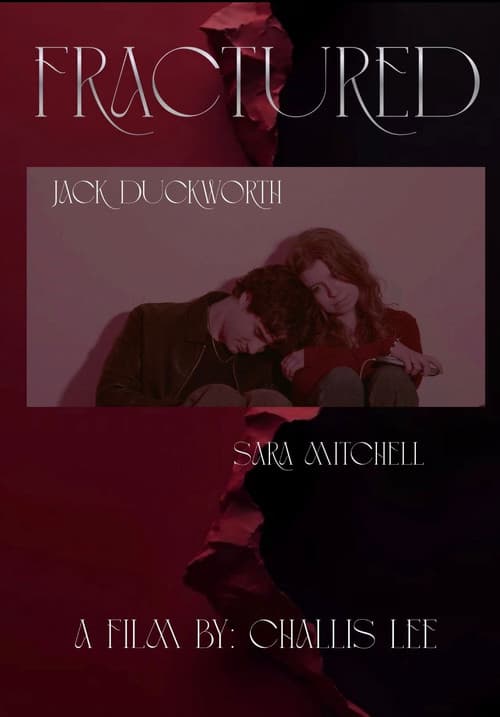
Fractured
Released April 29, 2026
↓ 0.624h
Details
- Language
- English
Popularity · Search interest now
Low
0.1
Based on TMDb activity
Incoming Editorial TeamVerified
On the night of his messy breakup, a drunk and heartbroken brother reconnects with his estranged sister, who becomes the comfort he didn't know he needed.
About this release
Fractured arrives on April 29, 2026, an English-language film whose premise centers on a single volatile night: a man, drunk and reeling from a messy breakup, finds himself reconnecting with a sister from whom he has grown estranged. She becomes, in the film's own framing, the comfort he didn't know he needed.
The setup is intimate by design — two siblings, one bad evening, the kind of confined emotional crucible that independent drama has long favored as a pressure-testing ground for character. There is a recognizable tradition here: the bottle episode, the one-night film, the story that collapses years of unspoken history into a few claustrophobic hours. Think of the way Marriage Story or Beautiful Boy used family rupture as a lens for something larger, or how countless smaller films have discovered that a kitchen table and two estranged people can generate as much tension as any action set piece. Fractured appears to be working in that register — domestic, conversational, operating on the logic that what two people don't say to each other is often more revealing than what they do.
What the available information does not reveal is who is behind the film. No director, writer, or cast is confirmed in the data at hand, which is itself a notable circumstance for a film less than eighteen months from release. Titles with low public profiles this far out tend to fall into one of two camps: productions that have been quietly assembled and are waiting on a festival premiere to generate their first wave of attention, or projects still deep enough in post-production that any announcement would be premature. Fractured carries no vote count and no rating from aggregators, suggesting it has not yet been screened publicly in any capacity. The Wikipedia entry exists, but the metadata offers nothing beyond the basic premise and language of origin.
That absence of credited authorship shapes how a prospective viewer encounters the film. The story's emotional logic — a brother and sister, estrangement, a crisis as catalyst — is legible enough to sketch in the imagination, but the texture of how that story will actually be told depends entirely on the sensibility of whoever made it. A film about a drunk man and his sister could be played for cringe comedy, for muted tragedy, for the kind of handheld naturalism that festivals associate with lived-in sincerity, or for something more formally controlled. Without knowing the director or the lead performances, the premise floats free of any particular aesthetic identity.
The sibling dynamic at the film's center is worth pausing on. Estrangement between a brother and a sister, rather than between romantic partners or parents and children, carries its own specific texture in dramatic storytelling. Siblings share history that predates any choice they made as adults — shared parents, shared household, shared versions of events that may have calcified into very different memories over the years. When the brother arrives in some compromised state, heartbroken and possibly making poor decisions, the sister who receives him is presumably being asked to set aside whatever put distance between them. The film's premise implies she does — or at least tries to — and that the encounter reshapes something for both of them. Whether that reshaping is dramatized as reconciliation, as further rupture, or as something more ambiguous is a question the available material doesn't answer.
The breakup that initiates the plot is described as messy, which gestures toward a particular kind of emotional chaos rather than a clean or mutual parting. A man in that state, turning not toward friends or toward solitude but toward a sister he has apparently avoided, suggests a character who is either more isolated than he would normally admit or who is finally, under pressure, reaching for something real. The film seems interested in using romantic failure as the key that opens a more fundamental door — the idea that when one relationship collapses, we look for the ones that predate it, the ones that feel less chosen and more structural. Whether that reading holds once the film is actually seen remains to be determined.
There is also the question of tone. The word "heartbroken" in the source description and the specificity of "drunk" as a condition rather than simply "upset" or "emotional" introduce a mild comic register alongside the dramatic one. A man who is genuinely intoxicated and genuinely devastated is, almost by definition, capable of both pathos and absurdity. Films that walk that line successfully tend to rely heavily on the calibration of their central performances, which makes the still-unknown casting all the more consequential.
Given the genre tradition Fractured appears to be drawing from and the modesty of its premise, the film will likely appeal most directly to viewers drawn to character-driven drama built around dialogue and emotional interiority — audiences who follow independent film circuits, who respond to stories about family dynamics, and who find the mechanics of adult sibling relationships underexplored relative to the attention given to romantic or parental bonds. If it emerges from a festival context with strong acting notices attached, that audience will know exactly where to find it.
Comments
Sign in to join the conversation.
Loading…