Details
- Language
- Japanese
- Studio
- TOHO
- TMDb Rating
- 7.0 (758 votes)
- Directed by
- Genki Kawamura
- Written by
- Genki Kawamura, Kentaro Hirase
Rating · Quality score from voters
TMDb
7.0/10
IMDb
6.5/10
Rotten Tomatoes
91%
Metacritic
71/100
Popularity · Search interest now
Rising
15.2
Based on TMDb activity
Starring








Where to watch
Links may earn Incoming a commission at no extra cost to you.
Incoming Editorial TeamVerified
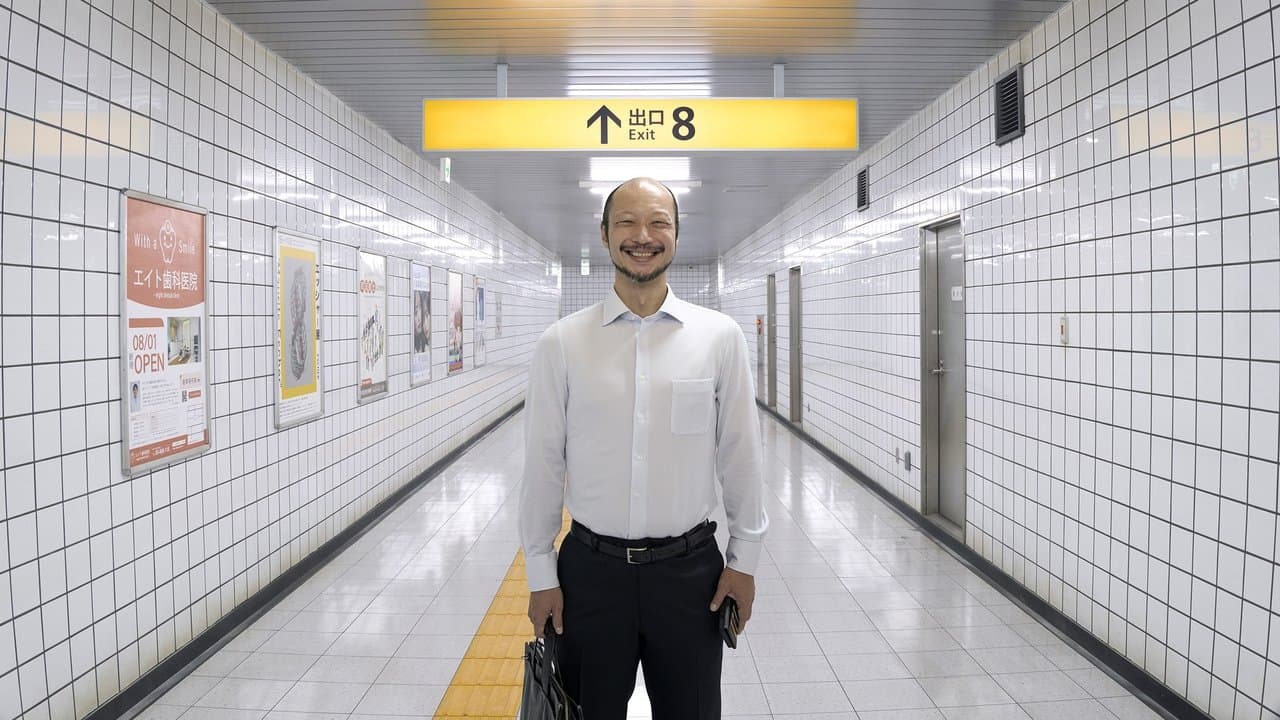
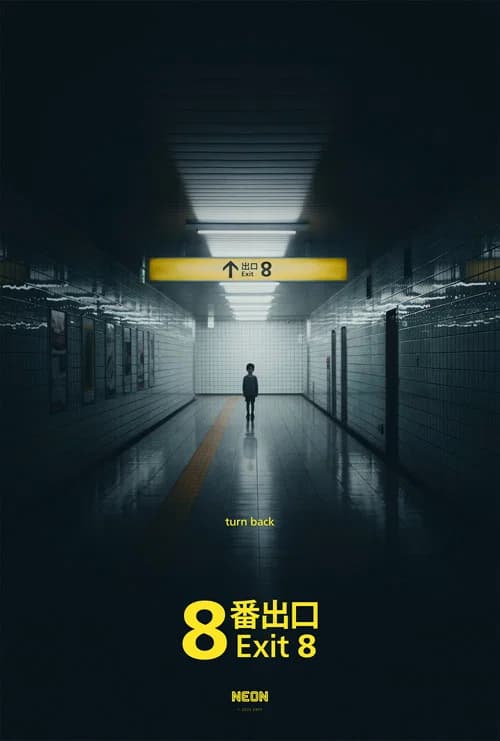
Exit 8 (Japanese: 8番出口) is a live-action film releasing on August 28, 2025. Based on a premise drawn from a looping subway corridor, it follows a man attempting to reach Exit 8 by identifying anomalies in an otherwise sterile passageway. Missing or overlooking any irregularity resets his progress to the start.
Trailer
Gallery (21)
About this release
Exit 8, produced by TOHO, AOI Pro., and Story, arrives on August 3, 2025. Its Japanese subtitle — 8番出口 — signals its origins plainly, and the film's central premise arrives equally unadorned: a man is trapped inside a sterile, featureless subway passageway and must find his way to Exit 8. The rules governing his situation are stated at the outset with an almost bureaucratic simplicity. Notice anything out of the ordinary, and turn back immediately. Notice nothing unusual, and keep walking. Miss an anomaly even once, and the loop resets to the beginning. The goal is Exit 8. The obstacle is the corridor itself, which appears to have no intention of releasing him.
That premise will be immediately legible to anyone familiar with a particular strain of Japanese internet horror that took hold in the early 2020s. The film shares its name and its fundamental logic with a 2023 indie video game developed by KOTAKE CREATE — a short, first-person walking simulator set in a looping underground passage modeled on the liminal aesthetics of Japanese transit infrastructure. The game became a notable phenomenon in streaming and Let's Play communities, drawing players and viewers into its methodical, tension-by-omission approach to dread. Whether the film is a direct adaptation of that game or an independent work drawing on the same conceptual well is not entirely clear from available materials, but the structural and thematic overlap is precise enough that the connection is unlikely to be coincidental. TOHO, one of Japan's most established theatrical distributors with a history that spans studio genre filmmaking from the original Godzilla pictures through contemporary J-horror and anime theatrical releases, is attached here alongside AOI Pro., a production company with credits across Japanese film and television.
The liminal space as horror setting has its own lineage worth noting. The Backrooms, a creepypasta concept that circulated in online communities from around 2019 onward, popularized the idea of featureless institutional environments — carpeted office hallways, fluorescent corridors, empty swimming pools — as vessels for existential unease. The Exit 8 game occupied adjacent territory but grounded its dread in something more procedural: the horror was not in the environment's emptiness but in the demand for constant, calibrated attention. You had to look. The passageway was always the same, and the terror was in learning to read its sameness for the precise moments it wasn't. Translating that mechanic into a passive viewing experience is a genuine formal problem, and it is one of the more interesting questions the film's release raises.
What a game communicates through player agency — the creeping anxiety of wondering whether you missed something, the disorientation of a loop you thought you understood — a film must convey through editing, performance, sound design, and composition alone. The audience of Exit 8 cannot turn around. They can only watch someone else decide whether to. How the filmmakers have chosen to externalize that decision-making process, and whether they have found a cinematic grammar adequate to what the game expressed through interaction, is perhaps the central open question surrounding this release. The trailer and marketing materials emphasize the corridor's clinical blankness and its flickering wrongness, but the texture of the film's pacing — whether it trusts silence and duration the way the game did, or whether it imposes more conventional horror rhythm onto the material — remains to be seen.
There is also the matter of the anomalies themselves. In the game, the deviations from the norm ranged from the mundane to the deeply unsettling: a figure standing where no figure should be, a detail of the environment subtly displaced, something in the background that wasn't there before. The pleasure and the dread of the game came from the player's growing familiarity with the passageway's baseline state, which made each deviation feel earned and specific. A film, which controls exactly what the audience sees and for how long, has a different relationship to that baseline. The audience cannot explore. They see what the camera shows them. Whether the film uses that constraint as a tool — withholding information the protagonist might have that the viewer doesn't, or vice versa — or whether it simply presents anomalies as conventional horror reveals, will determine a great deal about how the experience lands.
The film's original language is Japanese, and its streaming destination in North America skews noticeably toward genre-specialist platforms. Shudder, AMC+, and Philo are among the services carrying it at launch, with rental and purchase options also available across Amazon Video, Apple TV Store, Google Play Movies, YouTube, and Fandango at Home. That distribution profile — genre streaming rather than prestige arthouse — positions Exit 8 clearly within the horror and thriller marketplace, where J-horror has maintained a loyal international audience since the late 1990s. The TMDB vote average of 7 from 680 votes, while modest in sample size, suggests early viewers have found something worth recommending without treating it as exceptional.
The audience most likely to seek this out falls into a reasonably identifiable overlap: viewers with familiarity with J-horror's particular mode of dread, players of the source game or adjacent titles in the walking-simulator and liminal horror space, and horror enthusiasts with a tolerance for films that derive tension from atmosphere and rule-based logic rather than conventional monster mechanics. For that audience, the question the film poses is less about whether the man reaches Exit 8 than whether the filmmakers have found a way to make watching feel as disquieting as playing did.
Comments
Sign in to join the conversation.
Loading…