Details
- Language
- Japanese
Popularity · Search interest now
Low
0.1
Based on TMDb activity
Where to watch
Not currently available for streaming or purchase.
Links may earn Incoming a commission at no extra cost to you.
Incoming Editorial TeamVerified
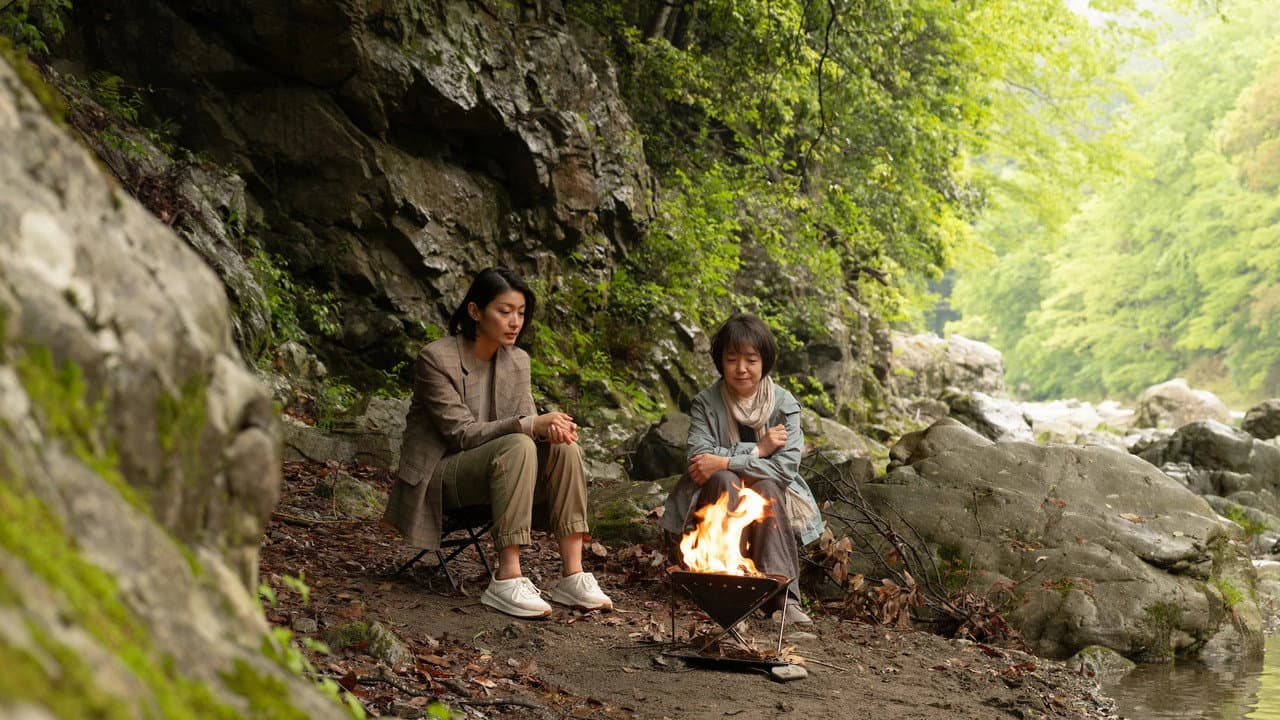
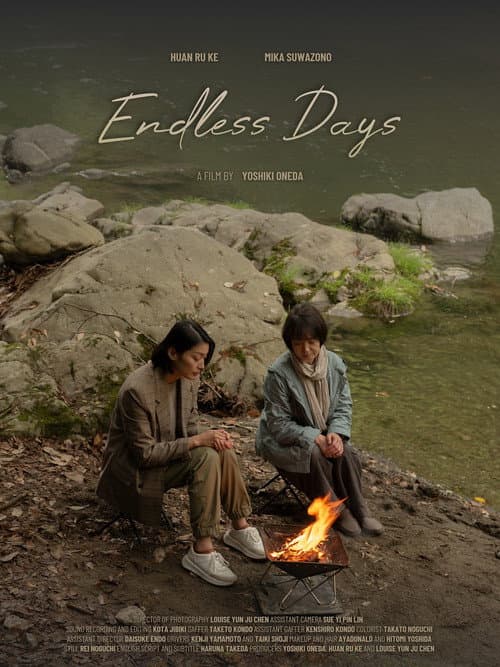
Jing, a woman living in Taiwan, visits Japan after receiving a letter from Kasumi, who once had an affair with her father. As she spends time with the now-ill Kasumi, their quiet conversations lead her to confront her father's hidden emotions—and her own long-buried loneliness.
About this release
Endless Days, a drama filmed in Japanese, is scheduled for release on April 25, 2026. Beyond its language of production and the outline of its central situation — a Taiwanese woman traveling to Japan to meet the woman who once had an affair with her father — relatively little promotional infrastructure surrounds it, which makes it the kind of film that tends to arrive quietly and find its audience through word of mouth rather than advance spectacle.
The story, as described, turns on a letter. Jing, a woman living in Taiwan, receives written correspondence from a woman named Kasumi — the former mistress of her father — and travels to Japan in response. Kasumi is ill by the time Jing arrives. What follows, by the film's own account, is built from quiet conversation: the two women talking across a generational and relational distance, with Jing gradually coming to understand something about her father's interior life that she had not previously known, and in the process confronting what the film calls her own long-buried loneliness. That is the entirety of the narrative frame that has been made available, and it is a spare one, but it is also a structurally coherent one. The drama, if it works, will live entirely in the texture of those conversations rather than in incident.
Films of this type — intimate, dialogue-driven dramas concerned with family grief and the emotional lives of women across generations — have a particular tradition in East Asian cinema, and a Japanese-language production set at least partly in Japan that follows a Taiwanese protagonist places Endless Days at an interesting cultural intersection. The cross-strait, cross-border dynamic embedded in its premise carries potential weight: Jing is not Japanese, and Kasumi is not Taiwanese, and the circumstances that connect them are by definition charged with awkwardness, obligation, and a kind of unwanted intimacy. Whether the film treats that asymmetry as dramatically central or allows it to function more as background texture is one of the things that cannot be answered from what has been made public.
The original language being listed as Japanese is worth noting given that the protagonist is Taiwanese. This raises a practical and aesthetic question about how language functions in the film — whether Jing speaks Japanese, whether there is translation or misunderstanding built into the dialogue, and whether the language barrier, if one exists, is treated as meaningful. These are not small choices in a film whose announced emotional core is two women talking their way toward understanding. A drama of this kind depends almost entirely on how those exchanges are staged, paced, and written, and the linguistic context in which they occur shapes all of that.
The figure of Kasumi is the more immediately intriguing of the two characters from a structural standpoint. She is the one who initiates contact by writing the letter; she is ill; and she is, by conventional social reckoning, the person in the more compromised position — the other woman, now aging, reaching out to the daughter of the man she loved. What she wants from Jing, or what she hopes the letter will accomplish, is not disclosed in any available material. That gap is likely intentional on the part of the filmmakers, and it is also the film's central engine: the audience, like Jing, will presumably be working out the answer to that question alongside her.
Jing's loneliness is described as long-buried, which suggests it predates her knowledge of Kasumi — that whatever she learns about her father does not create her isolation so much as it puts a name to something that was already there. This is a familiar structure in literary drama, the revelation that reframes rather than invents an emotional state, and it tends to produce a particular kind of quiet devastation when it is handled well. The film is not promising catharsis or resolution in its description, which is appropriate: these are the kinds of family truths that rarely resolve cleanly.
There is no credited director, writer, or cast in the available information, which is unusual for a film with a firm release date and limits what can be said about authorship. Without knowing who made Endless Days, it is difficult to place it within a body of work, to assess what visual or tonal approach the material might receive, or to understand how it arrived at distribution. Films with low public profiles at this stage sometimes represent international co-productions navigating staggered release strategies, or smaller festival acquisitions being positioned for targeted theatrical runs. None of that can be confirmed here.
What can be said is that the film is aimed at viewers who find drama sufficient in itself — who do not need a plot engine beyond two people, an unspoken history, and a finite amount of time together. The audience for Endless Days is likely to be comfortable with the pace and register of contemporary East Asian art cinema, drawn to stories organized around emotional excavation rather than action, and willing to sit with ambiguity about what reconciliation, if it comes at all, is supposed to look like.
Comments
Sign in to join the conversation.
Loading…