Details
- Language
- English
- Directed by
- Kamran Mundey
- Written by
- Kamran Mundey
Popularity · Search interest now
Low
0.0
Based on TMDb activity
Starring

Where to watch
Not currently available for streaming or purchase.
Links may earn Incoming a commission at no extra cost to you.
Incoming Editorial TeamVerified
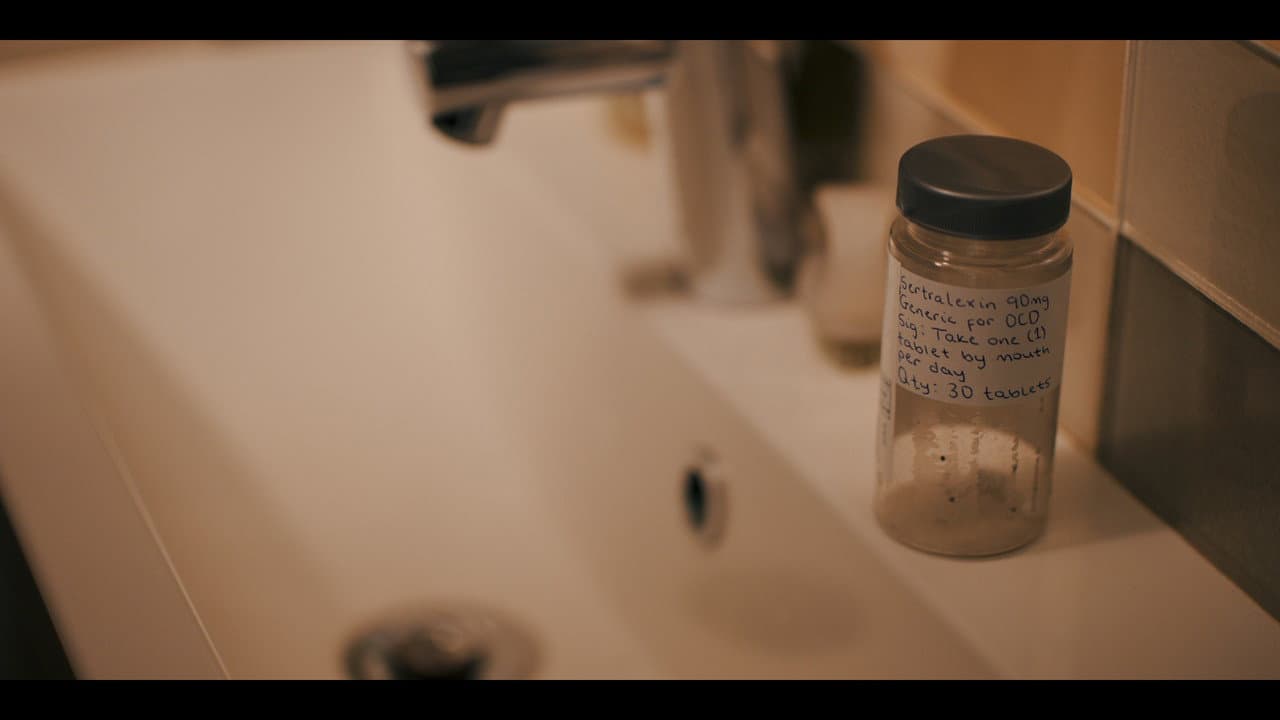
When Christopher is suddenly unable to pay for his medication, he is forced to learn to survive without control.
Gallery (9)
About this release
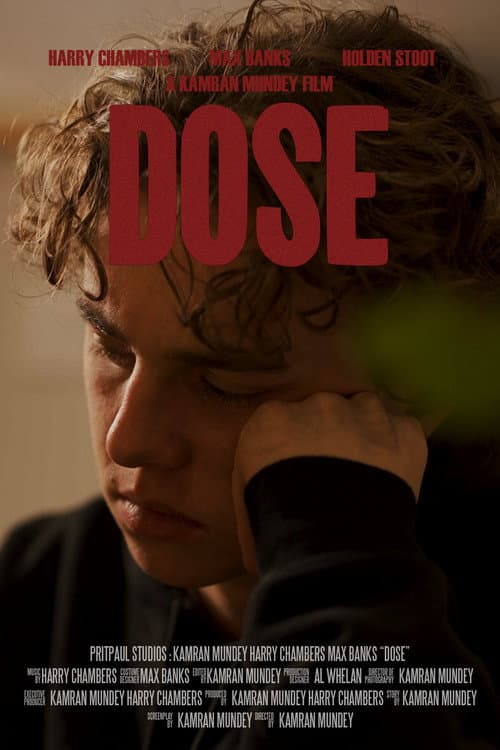
Dose is a drama film scheduled for release on April 25, 2026. The film follows a character named Christopher who, after losing access to his medication, must navigate life without the stability that treatment had provided.
The premise is compact and particular: a man loses the financial means to pay for a prescription, and the film tracks what follows. That scenario — a person suddenly cut off from pharmaceutical support — sits at the intersection of several ongoing preoccupations in American dramatic storytelling, from healthcare-system anxiety to questions about identity, dependency, and what it means to function. The logline's phrase "without control" suggests the film is less interested in the bureaucratic machinery of the healthcare crisis than in its psychological texture — what it feels like, from the inside, when the chemical scaffolding of a managed life is abruptly removed.
Beyond that premise, the available information about Dose is sparse. The film is an English-language production categorized as a drama, and its Wikipedia presence is modest, consistent with a smaller independent release rather than a studio picture with a long promotional runway ahead of it. Virtually nothing is publicly established about its director, cast, production company, or the circumstances of its development — which is not unusual for a lower-profile film roughly a year out from its theatrical date, but it does mean that the texture and approach of the work remain almost entirely unknown.
What the logline does establish is a narrative engine built around deprivation rather than acquisition. Many dramas about illness or medication center on the experience of treatment itself — the side effects, the institutional settings, the negotiations between patients and doctors. Dose appears to invert that: Christopher's story begins at the moment treatment ends, not when it begins. That inversion raises questions the available material doesn't answer. Is the medication in question for a psychiatric condition, a chronic physical illness, something else entirely? The word "control" carries different weight depending on the answer. A person managing a mood disorder without medication inhabits a different kind of story than someone managing, say, a pain condition or an autoimmune disease, even if the underlying economic precarity is identical.
There's also the question of genre register. Drama as a category is wide. The film could be a slow, observational character study in the vein of social-realist independent cinema, or it could shade into something more pressurized — a thriller of diminishing options, a portrait of deterioration, a story of unexpected adaptation. The phrase "forced to learn to survive" in the description leans toward the latter, implying an ordeal with some arc of hard-won adjustment, but whether that arc resolves into anything like stability or hope is not clear. The word "survive" is pointed. It doesn't promise recovery or transformation, only continuation.
Christopher's experience also positions the film within a lineage of stories about economic precarity and its bodily consequences. Healthcare costs as a dramatic subject have appeared in American film and television with increasing frequency over the past two decades, reflecting genuine material anxiety in the culture. But films that take that subject seriously as a lived experience — rather than as policy backdrop — tend to be relatively rare, or at least relatively underfunded. Dose, if it takes its premise at face value, would be engaging with something quite specific: not the drama of diagnosis, which is well-represented in the canon, but the drama of what happens when a diagnosis has been made, a treatment established, and then the economic ground shifts. That's a less-told story, and the specificity of it is either the film's most interesting quality or its most limiting one, depending on execution.
The April 25, 2026 release date places it in a stretch of the calendar that has historically accommodated independent and specialty films looking to catch awards-season attention while also benefiting from spring theatrical traffic. That timing doesn't tell us much about distribution scope — whether Dose is heading for a wide release, a limited theatrical run, or a platform debut — but a film with this profile and this level of current visibility would typically be a specialty or festival-adjacent release rather than a broad commercial one.
Audiences likely to seek Dose out are those with some personal connection to the experience of medication access and its disruptions — a constituency that is, in the United States, quite large — as well as viewers drawn to character-driven drama that takes social and economic conditions seriously as shaping forces on individual lives. Whether the film earns that attention depends on information that isn't yet available.
Comments
Sign in to join the conversation.
Loading…