Details
- Language
- Turkish
- Studio
- HOOD Base
Popularity · Search interest now
Low
0.1
Based on TMDb activity
Where to watch
Not currently available for streaming or purchase.
Links may earn Incoming a commission at no extra cost to you.
Incoming Editorial TeamVerified
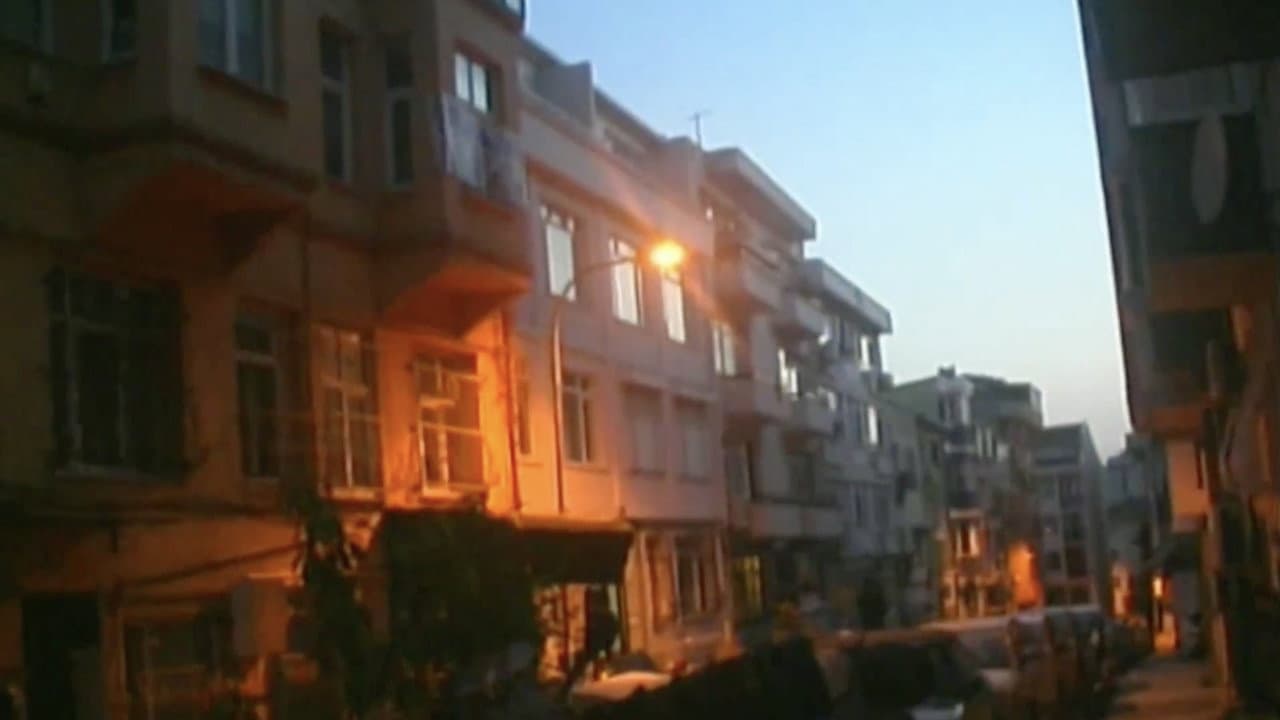
By the end of the weekend, nothing has truly changed. Ekin remains the same, the Anatolian side of Istanbul remains the same. Set in 2020s Istanbul, the film follows Ekin, a young adult living with his mother whose days revolve around searching for a place to live, at least as he tries to believe. As childhood memories, friendships, and new encounters linger in the streets, anxiety quietly grows, and after sleep, life resumes exactly where it left off.
Gallery (7)
About this release
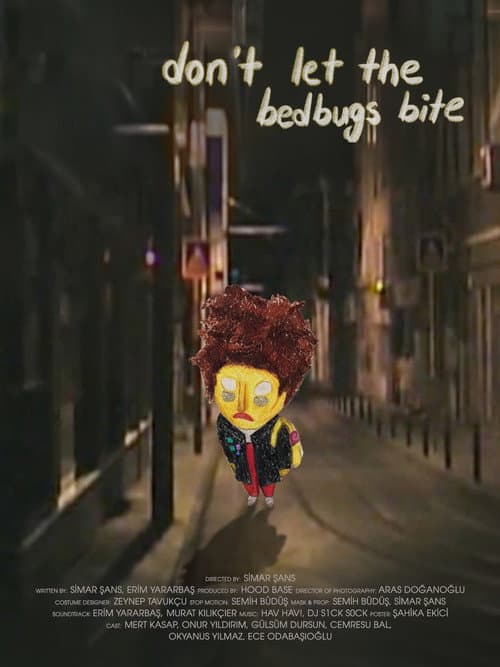
A Turkish-language drama from HOOD Base, Don't Let the Bedbugs Bite — subtitled Uyuyup Uyanınca, meaning roughly "after sleeping and waking" — is scheduled for release on April 25, 2026.
The film is set in Istanbul in the present decade and follows Ekin, a young man living with his mother. His days are organized, at least in his own telling, around the search for somewhere to live. Childhood memories surface. Friendships and new encounters drift through the city's streets. Anxiety accumulates without announcing itself. And then, after sleep, everything resumes exactly as it was left. By the end of the weekend the film spans, nothing has changed — not Ekin, and not the Anatolian side of Istanbul where the story takes place.
That geographical specificity is worth pausing on. Istanbul is not a monolithic setting. The Anatolian side — the Asian shore of the Bosphorus — carries a distinct texture in the city's cultural imagination: more residential, less touristic, quieter in its rhythms than the European districts that tend to dominate international representations of the city. Choosing to anchor a story about stasis and low-grade anxiety on that particular shore is a decision that signals something about register and intention. This is not a film about Istanbul as spectacle.
The premise belongs to a recognizable tradition of European and Middle Eastern urban slow cinema — films in which the drama is atmospheric rather than eventful, where the camera's patience is itself an argument. The plot, such as it is described, does not hinge on a crisis or a reversal. Ekin searches for housing in the way young people in contemporary cities often search for housing: with the sense that the search is meaningful without quite believing it will resolve. The bedbugs of the title are a common enough idiom — the English-language blessing "don't let the bedbugs bite" is offered at the threshold of sleep, a small ward against the night — and the subtitle's reference to waking and sleeping suggests the film is interested in that threshold as a structural and emotional condition: the daily cycle of lying down and rising to find the world unchanged.
What HOOD Base has produced before, and the specific creative personnel behind this film — director, writer, cinematographer — are not detailed in available materials. That absence makes it difficult to place the film within a body of work or to anticipate its visual and tonal approach with any precision. What can be said is that the production company is listed as the sole studio, suggesting a production modest in scale, and that the film's described sensibility — its insistence on cyclical non-resolution, its attention to the textures of a specific urban neighborhood — aligns with the kind of independent filmmaking that tends to find its audience through festival circuits before reaching broader distribution.
The question the film's setup raises most directly is one of form: how does a narrative about the absence of change sustain itself across feature length without either collapsing into tedium or cheating toward the kind of plot development it has implicitly rejected? This is a genuine craft problem, and it is not one the available description resolves. Films in this mode succeed when the accumulation of small observations — a conversation on a ferry, a room viewed for the second time, a meal eaten in silence — generates something that feels, in aggregate, like emotional movement even when the story refuses movement in any conventional sense. Whether Don't Let the Bedbugs Bite achieves this is a question that will have to wait for the film itself.
There is also the matter of Ekin's self-deception, which is built into the description with some care. He searches for a place to live "at least as he tries to believe." That framing suggests the housing search is, at least in part, a structure he has given himself to avoid confronting something else — what, exactly, the film does not say in advance. This is a familiar psychological architecture in character-driven drama: the stated goal as displacement activity. What Ekin is not doing while he searches for apartments, what the Anatolian streets are holding for him in the form of childhood memory and lingering friendship, what sleep represents in a life that resumes unchanged upon waking — these are the film's actual territory, and they are left deliberately open in the setup.
The Turkish-language film market has produced a range of internationally recognized work in recent decades, and audiences familiar with that tradition, or with the broader mode of festival drama centered on urban youth and housing precarity, will recognize the coordinates Don't Let the Bedbugs Bite is working within. Those less familiar with Turkish cinema but drawn to films about young adulthood in contemporary cities — the specific weight of living with a parent in your twenties, of searching for something you cannot quite name — may find the film speaks to a condition that is not particular to Istanbul at all.
Comments
Sign in to join the conversation.
Loading…