
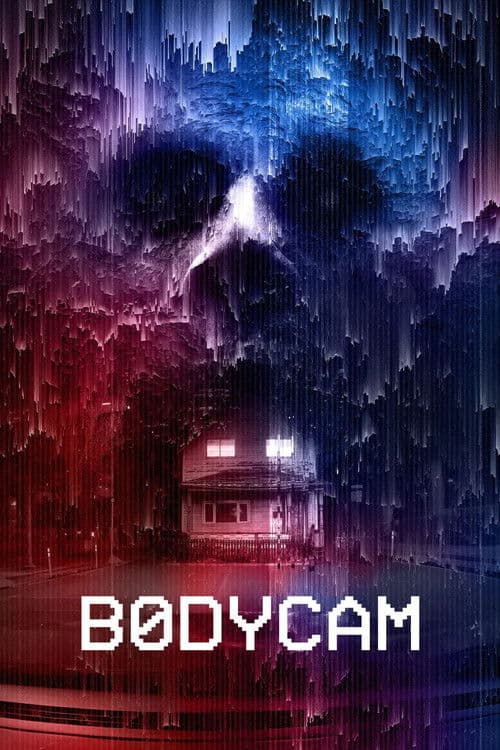
Details
- Language
- English
- Studio
- Superchill
- TMDb Rating
- 5.7 (61 votes)
- Directed by
- Brandon Christensen
- Written by
- Brandon Christensen, Ryan Christensen
- Theme
- true crime
Rating · Quality score from voters
TMDb
5.7/10
IMDb
5.0/10
Rotten Tomatoes
85%
Popularity · Search interest now
Rising
14.4
Based on TMDb activity
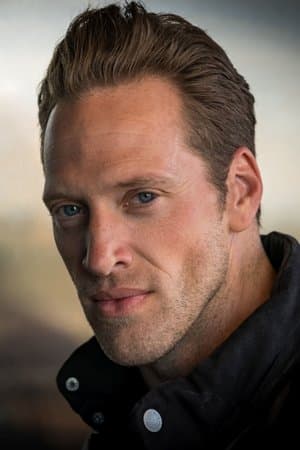
Starring





Where to watch
Links may earn Incoming a commission at no extra cost to you.
Incoming Editorial TeamVerified
A call to a quiet suburban home unleashes unthinkable carnage when two officers mistakenly shoot a man and his infant child, spiraling the tragedy into a fierce, unrelenting fall into the unknown.
Trailer
Gallery (19)
About this release
Bodycam, a horror film produced by Superchill and Essential Film Group, is scheduled for release on March 12, 2026.
The premise is blunt and, in the context of American public discourse, deliberately charged: two police officers respond to a call at a quiet suburban home and, in what the film frames as a mistake, shoot both a man and his infant child. That act of violence is not the endpoint of the story but rather its ignition switch. From there, the film's description promises a descent into something categorized firmly as horror — not procedural drama, not social realism, but genre horror, with language that gestures toward the supernatural or at least the inexplicable: "unthinkable carnage," "a fierce, unrelenting fall into the unknown."
Horror has a long tradition of using real-world fears as the raw material for something stranger and more formally extreme. Films in this vein — those that take a recognizable social wound and transfigure it through genre mechanics — have populated the landscape with enough regularity that the approach has its own critical shorthand. What distinguishes one entry from another is rarely the concept itself but the execution: how far the film commits to its premise, whether the horror logic coheres with the emotional logic, and whether the "unknown" into which characters fall feels earned or merely atmospheric. None of those questions can be answered from the outside before the film opens.
What the title signals is worth noting on its own terms. A bodycam, in contemporary usage, is a device associated with accountability and contested evidence — footage that either exonerates or condemns, that can be released or withheld, that exists in the gap between what officials say happened and what a recording appears to show. Centering a horror film on that object, and on an incident of police violence that results in the deaths of a man and an infant, is a structurally provocative choice. Whether the film treats the bodycam as a narrative device, a formal conceit (suggesting found-footage aesthetics), or simply a thematic signifier is not made clear in the available material.
The found-footage and bodycam-perspective subgenre has its own established grammar at this point. Films that restrict their visual field to surveillance or wearable camera footage use that constraint to generate claustrophobia, unreliable framing, and a particular kind of dread that comes from seeing only what the camera sees — which is never quite everything. If Bodycam operates within that formal tradition, it enters a space that has been well-worked, from early entries that established the conventions to more recent films that have pushed against them. Whether Superchill and Essential Film Group are working inside or against those conventions is an open question.
The studios involved — Superchill and Essential Film Group — do not have extensive public-facing profiles that would immediately orient a viewer the way a larger genre label might. This is not unusual for mid-range horror productions, which frequently emerge from smaller production entities, and it leaves the film's creative team — director, writer, cast — largely unaddressed in the available information. For a horror film whose premise depends significantly on performance (the officers who fire the shots, the world that responds to them) and on whatever formal choices govern how the "unknown" is rendered, those absences are notable. The film's eventual reception will likely hinge on precisely those elements.
The description's phrasing — "spiraling the tragedy into a fierce, unrelenting fall into the unknown" — suggests the film is less interested in the procedural aftermath of the shooting (investigations, community response, legal proceedings) than in something more visceral and less bounded by realism. The word "carnage" implies escalation beyond the initial incident. The "unknown" implies that the horror dimension is not entirely psychological or metaphorical. This positioning puts the film somewhere between a film that uses horror as a lens for social critique and one that uses a socially resonant premise as a launching point for more conventional genre mechanics. Both approaches have produced worthwhile films; they are also capable of producing work that satisfies neither impulse fully.
March 2026 places the release in what is traditionally a quieter theatrical window — past the winter awards corridor, ahead of the summer blockbuster season — where a genre film with modest production origins can find an audience without competing directly against tentpole releases. The film's streaming destination, Shudder, is significant context. Shudder has positioned itself as the primary subscription platform for horror genre work, with a catalog that skews toward films that might not receive wide theatrical distribution but that have specific appeal to horror audiences who actively seek out the genre rather than stumbling into it. The simultaneous availability on AMC+ and Philo broadens that reach modestly.
The audience most likely to seek out Bodycam is already fluent in horror's capacity to process social anxieties through extreme formal means. For that viewer, the premise offers a recognizable framework — contemporary American violence, institutional failure, consequences that exceed rational explanation — applied to genre machinery that has historically been capable of producing something more unsettling than straightforward drama might allow. Whether this film delivers on that potential is what March 12 will answer.
Comments
Sign in to join the conversation.
Loading…