Details
- Language
- English
Popularity · Search interest now
Low
0.0
Based on TMDb activity
Where to watch
Not currently available for streaming or purchase.
Links may earn Incoming a commission at no extra cost to you.
Incoming Editorial TeamVerified
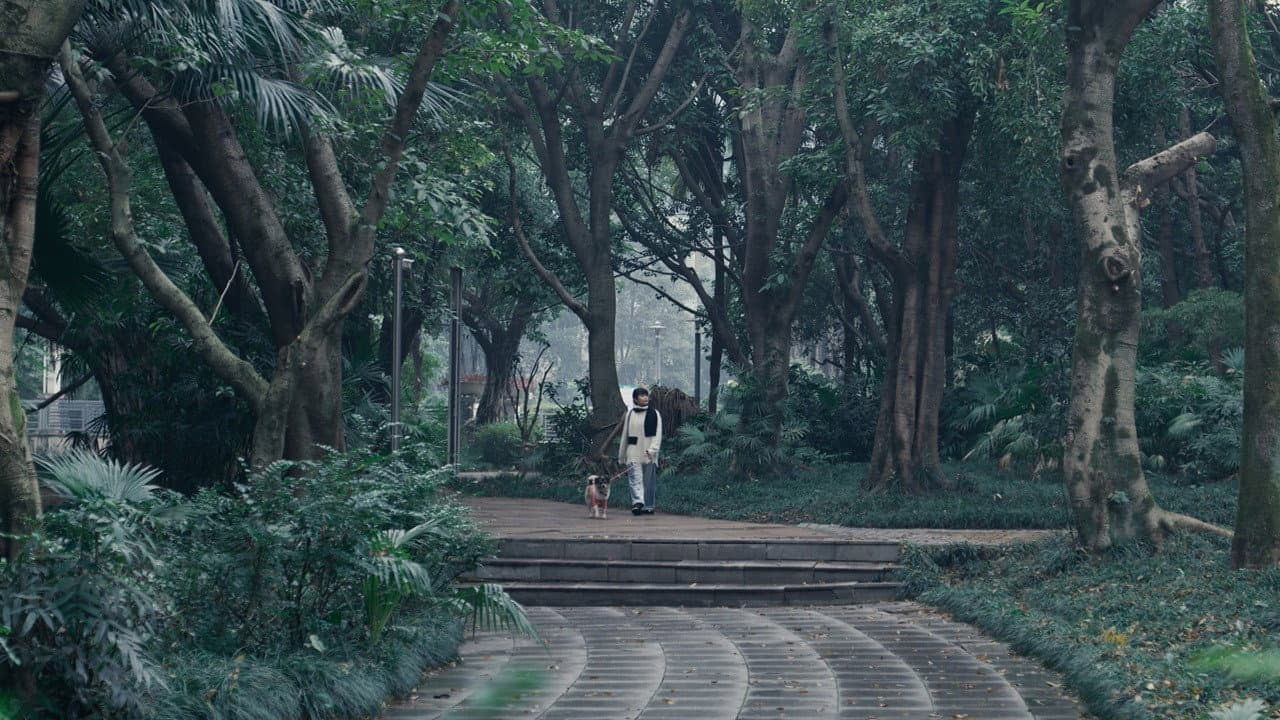
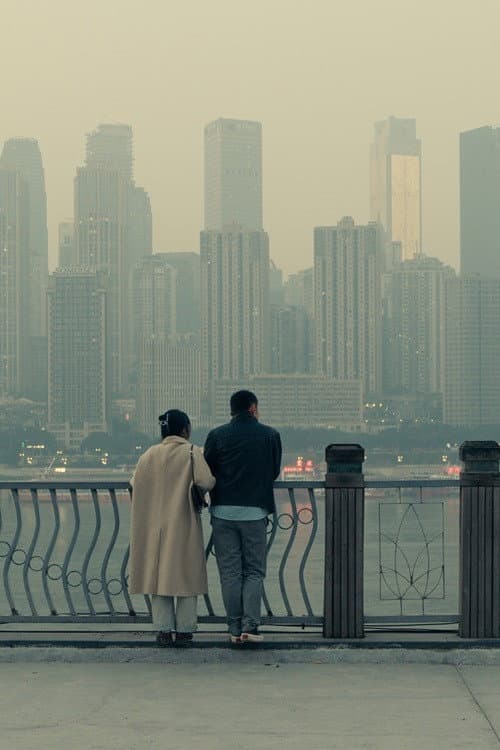
A newly married couple living in a Chinese megalopolis navigates the tricky waters of the traditional expectations that quietly surface in their most intimate exchanges.
About this release
The documentary At the Stage When is scheduled for release on April 30, 2026. Beyond that date and its broad subject matter, the film has generated little public-facing information, which itself says something about where it sits in the landscape of nonfiction cinema: it arrives without the advance machinery of a major festival circuit campaign or a well-known distributor's promotional push, at least not yet.
What the film's description does establish is a clear and specific subject. A newly married couple living in a Chinese megalopolis finds itself navigating the gap between the life they are building together and the traditional expectations that surface — quietly, incrementally — in their most intimate exchanges. That framing is precise in a way that signals documentary intent rather than dramatic contrivance. The emphasis on "quietly" is worth noting. The film appears less interested in confrontation than in the kind of friction that accumulates in small moments: a comment at the dinner table, an assumption about domestic labor, a question about children asked one too many times. These are not the materials of an exposé. They are the materials of observation.
The subject places At the Stage When within a recognizable tradition of intimate documentary portraiture, a mode that has produced some of the form's most enduring work. Films in this vein tend to gain their authority not from access to extraordinary events but from sustained proximity to ordinary ones. The challenge for any filmmaker working this way is time — both the time spent with subjects and the patience required to let meaning accumulate without forcing it. Whether this film was made over months or years, with a single camera operator or a larger crew, is not yet known. The credited production background has not been made public.
The setting — a Chinese megalopolis, unnamed in the available materials — carries its own weight. China's major cities have in recent decades become sites of genuine cultural negotiation, where rapid urbanization, shifting generational values, and the persistence of Confucian-inflected family structures coexist in the same apartment. A young married couple in that environment is not simply two people figuring out how to share a kitchen. They are also figures at the intersection of competing ideas about what marriage is for, what a woman's trajectory should look like, what a man is expected to provide. Documentary cameras placed in that space have the potential to capture something that is simultaneously deeply personal and broadly sociological.
The film's original language is listed as English, which raises an immediate question for anyone paying close attention to the subject matter. A documentary centered on a Chinese couple in a Chinese city being presented in English invites curiosity about its construction — whether the subjects are bilingual, whether the film was made for an international audience from the outset, whether English-language narration or interviews frame the Chinese-language interactions at its center. None of this is answered by the available information, and it is not a minor question. The language choices a documentary makes, and the audience those choices assume, shape the film's entire interpretive frame.
What is also open is the question of whose point of view the film privileges. "Newly married couple" is a neutral phrase, but documentaries are never neutral instruments. Whether At the Stage When follows both partners with equal weight, or whether it cleaves closer to one perspective — the wife's experience of traditional pressure is a different film from the husband's, and a different film again from one that treats the couple as a unit — is something the current description does not resolve. Similarly, the phrase "traditional expectations" is doing considerable work without being examined. Whose traditions, transmitted through which channels — in-laws, social media, state-adjacent cultural messaging, peer pressure among friends — is left entirely open. The film's value will depend in some part on how granular it gets about mechanisms that are easy to gesture at but harder to show.
There is also the question of form. Observational documentary, the fly-on-the-wall approach that places a camera in domestic space and waits, is one option. But the subject could equally support a more essayistic or participatory approach, one in which the filmmakers' presence is acknowledged and the subjects reflect on their situation directly. The description gives no indication of which direction the film takes, and that formal question is not trivial. A film that watches a couple argue about whose mother is coming to visit for the New Year is a genuinely different artifact from one in which a wife sits alone and speaks to the camera about what she expected marriage to feel like.
The release date — April 30, 2026 — places the film in a moment when the festival cycle for that year will have largely run its course, though not entirely. Whether it arrives with awards recognition or critical attention already attached to it, or whether it comes to audiences cold, remains to be seen.
The audience most likely to seek out At the Stage When will include viewers with a sustained interest in documentary work exploring contemporary Chinese social life, as well as those drawn more broadly to intimate nonfiction about marriage, gender, and generational change. For that group, the film's specificity of setting and subject — modest in its stated ambitions, attentive to the ordinary — is precisely the draw.
Comments
Sign in to join the conversation.
Loading…