 Warm
movieReleased
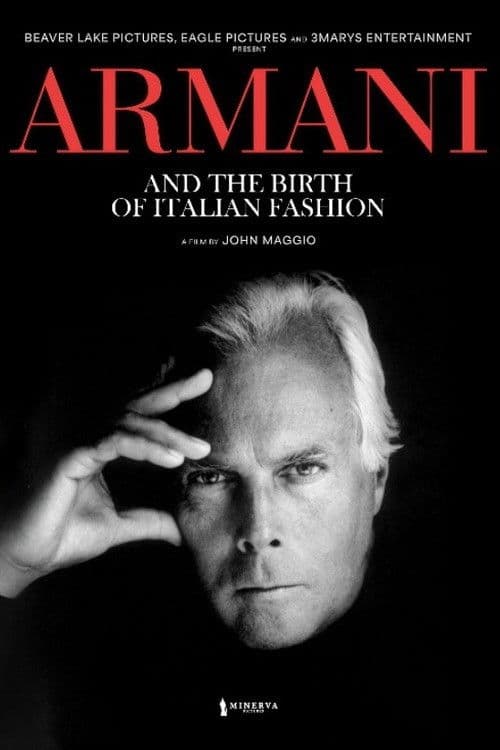
Armani and the Birth of Italian Fashion
Released April 25, 2026
↑ 1.424h
Details
- Language
- English
- Directed by
- John Maggio
- Theme
- workplace
Popularity · Search interest now
Low
0.6
Based on TMDb activity
Hype score
leaderboard →49
/ 100↑ +1.4 in 24h
#213 globally#126 in movie
30-day trendWP 45
Armani and the Birth of Italian Fashion trailer climbs YouTube rankings this week.
Starring


Incoming Editorial TeamVerified
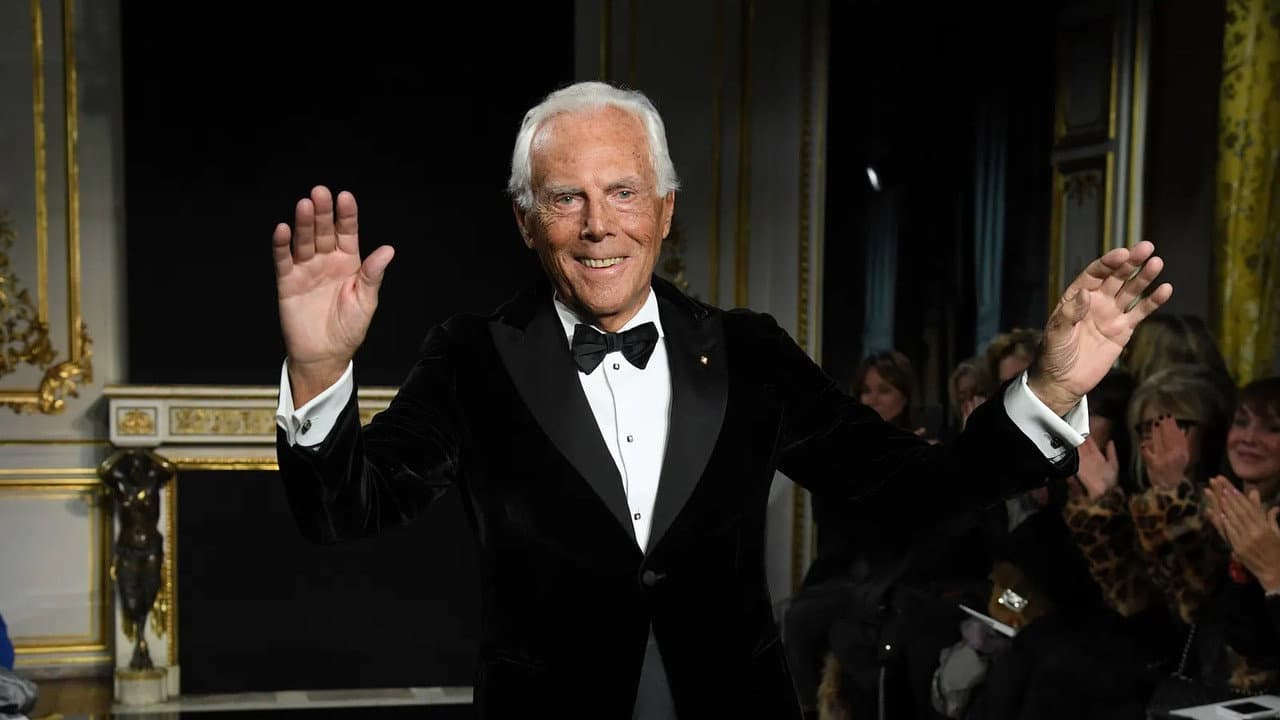
Armani and the Birth of Italian Fashion is a documentary film releasing April 25, 2026. It centers on Giorgio Armani's first and final on-screen interview and traces the rise of Italy's major fashion houses, including Versace, Gucci, Valentino, and Prada.
Gallery (2)
Key features
- ·Documentary film
- ·Features Giorgio Armani's first and final on-screen interview
- ·Covers multiple Italian fashion houses
- ·Set in Milan
- ·Explores Hollywood and Italian fashion connections
- ·English language
- ·Releases April 25, 2026
FAQ
When does Armani and the Birth of Italian Fashion release?
The film releases on April 25, 2026.
What is Armani and the Birth of Italian Fashion about?
It is a documentary tracing the rise of Italian fashion houses, anchored by Giorgio Armani's first and final on-screen interview, with coverage of houses including Versace, Gucci, Valentino, and Prada.
Who is interviewed in Armani and the Birth of Italian Fashion?
Giorgio Armani gives what is described as his first and final on-screen interview in the film, alongside fashion figures, actors, and cultural commentators.
Where was Armani and the Birth of Italian Fashion filmed?
Portions of the documentary were filmed within Milan's fashion spaces, though the full list of locations has not been confirmed in available data.
About this release
A documentary titled Armani and the Birth of Italian Fashion is scheduled for theatrical release on April 25, 2026. The film centers on Giorgio Armani — one of the most recognizable figures in twentieth-century design — and draws its central authority from what the production describes as his first and final on-screen interview. That framing alone gives the film an unusual weight before a single frame has been widely seen.
The subject matter is vast, and the documentary appears to have calibrated its ambitions accordingly. Rather than limiting itself to a single biography, the film traces the broader rise of Italy's fashion empires through the dynastic families and individual designers who collectively built the industry's international reputation. Armani is the film's anchor, but the names invoked in its framing extend to Versace, Gucci, Valentino, and Prada — houses whose histories are individually dense enough to fill their own features. The choice to gather them under one roof, so to speak, signals an interest in argument as much as portraiture: that these figures and their rivalries constitute something larger than a set of competing brands, that they amount to a coherent cultural moment with a beginning and an arc.
That arc is located specifically in Milan, and the film is described as being set within the city's most exclusive fashion spaces. Location in documentary filmmaking is rarely incidental — physical settings lend credibility and texture to oral history, and Milan's fashion infrastructure carries decades of competitive memory. Whether the film uses those spaces as mere backdrop or as active elements of the storytelling is one of the open questions the available information does not resolve. Similarly, the documentary's described reach across "fashion icons, actors, and cultural tastemakers" suggests a substantial interview roster, though which specific figures appear alongside Armani is not yet confirmed in any detail made public.
The Hollywood dimension is worth noting separately. The film explicitly addresses what it calls the enduring romance between Hollywood and Italian design, a relationship with real historical substance — Armani's work dressing Richard Gere in American Gigolo in 1980 is often cited as a turning point in the designer's American visibility, though the film's own treatment of that history is not yet detailed in available materials. The inclusion of actors among the interviewees suggests the documentary intends to pursue that thread with some depth, exploring how American celebrity and Italian craftsmanship became mutually reinforcing over several decades. That intersection has been touched on in fashion journalism and in prior documentary work, but it hasn't often been examined from inside the houses themselves, with the principals speaking directly.
The phrase "first and final on-screen interview" is doing considerable work in the film's framing. Armani, who was born in 1934, has been notably private over the course of a career spanning more than five decades. A final interview implies a kind of reckoning — or at least a summation — and positions the documentary as a document of record rather than simply a promotional exercise. What exactly Armani chose to address, what periods of his career receive emphasis, and what he declined to discuss are all questions the marketing has not yet answered. The creative rivalries mentioned in the description hint that the film may not be strictly celebratory, but whether it engages critically with the labor practices, intellectual property disputes, or commercial pressures that have shaped these houses over time is unclear from what's currently available.
The competitive landscape among the houses themselves is potentially the film's richest material. Armani, Versace, Gucci, Valentino, and Prada represent not only different aesthetic philosophies but different models of creative succession and corporate ownership. Some remain family-controlled or founder-adjacent; others passed into large conglomerate ownership. The tensions between artisanal identity and global commercial scale have defined the recent history of luxury fashion in ways that are difficult to tell heroically. Whether this documentary attempts that more complicated story or focuses primarily on the founding generation and its romantic mythology is another question the current framing leaves open.
There is also the question of periodization. "The birth of Italian fashion" implies a specific historical thesis — that there was a moment when Italy's design industry coalesced into something internationally significant, and that the figures named were instrumental in that moment. Fashion historians generally place the postwar Italian industry's international emergence somewhere in the 1950s and 1960s, with the Florentine presentations organized by Giovanni Battista Giorgini often cited as an early inflection point, though Milan eventually supplanted Florence as the industry's capital. Whether the film engages with that longer historical context or begins its story with the generation of designers it profiles most closely is not specified in available materials.
The documentary's English-language production and its star-studded framing suggest it is oriented toward international audiences with general cultural curiosity rather than specialist fashion knowledge. Viewers who came of age during the peak cultural visibility of these houses — roughly the 1980s and 1990s — and who have an interest in how that era's aesthetic confidence was actually constructed will find the film's premise directly addressed to them. So will anyone drawn to the particular drama of creative ambition, family legacy, and the making of taste in postwar Europe. For that audience, the Armani interview alone represents primary source material that simply did not exist before this production.
Comments
Sign in to join the conversation.
Loading…