Details
- Language
- English
- Studio
- RVK Studios
- Directed by
- Baltasar Kormákur
- Written by
- Jeremy Robbins
Rating · Quality score from voters
IMDb
6.1/10
Rotten Tomatoes
68%
Metacritic
58/100
Popularity · Search interest now
Low
8.2
Based on TMDb activity
Hype score
leaderboard →51
/ 100
#204 globally#120 in movie
Apex accelerates in Wikipedia traffic among movie releases this week.
Starring







Incoming Editorial TeamVerified
Apex is an upcoming thriller film set for release on April 24, 2026. The story follows a grieving woman on a solo journey through the Australian wilderness who becomes the target of a killer in a survival confrontation.
Trailer
Gallery (24)
Key features
- ·Survival thriller genre
- ·Set in Australian wilderness
- ·Solo protagonist narrative
- ·Cat-and-mouse premise
- ·English language
- ·2026 theatrical release
FAQ
When does Apex release?
Apex is scheduled for release on April 24, 2026.
What is Apex about?
The film follows a grieving woman on a solo adventure in the Australian wilderness who becomes the target of a killer in a survival thriller scenario.
What genre is Apex?
Apex is a survival thriller set in the Australian outback.
About this release
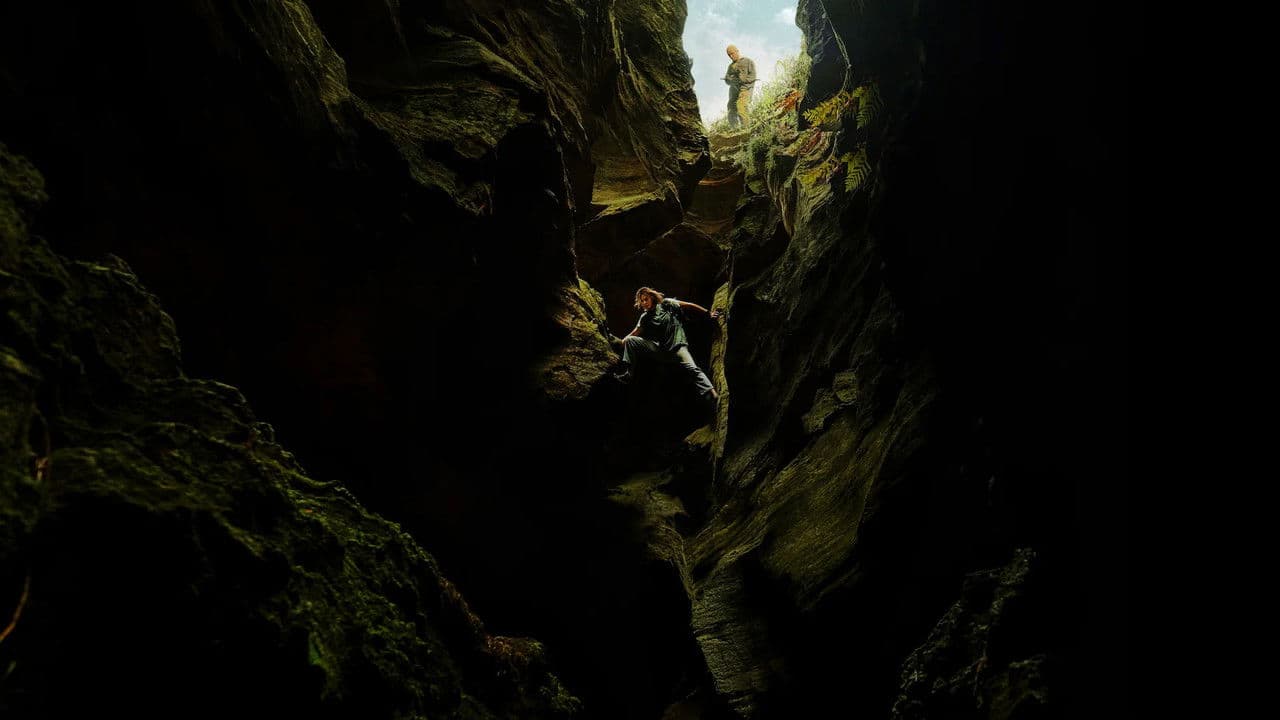
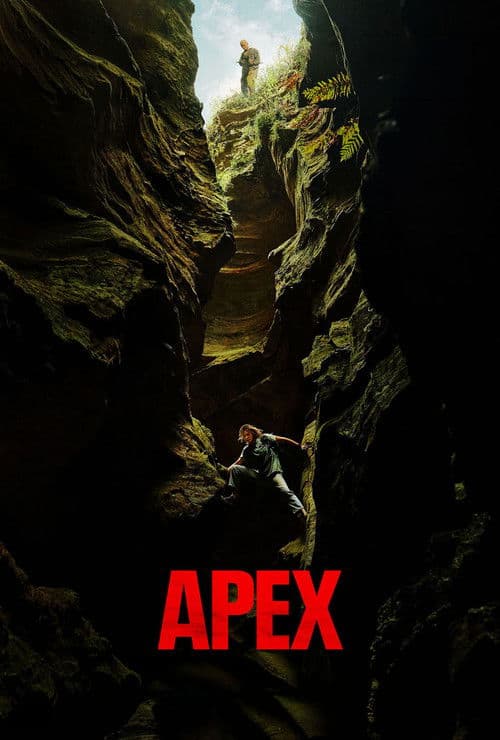
Apex, an action thriller produced by RVK Studios, Chernin Entertainment, and Ian Bryce Productions, is scheduled for release on Friday, April 24, 2026. The film centers on a grieving woman who has pushed herself into the Australian wilderness on a solo adventure, only to find that she has become the target of a killer who views her as prey.
The premise belongs to a recognizable lineage within the thriller genre — the "most dangerous game" scenario, in which a hunter pursues a human quarry through hostile terrain. It is a framework that has been revisited repeatedly across decades of genre cinema, typically because the stripped-down dynamic generates a particular kind of sustained tension: two figures, an environment that favors neither entirely, and an asymmetry of intent that can shift as the story progresses. What distinguishes Apex on paper from many of its predecessors is the specificity of its setting and the character at its center. The film is not staging this confrontation in a generic forest or an anonymous mountain range. The metadata points to Wandarra National Park in Australia as the primary location, a geographic specificity that carries its own implications — isolation, extreme climate, unfamiliar landscape for audiences in the northern hemisphere who tend to associate wilderness survival cinema with temperate or arctic environments.
The survival challenges facing the protagonist appear to be deliberately varied. Keywords associated with the production suggest the film moves across different physical registers — canoeing, rock climbing, the threat of deadly falls — which implies a narrative that doesn't confine its action to a single terrain type. Rather than a pursuit through one continuous environment, the film seems to move its central character through a sequence of distinct physical ordeals, each presenting its own set of problems independent of the human threat. The killer, meanwhile, appears to be operating with a crossbow, a weapon choice that carries its own tonal weight: it is slower than a firearm, requires proximity and skill, and lends the hunt a more deliberately cruel, almost ritualized quality.
The production background assembled here raises a few points worth noting. Ian Bryce Productions has a long association with large-scale action filmmaking, and Chernin Entertainment has demonstrated a consistent interest in survival and creature-feature genre work over the past decade. RVK Studios is the third production entity attached. The combination suggests a project with enough resources to render the Australian wilderness convincingly and to execute physically demanding action sequences with some ambition, though the scale of the film — whether it is a contained genre piece or something with broader spectacle aspirations — remains unclear from what is publicly available.
The metadata also references the Trollveggen mountains in Norway, which is a detail that doesn't resolve easily against the Australian wilderness setting that dominates the rest of the film's described geography. Whether this indicates a prologue, a flashback, a separate sequence early in the story that establishes the protagonist's history as an extreme adventurer before the main action relocates to Australia, or something else entirely, is not apparent from the available information. It is the kind of detail that raises a genuine structural question about how the film is organized — whether the Norway location functions as character context for a woman whose grief has been channeled into increasingly extreme physical challenges, or whether it serves some other narrative purpose.
The grief element is arguably the most interesting variable in the premise as described. Survival thrillers frequently require their protagonists to discover reserves of will and resourcefulness under pressure, and the standard dramatic mechanism is simply the instinct to live. Grounding that instinct in a character who is already, in some sense, testing herself against loss — who has arrived in a remote wilderness not as a casual tourist but as someone pushing limits, possibly as a way of processing or confronting something — adds a psychological dimension that could either deepen the film's emotional register or remain largely decorative depending on how the screenplay handles it. The keywords also reference a missing persons case and an investigation resolution, which suggests the film has at least some procedural element, possibly threading a parallel narrative strand alongside the wilderness confrontation itself.
The cat-and-mouse structure implied by the premise and its associated descriptors tends to live or die on the credibility of both figures — the hunter and the hunted. If the killer is positioned as simply a "nutcase," to use the film's own keyword, the threat risks becoming a blunt instrument. But the descriptor "cunning" in the film's logline suggests an antagonist with some degree of calculated intelligence rather than pure malice, which at least opens the possibility of a more genuinely strategic confrontation rather than a series of close escapes from an unstoppable force.
The film will likely draw viewers who follow survival-thriller genre releases, particularly those with an interest in wilderness settings that move beyond the heavily trafficked landscapes of Pacific Northwest or Scandinavian forest procedurals. The Australian outback and national park context positions it somewhere between the physical extremity of climbing and adventure films and the psychological pressure of chase thrillers, an intersection that has its own dedicated audience. Anyone who has followed Chernin Entertainment's output in the genre space, or who tracks Ian Bryce Productions, will have a production context to set against whatever the marketing campaign eventually reveals about tone and execution.
Comments
Sign in to join the conversation.
Loading…