Details
- Language
- Chinese
- Studio
- Such A Good Film
- TMDb Rating
- 6.0 (1 votes)
- Theme
- small town
Rating · Quality score from voters
IMDb
7.0/10
Popularity · Search interest now
Low
6.7
Based on TMDb activity
Starring








Incoming Editorial TeamVerified
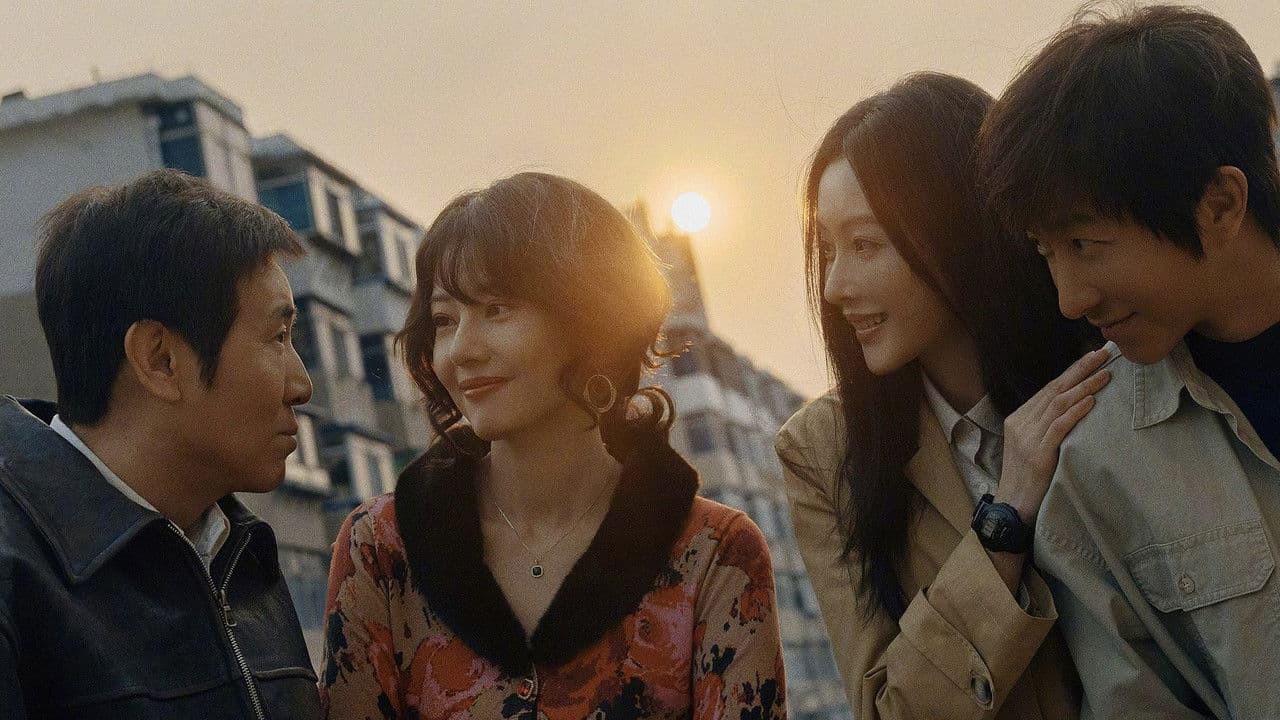
All the Good Eyes (森中有林) is a Chinese-language family drama spanning four decades in the lives of a family in Northeast China. The film is scheduled for release on April 25, 2026.
Trailer
Gallery (2)
Key features
- ·Chinese-language family drama
- ·Set in Northeast China
- ·Narrative spans approximately four decades
- ·Upcoming theatrical release April 25, 2026
FAQ
When does All the Good Eyes release?
All the Good Eyes is scheduled to release on April 25, 2026.
What is All the Good Eyes about?
The film follows a Northeast China family across four decades, depicting their experiences with prosperity, hardship, love, conflict, and their enduring bond to their ancestral land.
What is the Chinese title of All the Good Eyes?
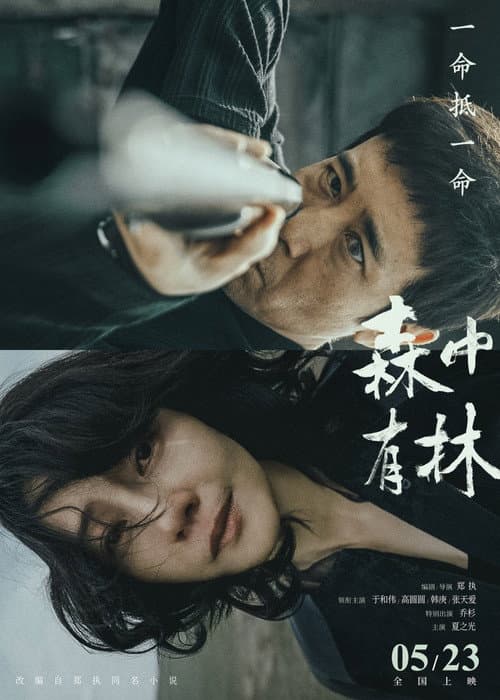
The Chinese title is 森中有林.
What language is All the Good Eyes in?
The film is in Chinese (Mandarin).
About this release
All the Good Eyes (森中有林), a Chinese-language drama produced by Such A Good Film and Maxtimes Pictures, is scheduled for release on April 25, 2026. The film carries a subtitle that translates roughly as "Forest Within the Forest" — a phrase that quietly announces the layered, recursive quality of what the story promises: family as ecosystem, each generation sheltering and competing with the next.
The narrative spans four decades in the life of a single family rooted in Northeast China, a region known in Chinese cultural memory as the Dongbei — the vast, industrial, and agrarian heartland that has generated its own distinct literary and cinematic tradition. The synopsis traces cycles of prosperity and hardship, love and hatred, fortune and misfortune, with the family's bond to their ancestral land serving as the fixed point around which everything else rotates. That framing — land as anchor, as inheritance, as burden — places the film squarely within a strain of Chinese epic drama that takes seriously the weight of place on the people who refuse to leave it.
The metadata confirms the film is based on a novel or book, which adds a layer of anticipation for anyone familiar with how Northeast China's literary output has translated to screen in recent years. The Dongbei has produced some of the more distinctive voices in contemporary Chinese fiction — writers who work in a mode that blends hardship, black comedy, and an almost geological patience with time. Whether All the Good Eyes draws from that tradition or from an older, more conventionally melodramatic lineage of family saga fiction is not yet clear from available materials. What is known is that the source material exists, which means the film arrives with a pre-existing architecture: character relationships already constructed, a timeline already charted across forty years, moral reckonings already rendered on the page. The filmmakers' task is translation, which carries its own specific pressures.
The genre tags — drama, romance, crime — are worth pausing on. Most multigenerational family epics settle comfortably into the first two categories; the inclusion of crime introduces a more unsettling dimension. Whether that refers to a single incident that reshapes the family's trajectory, a recurring pattern of transgression across generations, or something structural to the social world the film depicts is not disclosed in any currently available description. It may be that the crime element is relatively minor, a single thread in a larger weave. Or it may be that the film's vision of Northeastern Chinese life over forty years treats crime not as aberration but as one of the ordinary instruments by which people navigate economic and social precarity. That ambiguity is itself informative: the marketing, such as it is at this stage, has chosen not to emphasize the criminal dimension, which suggests either that it functions as a subplot or that the production is being positioned primarily as a prestige family drama rather than a genre film.
The production involves two companies: Such A Good Film and Maxtimes Pictures. Both are Chinese production entities, which aligns with the film's original language and setting. Beyond that, the available materials do not specify director, cast, or cinematographer. For a film with a release date still roughly a year out from the time of this writing, that absence is not unusual, but it does mean that some of the most consequential creative decisions — whose face will anchor the forty-year span, whose vision will translate the novel's prose into images of the Dongbei landscape — remain opaque. A saga covering four decades almost inevitably raises the question of how it handles time: whether it moves chronologically, whether it employs a single actor across aging makeup, whether it jumps between periods with distinct visual signatures. These are not small craft questions, and their answers will determine much of the film's emotional texture.
The subtitle's imagery is worth one more consideration. 森中有林 — a forest that contains, or conceals, another forest — suggests interiority and concealment as much as abundance. The official English-language description speaks of the family's "steadfast guardianship of one another," a phrase that could be read as warmth but also carries the faint coercive undertone that all guardianship involves: someone is being guarded, whether they wish to be or not. A saga that runs four decades across prosperity and ruin, love and hatred, is unlikely to present that guardianship as uncomplicated. The novel origin only increases the expectation that the film will take time with contradiction — that the land which "sustains" this family is also, plausibly, what keeps them from leaving, from starting over, from escaping whatever the crime element eventually names.
The audience most likely to seek this out in April 2026 will include viewers who follow contemporary Chinese cinema closely, particularly those drawn to the kind of rural or semi-industrial epic that has earned international festival attention over the past decade, as well as readers of Chinese popular and literary fiction who may already know the source novel. Given the film's genre spread and its emphasis on multigenerational family bonds — categories that tend to travel reasonably well across cultural contexts — it may also find a secondary audience among general arthouse viewers drawn to long-form narrative and unfamiliar regional settings.
Comments
Sign in to join the conversation.
Loading…