 Cool
A Messy Tribute to Motherly Love
Een mislukt eerbetoon aan moederliefde
Released April 30, 2026
↓ 0.224h
Details
- Language
- Dutch
- Studio
- One Day Film
- Directed by
- Dan Geesin
- Written by
- Dan Geesin
- Theme
- small town
Popularity · Search interest now
Low
0.9
Based on TMDb activity
Starring






Incoming Editorial TeamVerified
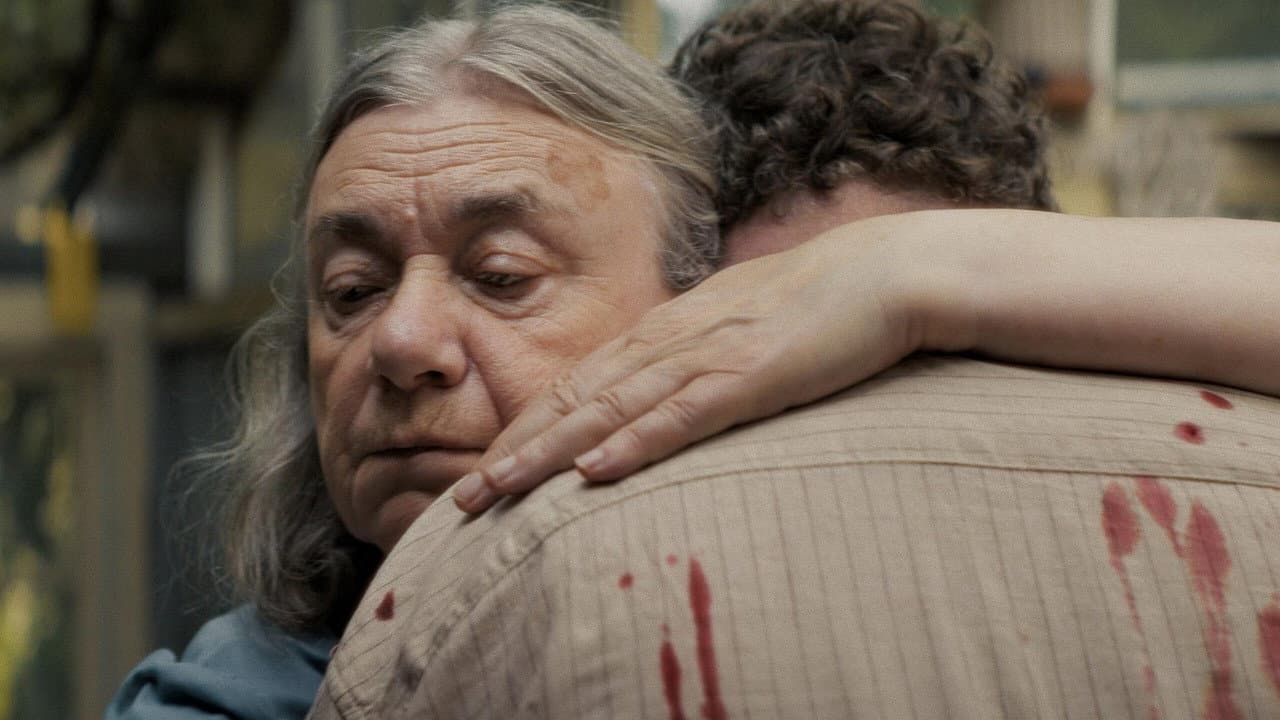
When people literally explode from emotional overload, grief is just the beginning. A wildly surrealist charade in which a bereaved man, his friend and mother spiral through village life.
Gallery (6)
About this release
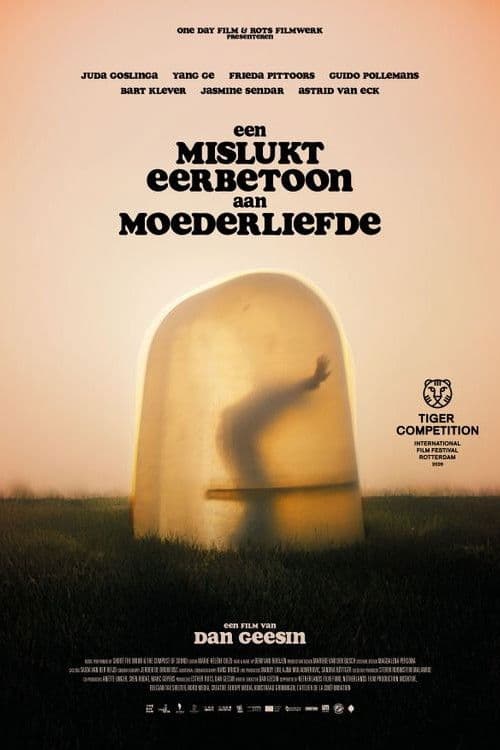
A Messy Tribute to Motherly Love — or, in its original Dutch, Een mislukt eerbetoon aan moederliefde — is scheduled for release on April 30, 2026, produced by One Day Film and Rots Filmwerk. The film is a Dutch-language production, surrealist in its stated ambitions, and arrives with a premise that is difficult to place in any comfortable category: people, under the weight of emotional overload, literally explode. From there, the film follows a bereaved man, his friend, and his mother as they move through the rhythms and textures of village life in the aftermath of grief.
The film's Wikipedia association with the 55th International Film Festival Rotterdam places it within a specific context worth noting. Rotterdam has long functioned as a showcase for formally adventurous, often low-budget European cinema — films that resist the narrative tidiness of mainstream festival circuits. The festival has historically favored work that is willing to be uncomfortable, incomplete, or deliberately difficult. That a film built around surrealist conceits and domestic tragedy would find a home in that context is not surprising, but it does signal something about the register the filmmakers appear to be working in. Rotterdam is not the Palme d'Or circuit; it tends to reward strangeness over polish, and it often surfaces films that go on to circulate quietly but persistently through arthouse venues and cinematheques.
The production companies — One Day Film and Rots Filmwerk — are not household names outside Dutch-language cinema, which is itself a relatively small international market. That combination of modest production infrastructure and Rotterdam adjacency suggests a film made with limited resources and considerable creative latitude. Whether that latitude produces something genuinely unsettling or merely eccentric is one of the things that can't be answered before the film arrives.
What is known about the premise warrants some attention. The description positions the central explosive phenomenon — people detonating from emotional excess — not as horror but as a premise for a "wildly surrealist charade." That tonal framing is doing a lot of work. Surrealism in cinema has a wide range: it can encompass the meticulous strangeness of Buñuel, the absurdist social comedy of certain Dutch and Belgian films, or something more loosely deployed as an aesthetic mood rather than a structural principle. The word "charade" in the description implies something theatrical, perhaps even farcical — a performance of grief rather than grief rendered directly. Whether the film sustains that register consistently or whether the surrealist conceit eventually gives way to more conventional dramatic beats is an open question.
The dramatic triangle at the center — a bereaved man, his friend, and his mother — is spare enough to accommodate a great deal, but also narrow enough to suggest that the film is less interested in plot than in dynamic. Village life as a setting carries its own associations: the closed social world, the weight of community observation, the particular way that private grief becomes semi-public in small geographies. Set against the heightened premise of literal emotional explosion, that mundane backdrop could produce genuine tension between the extraordinary and the ordinary — or it could flatten the surrealism into whimsy.
The title's bilingual self-awareness is also worth noting. Calling something a "messy tribute" or "mislukt eerbetoon" — a failed tribute — is a form of preemptive self-critique built into the work's identity. The film seems to know, or at least wants its audience to know, that what follows will not be a clean or reverential treatment of its subject. Motherly love, grief, and the relationships that survive bereavement are well-trodden territory in drama; framing the entire enterprise as a failure before it begins is either a genuinely interesting formal gesture or a defensive one. It positions the messiness as intentional, which protects against the charge of incoherence while also potentially lowering the stakes of what the film is attempting.
The genre tags assigned to the film — drama and science fiction — reflect the difficulty of classifying something built around a fantastic premise deployed in a realist social setting. The exploding bodies are, presumably, the science-fiction element, though the film's description doesn't emphasize world-building or speculative logic. It reads less like science fiction in the traditional sense and more like magical realism given a violent edge: the impossible thing happens, and the characters must navigate ordinary life around it. That is a distinct mode from genre science fiction, and audiences expecting the latter may find themselves in unfamiliar territory.
With no votes or ratings attached to the film in any tracking system as of now, there is simply no aggregated critical or audience response to draw on. The film has not yet accumulated a public record. What exists is the premise, the production context, and the festival association — enough to orient potential viewers but not enough to predict reception.
The audience most likely to seek this out will be viewers already oriented toward Dutch-language European cinema, festival arthouse programming, and films that treat grief as a pretext for formal experimentation rather than emotional catharsis. For that audience, the Rotterdam connection and the deliberately unglamorous title function as reliable signals. For everyone else, April 30, 2026, will arrive with a film that promises to be neither comfortable nor easily categorized — and that may be precisely the point.
Comments
Sign in to join the conversation.
Loading…