 Cool
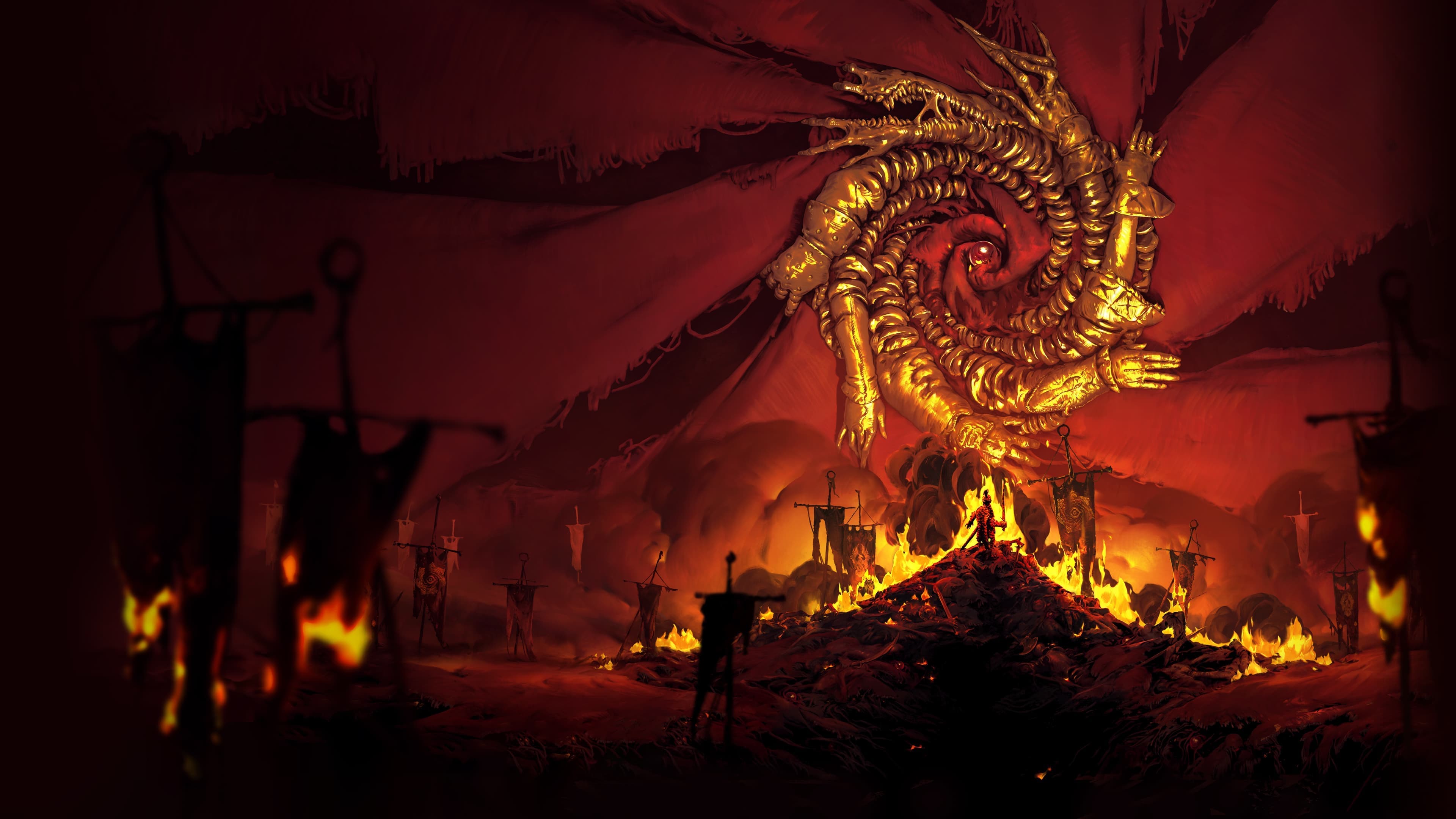
No Rest for the Wicked
Releases March 31, 2027
143days20hours01min18sec
↑ 0.824h
Details
- Developer
- Moon Studios
- Platforms
- PCPS5Xbox Series X/S
- Developer
- Moon Studios
- Publisher
- Private Division
- Mood
- darkfast paced
- Theme
- survival
- Format
- single player
Rating · Quality score from voters
RAWG
4.0/5
Popularity · Search interest now
Trending
395.0
Based on TMDb activity
Where to buy
Links may earn Incoming a commission at no extra cost to you.
Incoming Editorial TeamVerified
No Rest for the Wicked is an action-adventure RPG developed for PC, PlayStation 5, and Xbox Series X, scheduled for release on October 30, 2026.
Gallery (5)
Key features
- ·Action-adventure RPG
- ·Available on PC, PS5, Xbox Series X
- ·Exact release date: October 30, 2026
- ·Multi-platform release
FAQ
When does No Rest for the Wicked release?
No Rest for the Wicked releases on October 30, 2026. It launches simultaneously on PC, PlayStation 5, and Xbox Series X.
What platforms is No Rest for the Wicked available on?
No Rest for the Wicked is available on PC, PlayStation 5, and Xbox Series X. It is a current-generation console and PC release with no mention of older hardware platforms.
What genre is No Rest for the Wicked?
No Rest for the Wicked is categorized as an action-adventure role-playing game. It spans the adventure, action, and RPG genres.
Who developed No Rest for the Wicked?
Developer and publisher details are not available in the current structured data for No Rest for the Wicked.
About this release
No Rest for the Wicked, the action role-playing game from Moon Studios published by Private Division, is scheduled to release on October 30, 2026, for PC, PlayStation 5, and Xbox Series X.
Moon Studios is an Austrian developer best known for the Ori series — Ori and the Blind Forest and Ori and the Will of the Wisps — two platformers that established the studio's reputation for precise, kinetic movement and a particular visual fastidiousness. No Rest for the Wicked represents a pronounced departure from that lineage. Where the Ori games are side-scrolling platformers with a soft, painterly aesthetic, this new project sits firmly in the action-RPG genre, a space occupied by demanding contemporaries that ask players to read enemy timing carefully and commit to deliberate, often punishing combat. The shift is not a lateral one; it suggests an ambition to compete in a significantly more crowded and scrutinized category of game.
The title arrives on three platforms simultaneously — a notable choice in a period when many comparable releases have staggered their console launches or remained platform-exclusive for extended windows. Releasing on PC, PlayStation 5, and Xbox Series X on the same date signals a broad-audience approach from publisher Private Division, a label that has historically focused on mid-sized, artistically distinct projects rather than blockbuster-scale productions. That positioning is worth holding in mind: No Rest for the Wicked is neither an independent release nor a major-studio tentpole, but something in the space between — a game with evident production ambition backed by a publisher that tends to give developers room to take formal risks.
The October 30 date places it at the edge of the traditional holiday release window, the Friday before Halloween. That timing is neither accidental nor especially unusual for an action RPG with a title carrying obvious dark-fantasy connotations. The genre has found a loyal audience that is not particularly holiday-dependent — players drawn to this kind of game tend to seek it out on its merits and on their own schedules rather than as a seasonal purchase — but landing ahead of the thicker November release cluster gives the game a cleaner window to establish itself before attention becomes more divided.
What the metadata does not reveal is substantial, and those gaps are precisely where the interesting questions sit. The genre classification — action, adventure, role-playing — is broad enough to encompass an enormous range of design philosophies. Whether the game leans toward the systemic complexity of a traditional RPG, with deep character-building and branching progression, or toward the more pared-down, combat-rhythm-focused design that has become associated with the soulslike subgenre, is not something the available information settles. Moon Studios' background in movement-driven platformers suggests an interest in how a character feels in motion, which could mean the combat has been designed with particular attention to physical feedback — but that remains an inference drawn from history rather than confirmed fact.
The user rating of 3.97 — presumably drawn from a pre-release tracking or wishlist-adjacent system rather than post-launch reviews, given the absence of a Metacritic score — indicates a meaningfully engaged audience already paying attention to this release. It is not a number that points to either indifference or overwhelming anticipation; it sits in the range that tends to reflect genuine interest from a core audience without the kind of broad cultural saturation that would push it higher. For a studio making its first major genre pivot, that figure suggests the Ori fanbase is following Moon Studios to unfamiliar territory, curious rather than certain.
The relationship between Moon Studios and Private Division is also worth noting without overstating. Private Division has published titles that range considerably in tone and scope, and its involvement here does not, on its own, tell you much about the game's budget, its scope, or the degree of creative latitude the developer has been given. What it does suggest is that the game has been resourced sufficiently to land on three platforms at once and to carry a profile significant enough for a dedicated release date to be set more than a year in advance — a signal that both parties are treating this as a serious commercial and creative proposition.
The setting and narrative dimensions of the game remain entirely opaque from the available data. The title gestures at exhaustion, moral weight, possibly a religious or folkloric register — but titles are poor evidence for anything. What genre and developer context together suggest is a game interested in atmosphere and a certain kind of physical commitment from the player, but that is a thin reed to lean on.
The audience most likely to track this closely is twofold. Players who followed Moon Studios through the Ori games will find this a genuine curiosity — a chance to see whether the qualities that distinguished those platformers translate into a structurally different form. And players already invested in action RPGs, particularly those drawn to demanding, deliberate combat systems, will be watching to see whether a studio with no prior history in the genre has found something new to say within it, or has arrived as a capable but recognizable participant. Both groups have reasons to wait for October 30 with attention, if not certainty.
Comments
Sign in to join the conversation.
Loading…