 Cool
gameReleased
Coffee Talk Tokyo
Released May 20, 2026
Details
- Developer
- Toge Productions
- Platforms
- PC
- Developer
- Toge Productions, Chorus Worldwide Games
- Publisher
- Chorus Worldwide Games
Where to buy
Links may earn Incoming a commission at no extra cost to you.
Gallery (5)
About this release
Coffee Talk Tokyo, developed by Toge Productions and published by Chorus Worldwide Games, is scheduled for release on PC on May 20, 2026. It is the third entry in the Coffee Talk series, following the original Coffee Talk, released in 2020, and Coffee Talk Episode 2: Hibiscus & Butterfly, which arrived in 2023.
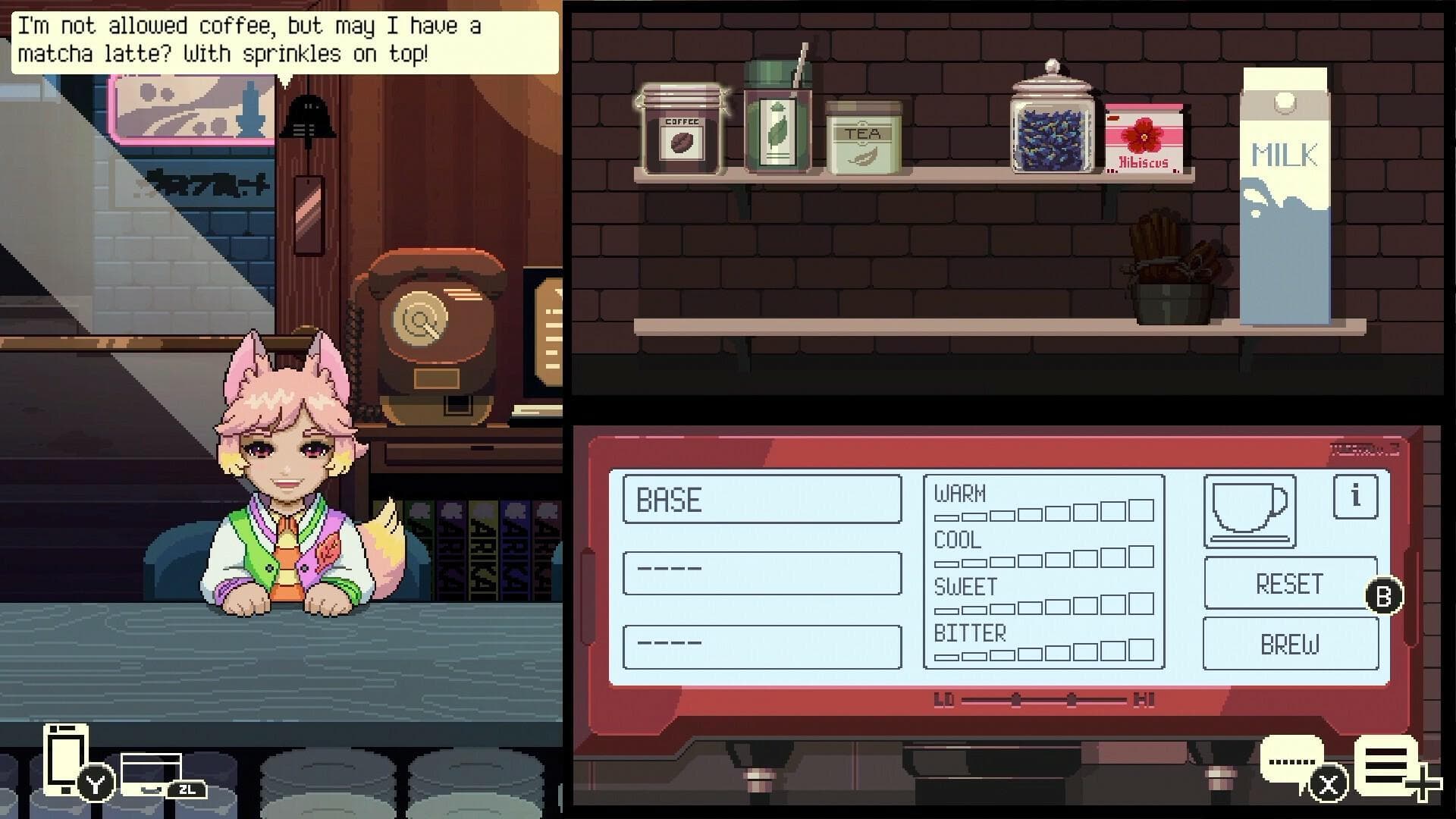
The Coffee Talk series occupies a particular corner of the visual novel and "café simulation" tradition — a genre defined less by mechanical challenge than by atmosphere and character. Players typically take the role of a barista working late-night shifts, serving a rotating cast of patrons who are fantastical creatures, humans, or some combination thereof, living in a version of a real-world city that has been refracted through speculative fiction. The first game was set in an alternate Seattle; the second continued in that same location. The shift implied by the subtitle Tokyo suggests the series is moving its setting to Japan's capital, which would mark a meaningful geographical and cultural change in the franchise's world-building, even if the structural rhythms of listening to customers, preparing drinks, and watching their stories unfold remain intact.
Toge Productions, an Indonesian studio, has been the consistent creative force behind the series. Their authorship is notable partly because the original Coffee Talk was something of a quiet breakout — a game made by a relatively small Southeast Asian developer that found an audience well beyond expectations, trading on pixel art aesthetics, a lo-fi musical sensibility, and a genuine interest in what it means to make people feel heard, even fictional ones. The involvement of Chorus Worldwide Games as both co-developer and publisher continues the partnership that was in place for Episode 2.
What remains open, based on what has been announced, is almost everything about the particulars. The game has no listed genre tags in its metadata, which is unusual and leaves open questions about whether Coffee Talk Tokyo represents a full sequel, a standalone episode in the mold of Episode 2, or some structural departure from the format established by its predecessors. It is currently listed only for PC, with no announced console ports, though the earlier games eventually reached platforms beyond their initial releases — a point worth noting for players who have followed the series on other hardware and might be wondering whether to wait.
The Tokyo setting invites questions that the available information does not answer. Whether the game transplants the existing cast of characters to a new city, introduces an entirely new set of patrons and a new barista, or does something more complex with the relationship between the two locations is unknown. The Coffee Talk series has always been interested in diversity of perspective — its creature-filled cities function partly as a way of talking about outsiders, belonging, and the effort of being genuinely present with another person for the duration of a cup of coffee. A Tokyo setting carries its own cultural specificity, and how Toge Productions approaches that specificity, given that the studio is based in Indonesia rather than Japan, is a genuine question the release will eventually have to answer on its own terms.
The release date of May 20, 2026, places Coffee Talk Tokyo in a spring window without any announced competition or surrounding context that might affect its reception. The absence of a Metacritic score is expected for an unreleased title, and the absence of any genre classification in the current metadata makes it difficult to situate the game within any particular marketing category — though players familiar with the series will recognize it immediately as a narrative-driven experience in which the act of preparation, the patience of listening, and the accumulation of small stories matter more than any conventional measure of gameplay difficulty.
The audience most likely to seek out Coffee Talk Tokyo is, first and foremost, the existing fanbase of the series — players who spent time in the late-night café of the first two games and responded to their particular combination of melancholy, warmth, and lo-fi visual style. Beyond that core, the game may attract players drawn to the broader tradition of contemplative visual novels, particularly those interested in urban settings and character-driven storytelling without combat or fail states. Whether Coffee Talk Tokyo makes any effort to reach beyond that established audience — through new mechanics, a higher production profile, or some structural reinvention — is precisely what May 2026 will clarify.
Comments
Sign in to join the conversation.
Loading…