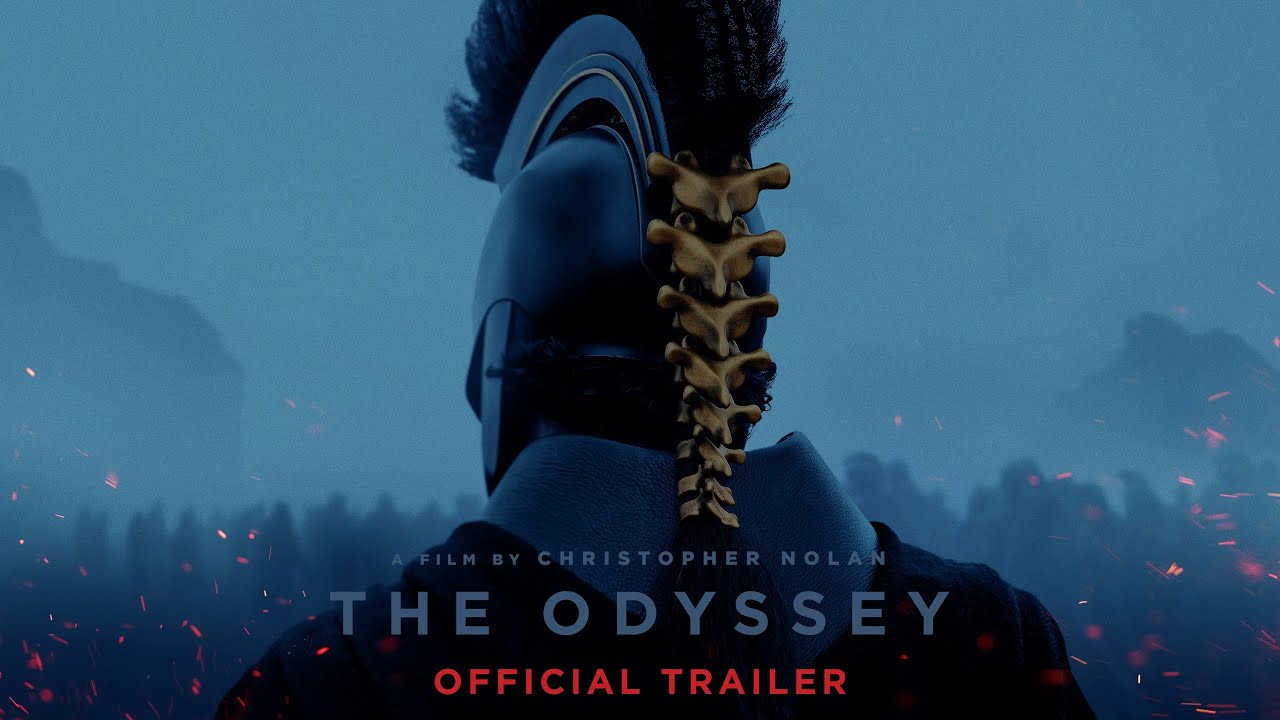
Here is what actually happened with the culture war backlash against Christopher Nolan's The Odyssey: most of it was aimed at a movie that doesn't exist.
Before the film opened, posts circulated claiming Elliot Page had been cast as Achilles. Elon Musk posted that Nolan had "lost his integrity." Reddit threads filled up. A Forbes piece eventually had to write up the situation under the headline "The Odyssey Woke Backlash Is Another Ridiculous Example of the Culture Wars Placing Politics Above Art." The actual casting: Page plays Sinon — but not the deceiver of legend. That Sinon, the one who tricks Troy into wheeling in the horse, comes from Virgil's Aeneid, not Homer's Odyssey at all. Nolan's version inverts him: an honorable soldier who has no idea what the horse is actually for, who dies in loyal service to Odysseus. Achilles is played by someone else entirely.
The backlash preceded the film. Then the film came out. Then the backlash continued anyway, slightly adjusted, because at this point it had nothing to do with the film.
Five weeks in, the critical discourse and the social media discourse have almost no overlap. The interesting questions about this film are being buried under noise, and the noise has a pattern.
The Emily Wilson problem
The most consequential piece of criticism is Emily Wilson's 4,000-word LRB review, "An Uncomplicated Man." Wilson's 2017 translation of the Odyssey was one of Nolan's acknowledged primary sources, which makes her the most qualified hostile witness imaginable. Her charges: emotionally empty, abysmal writing, gimmicky structure, characters without convincing motivation. The piece briefly crashed the LRB's website.
Here is what almost every piece covering the Wilson review left out: she writes that "the release of The Odyssey is still an event to celebrate" for its effect on public interest in Homer. She is simultaneously damning the film and welcoming its cultural effect. This is a specific, nuanced position from a scholar who has spent her career making Homer accessible to people who weren't going to read it in Greek. The coverage of her review collapsed that nuance into a flat "top Homer scholar destroys Nolan," which is a different, less interesting argument.
There is also a Slate piece titled "I'm a Classicist. Were Emily Wilson and I Watching the Same Odyssey Movie?" which is a classicist fighting a classicist over a film adaptation of a 2,700-year-old poem. This is genuinely interesting. Almost nobody is talking about it.
The gods were not eliminated
One of the persistent charges from classical and religious criticism is that Nolan "eliminated the gods," turning myth into secular allegory. This is not what the film does. Athena appears, played by Zendaya. Her divine nature is left ambiguous: the film suggests she may be a manifestation of Odysseus's guilt, connected to a priestess his men killed at Troy. Whether she is a goddess or a psychological projection is never resolved.
That ambiguity is an interpretive choice. You can disagree with it. But "ambiguous" is not the same as "eliminated." Critics describing the film as having removed the divine apparatus are describing their interpretation of an unresolved question as a settled fact. The Athena threads on Reddit, where people are actually working through the visual evidence and the structural implications, are doing more interesting work than most of the op-eds.
What Nolan actually said about Homer
Nolan said the original ending of The Odyssey was "so grim and misogynistic" that he had to exclude some material. The backlash treated this as Nolan retroactively labeling the entire Homeric tradition as problematic. What he was specifically referring to is the scene in which Telemachus hangs twelve slave girls. Classicists have genuinely debated this passage in exactly those terms for decades. Wilson's own translation was noted for how it handled those lines. Nolan's comment was a filmmaker explaining a specific editorial decision about a specific scene. The coverage of the controversy made it sound like he called Homer a misogynist and moved on.
The thing nobody is talking about
The Western Sahara situation has received almost no mainstream film coverage. FiSahara, the Western Sahara International Film Festival, called for a boycott after Nolan filmed in Dakhla, a city in Moroccan-occupied Western Sahara. The Carnegie Endowment published a piece. Democracy Now covered it. A Sahrawi journalist told Middle East Eye that international productions were using the region as a backdrop while local journalists were imprisoned. Nolan's team has not responded to the boycott call.
A film explicitly about the moral cost of war, shot in a region under military occupation, while the production team stayed silent for over a year. That tension is worth sitting with. It doesn't cancel the film. But it's a more serious question than whether Matt Damon looks sufficiently Greek.
The format war nobody asked for
There is a separate, smaller discourse happening that has gotten almost no critical attention but has been consuming a significant portion of Reddit's film communities: the IMAX format situation.
Nolan shot the entire film on IMAX cameras, the first Hollywood feature to do so. The problem is that only 41 theaters worldwide can screen it in the intended 1.43:1 IMAX 70mm format. Everyone else gets a different aspect ratio, a different film stock, or a digital approximation. The film's own website has a toggle letting viewers compare six different presentation formats. IMAX's physical platter limitations also forced Nolan to cut the runtime below three hours. He wanted it longer, pushed IMAX engineers to find a solution, and was told expanding the system further would require rebuilding it from scratch.
The online argument: one side says releasing a film with a "correct" format that 99% of audiences can't access is gatekeeping dressed up as artistic integrity. The other says Nolan is the only filmmaker still fighting for theatrical exhibition at this scale and that counts for something. I lean toward the second camp, but I understand the frustration. What I don't understand is why this debate is getting less attention than a casting rumor that turned out to be false.
The word that keeps appearing
There is a specific word that keeps showing up in positive reviews, and I think it's the actual critique: "aloof." Variety calls the film "vast, thrilling, aloof." Even the admirers describe something cool and intellectually impressive rather than felt. That's a real tension in Nolan's work (it has been since Interstellar), and it's the one argument worth having about this film. Not whether the gods were secularized. Not whether the translator liked the script. Whether a film about homecoming and grief and the cost of violence actually makes you feel any of those things.
The film has a 94% on Rotten Tomatoes and a 97% audience score. It has also generated a boycott call nobody covered, a casting misinformation cycle that ran for months, a classicist fighting another classicist in the pages of Slate, and a national argument about whether Homer was misogynistic based on a quote that was taken out of context. Pick which version of The Odyssey story you want to follow. Most people have already picked without realizing it.
Tracking The Odyssey and everything else in theaters and on streaming at incoming.to.