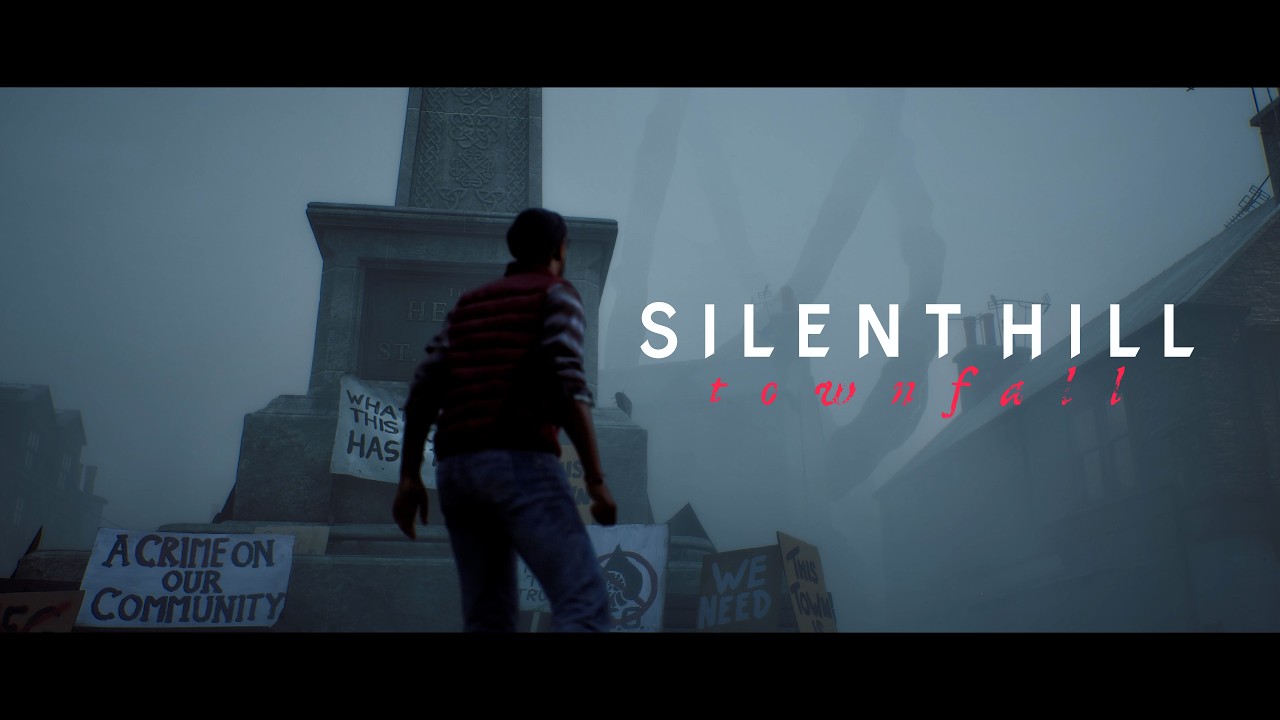
Silent Hill: Townfall came out September 24 with a genuinely rare thing for this franchise lately: a broad, real critical consensus that it's good. Metacritic has it at 81 across both platforms it released on. OpenCritic puts 89% of reviewing critics in the "recommended" column. Those are strong numbers for any horror game, let alone one carrying a name with as much baggage as Silent Hill.
They're not unanimous numbers, though. Read enough of the roundup and the same complaint keeps surfacing, sometimes from reviewers who otherwise loved the game. Here's what it actually is, what's earning the praise, and what's pulling a chunk of critics down to the 60s and 70s.
What You're Actually Playing
Silent Hill: Townfall is developed by Screen Burn Interactive (the Scottish studio formerly known as No Code) and co-published by Konami and Annapurna Interactive, released September 24 on PS5 and PC via Steam and the Epic Games Store, per Wikipedia. There's no Xbox version.
You play Simon Ordell (voiced by Jovan Adepo), who washes up with no memory on the shore of St. Amelia, a fog-bound Scottish coastal town modeled on the real village of St Monans in Fife. A man named Richard Shaw (Terry O'Quinn) contacts him through a handheld device branded CRTV, pushing him to find a nurse named Zoe Ellis (Kezia Burrows). Per IGN's review, the story runs roughly 13 hours and ends in one of five possible endings.
Two things separate this from recent Silent Hill entries. It's the first major entry told entirely from a first-person perspective, a choice the developers have attributed to the CRTV device itself: you need to physically hold and read the thing, which doesn't translate cleanly to third person. That's a narrower claim than "first first-person Silent Hill," worth being precise about: Silent Hill 4 had first-person sections in its apartment hub back in 2004, Silent Hill: The Arcade used it in 2007, and 2024's The Short Message used it too. Townfall is the first to stay in it the whole way through. It's also set outside the United States for only the third time in franchise history, after The Short Message (Germany) and 2025's Silent Hill f (1960s Japan). Series producer Motoi Okamoto has said the point was to stop treating Silent Hill as one physical place and start treating it as, in his words, more of a phenomenon than a location.
Where the Praise Is Coming From
The reviews agree on what's working, even when they disagree on how much it matters.
Atmosphere tops nearly every list. PC Gamer gave it 89/100, PCGamesN went to a full 10/10 calling it "hauntingly perfect" and one of the reviewer's favorite horror games ever, and NME also landed on a perfect 5/5. Eurogamer gave it 4/5 and specifically praised how the shift to first person makes the fog and monster encounters feel more vulnerable and immediate than the series' usual third-person view.
The CRTV device gets singled out as a real design idea, not just a gimmick. It's a handheld TV that hisses and shows a sonar-style readout of nearby threats through walls, explicitly compared by both IGN and Metacritic user reviews to the motion tracker from Alien: Isolation. IGN's Tristan Ogilvie, who scored it 8/10, wrote that the puzzle design tied to it is some of the best he's seen in a horror game recently, much of it built around recreating mid-90s technology.
The setting grounds all of it. Okamoto and writer-director Jon McKellan chose 1996 deliberately, describing it as the moment home technology, PCs, and the early internet started reshaping daily life, and they leaned on real events from the development team's own lives for the story's themes of guilt and corporate cover-up. GameSpot (8/10) and The Guardian (4/5) both called it one of the more grounded, human stories the franchise has told.
The Recurring Complaint
Here's the throughline, once you read past the top scores: several critics, including some who liked the game overall, single out combat and stealth as the weak link.
IGN's own review is instructive here, because it's mostly positive and still notes the friction directly. Melee combat is intentionally slow and weapons degrade, guns are scarce and loud enough to draw more enemies, and the CRTV's ability to see threats through walls means the opening hours are, in Ogilvie's words, "pretty light on any substantial scares." He says the game does eventually deliver real jump scares later, particularly once a stretch removes the CRTV entirely and forces you to rely on your eyes and ears.
Others found the same systems more of a problem than a feature. Gfinity scored it 60 and called the loop "exhausting, uneven, frustrating," citing "trial-and-error stealth" specifically. Cultura Geek, also at 60, said clunky combat "weakens both the exploration and narrative," the two things the game does best. TechRadar Gaming, at 80, still flagged "forgettable monster designs and stiff facial animations" alongside its praise. The lowest score among major outlets, Video Games Chronicle's 3/5, is titled outright "Outstanding horror marred by infuriating stealth," making its position the headline rather than a footnote.
Metacritic's own numbers reflect the gap between camps: critics landed on 81 ("Generally Favorable"), but the separate user score sits at 7.3, "Mixed or Average," with a real cluster of user reviews citing the same combat and pacing complaints critics raised, alongside some frame rate reports.
Editorial Take: Reading the full spread, the disagreement isn't really about whether Townfall is scary or well-made. Almost nobody argues that. It's about how much patience you have for trial-and-error stealth against unkillable enemies who can pull you out of hiding, and whether that friction serves the horror or just gets in its way. Critics who came in for the story and atmosphere tend to forgive it. Critics grading the moment-to-moment gameplay tend not to.
Who This Is For
Players who show up for atmosphere, mystery, and puzzle design are the ones the 89% OpenCritic recommend rate is actually describing. That's the strongest part of the consensus, and it's not close.
Combat is where you should adjust expectations. The melee is deliberately clumsy and guns are a last resort by design, and reviews split roughly along whether that reads as tense or just tedious. Worth deciding for yourself rather than taking either camp's word for it.
And if jump scares are what you're actually chasing, IGN's review is worth reading directly: the CRTV's wall-hack utility blunts a lot of the early tension, though it pays off later once the game takes the device away from you.
FAQ
When did Silent Hill: Townfall release? September 24, 2026, on PS5, Windows via Steam, and the Epic Games Store. There is no Xbox version.
What is Silent Hill: Townfall's Metacritic score? 81 on both PS5 and PC, based on 73 critic reviews, rated "Generally Favorable." The separate user score is 7.3 out of 10, rated "Mixed or Average."
Who developed Silent Hill: Townfall? Screen Burn Interactive, the Scottish studio previously known as No Code, co-published by Konami Digital Entertainment and Annapurna Interactive.
How long is Silent Hill: Townfall? Roughly 13 hours for a single playthrough, according to IGN's review. The game has five possible endings.
Is the combat in Silent Hill: Townfall good? It's the most divisive part of an otherwise well-reviewed game. Melee is intentionally slow and guns are scarce, which several critics found tense and others, including Video Games Chronicle and Gfinity, found frustrating enough to significantly lower their scores.
Is Silent Hill: Townfall connected to the other games? It's a standalone spin-off, not tied to the mainline story. Like 2025's Silent Hill f, it moves the series to a new setting, this time 1996 Scotland instead of Japan.
Silent Hill: Townfall is out now on PS5 and PC. Tracking new releases across movies, TV, games, music and books at incoming.to.